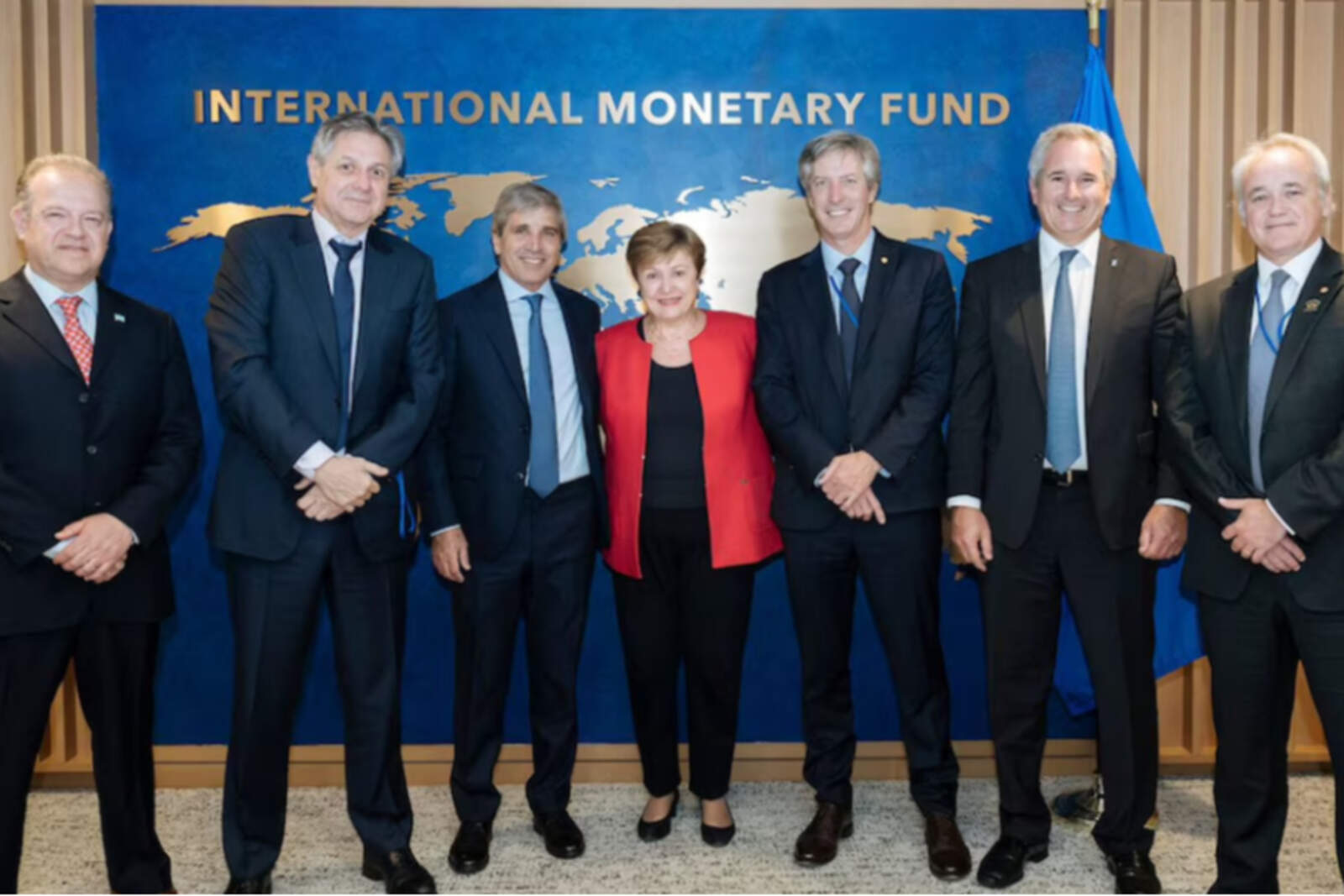

This Tuesday, a delegation from the International Monetary Fund (IMF) will arrive in Buenos Aires to begin the technical review of the agreement signed with the Argentine Government in April. This is the first formal evaluation of the Extended Fund Facility (EFF) program, which provides for total financing of USD 20 billion, of which USD 12 billion have already been disbursed as a boost to reserves.
The delegation will be led by Bikas Joshi, a Nepalese economist with extensive experience within the multilateral organization, who is already part of the team monitoring the Argentine situation along with Luis Cubeddu and Ashvin Ahuja. The mission will assess compliance with the fiscal and reserve targets committed to by the Ministry of Economy and the Central Bank.
Difficulties in the reserve target
One of the main focuses of the review will be performance in terms of international reserves. According to private estimates, the Government would still be below the expected threshold: about USD 4 billion would be needed to reach the accumulation target agreed with the IMF.
Although the recent inflow of funds through repo operations brought gross reserves to about USD 40.5 billion, only USD 500 million of that total are considered net international reserves (NIR) under the Fund's methodology.
Fiscal surplus and positive signals on the economic front
Where the Government appears to have shown better results is on the fiscal front. According to official data, the primary surplus accumulated in the first five months of 2025 reached 0.8% of GDP, exceeding the targets agreed with the organization. Meanwhile, the overall financial result stood at 0.3% of GDP.