The report also questions the opening of a betting market on the presence of Folarin Balogun in the match between the United States and Belgium. This market was opened when the American forward still had to serve a suspension for his expulsion in the previous match against Bosnia and before the FIFA officially confirmed that the sanction had been lifted. For this case, the Copenhagen Group requested a formal explanation from the highest football authority, as no similar markets were detected for the other 14 players expelled during the tournament.
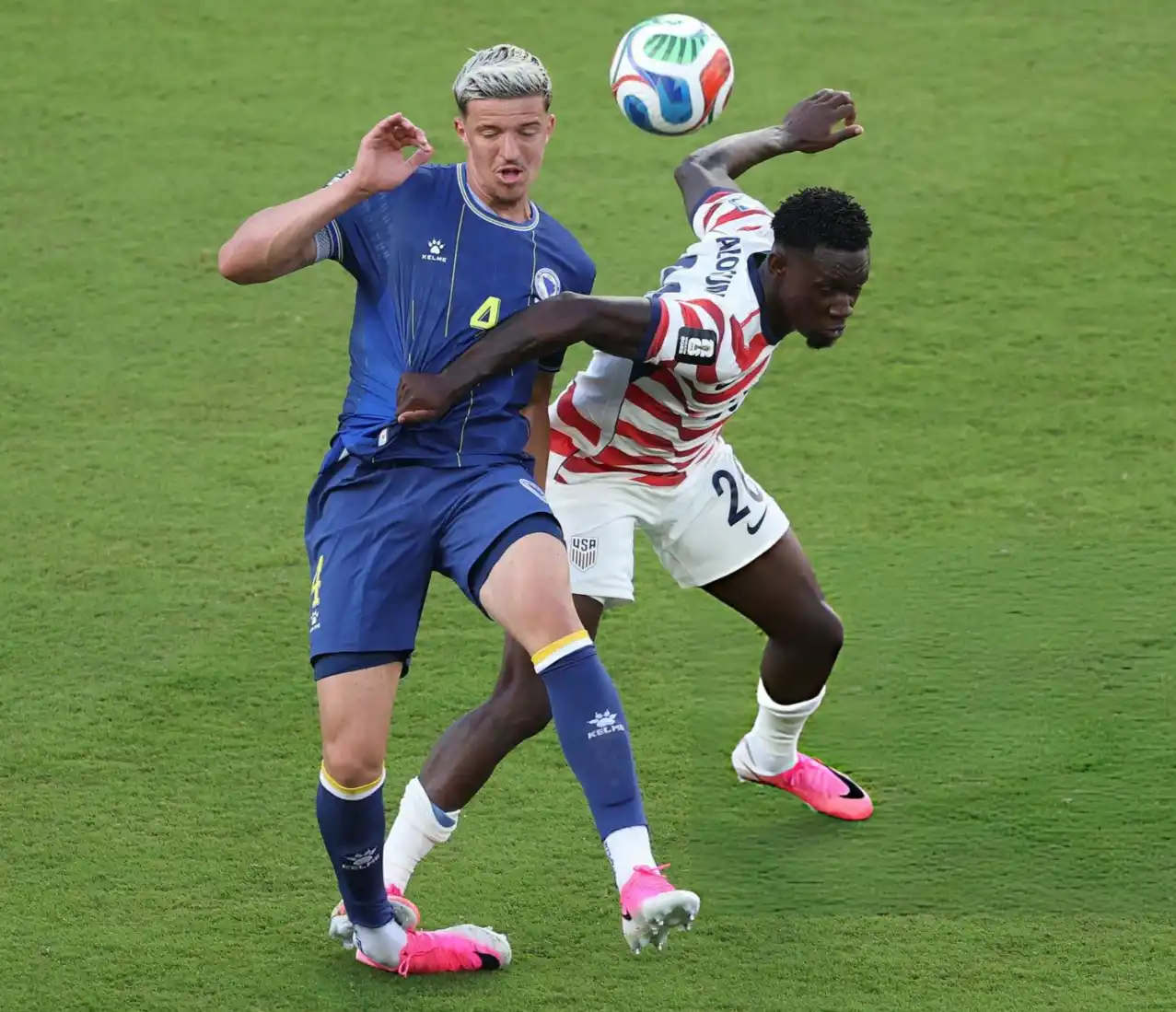
The lack of Balogun that led to his expulsion, whose resulting suspension would later be annulled
Christian Kalb, a gaming regulation specialist who previously collaborated with the Copenhagen Group but did not participate in this report, explained that this type of alert can respond to multiple factors and not necessarily to match-fixing. "The alerts can be explained by atypical behaviors such as changes in odds or risk coverage strategies. There are many explanations that do not involve manipulation", he told The Athletic.
The body also estimated that around 240 billion dollarswere wagered during the World Cup, approximately double that of Qatar 2022. Additionally, for the first time, it incorporated a permanent monitoring of prediction markets like Polymarket and Kalshi, platforms that, according to the report, pose new challenges by allowing bets on a wide variety of events and, in many cases, with payment methods that are difficult to trace.
Two days before this report was made public, FIFA had released the conclusions of its Integrity Working Group, which stated that it had not detected "suspicious betting activity or signs of match manipulation" in any of the 104 matches of the World Cup. During the competition, the body worked alongside Interpol, the FBI, Sportradar, the six continental confederations, and the Copenhagen Group itself to monitor betting markets and reporting channels in real time.
FIFA assured that it found no irregularities during the World Cup
It should be clarified that, despite everything presented by the European organization, the document states that there is no evidence of match-fixing and that the situations highlighted only justify closer monitoring.
Days after its conclusion, the 2026 World Cup continues to generate discussion, especially regarding its controversies. In this context, a preliminary report from the Copenhagen Group, an international body specialized in preventing the manipulation of sports competitions, has recently come to light, which detected seven alerts related to possible irregularities in betting markets during the 2026 World Cup.
The report, accessed by The Athletic before its full publication, summarizes the work carried out by the international network created under the Macolin Convention of the Council of Europe. During the World Cup, all 104 matches of the tournament were monitored, with 15 matches under enhanced surveillance and 12 specific episodes analyzed for their potential risk to sports integrity.
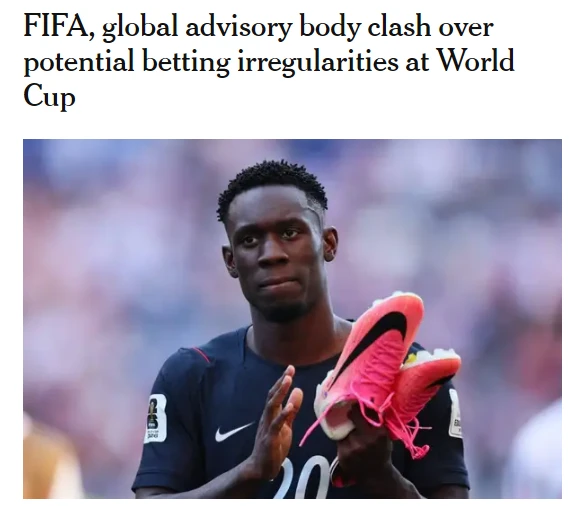
The cover of the article from The Athletic
Within this group, seven incidents were categorized as "yellow alerts", the second level of a scale that also includes green, orange, and red states. According to the definition of the body itself, this category applies when there are "several signs of irregularities", such as unusual movements in betting odds, rumors, or intelligence information, although not constituting proof of manipulation.
Among the situations that drew the most attention were the expulsion of South African Themba Zwane against Mexico, a high volume of bets on the Polymarket platform that Spain would not defeat Cape Verde (a match that ended 0-0), and the three-and-a-half-minute delay by VAR to disallow a goal by Ferran Torres in Spain's victory over Saudi Arabia.