
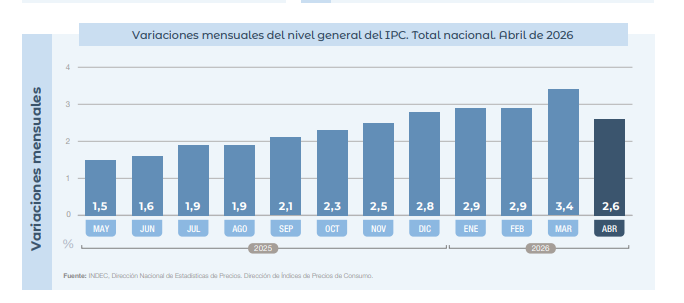
One of the most significant pieces of information regarding the April inflation, which stood at 2.6% and confirmed a slowdown from the 3.4% recorded in March, was related to the behavior of the food and non-alcoholic beverages category, crucial due to its direct impact on the cost of living.
This segment recorded a barely 1.5% increase at the national level, the lowest since August 2025, when it was 1.4%.
The slowdown is significant not only because of the magnitude of the number but also because food had been one of the main drivers of inflation in recent months. In April, however, they not only grew below the general index but also ranked among the divisions with the least variation across the country.
The phenomenon was even more pronounced in the Greater Buenos Aires, where food prices increased only 1.2%, reaching their lowest level since June 2025 (0.9%). This data is particularly relevant as it pertains to the region with the highest concentration of population and consumption, amplifying its impact.
Poverty and inflation
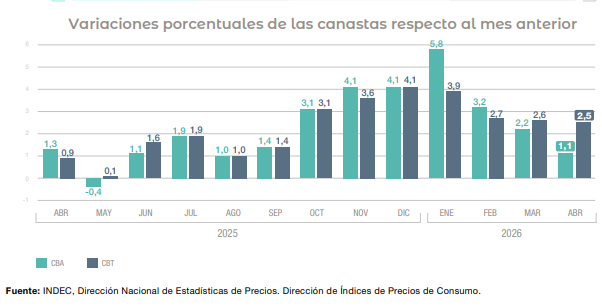
The improvement also extended to the indicators measuring the income levels necessary to avoid falling into poverty or indigence. The Basic Food Basket (CBA), which establishes the indigence line, recorded a 1.1% increase in April, the smallest increase since August of last year (1%).
Meanwhile, the Total Basic Basket (CBT), which determines the poverty line, increased by 2.5%, marking its lowest variation since September 2025 (1.4%). Both indicators directly reflect the impact of the slowdown in food prices on living conditions.