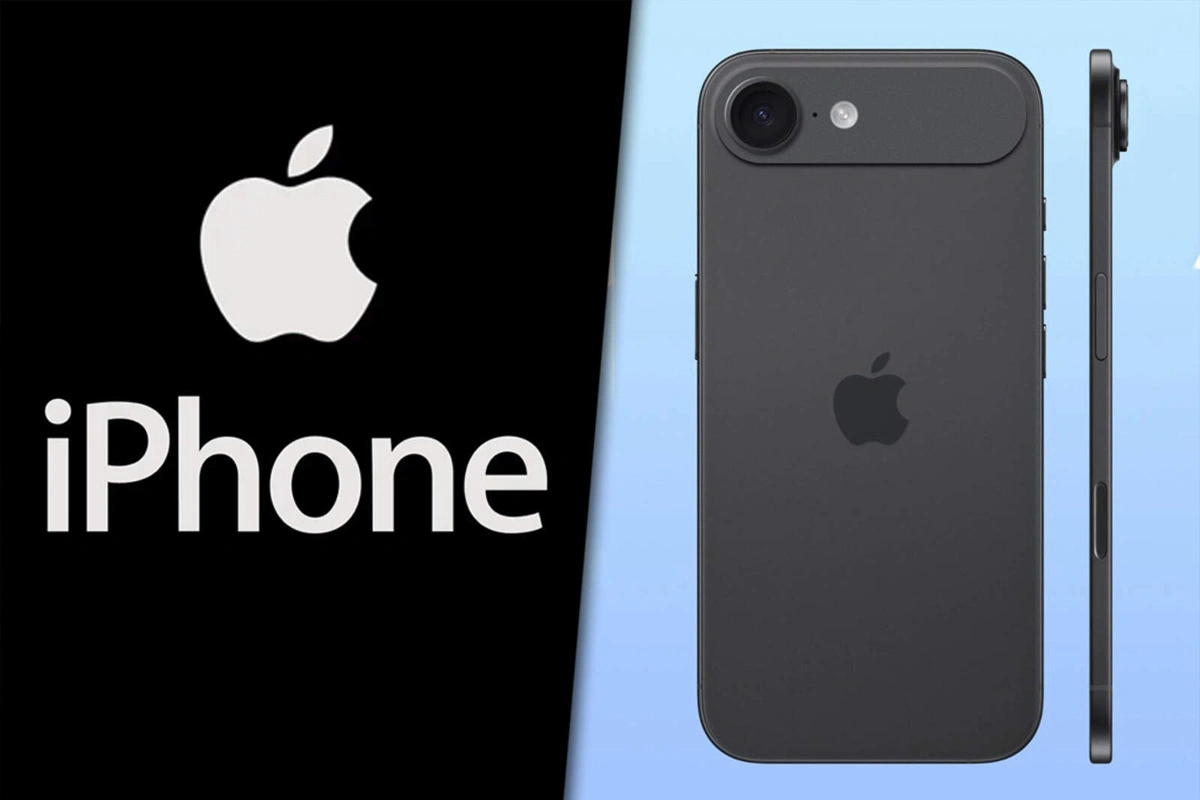
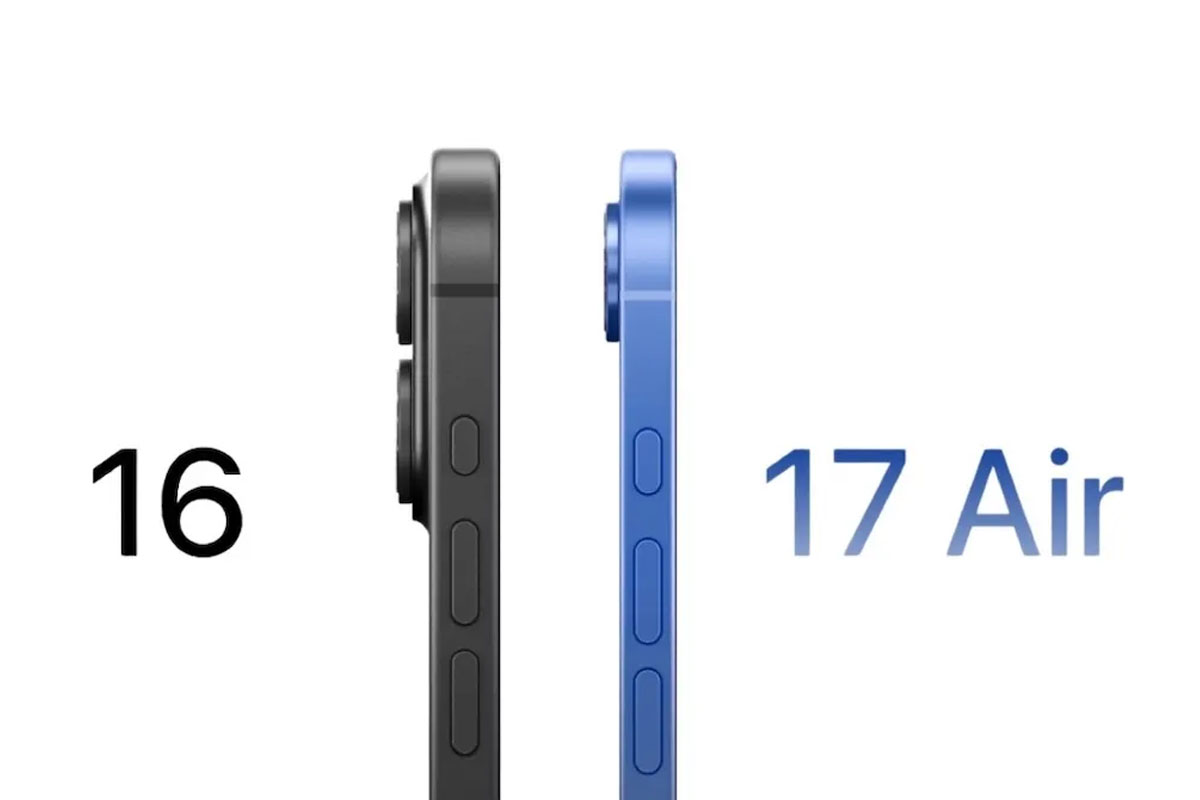
Apple is preparing a major change in its smartphone line with the iPhone 17 Air. It is the thinnest device in the history of the brand.
The new model is committed to an ultra-thin design, premium materials and improvements in efficiency. The information comes from reports from the technology sector that anticipate a shift in the company's strategy
.
An ultra-thin design that redefines the iPhone The iPhone
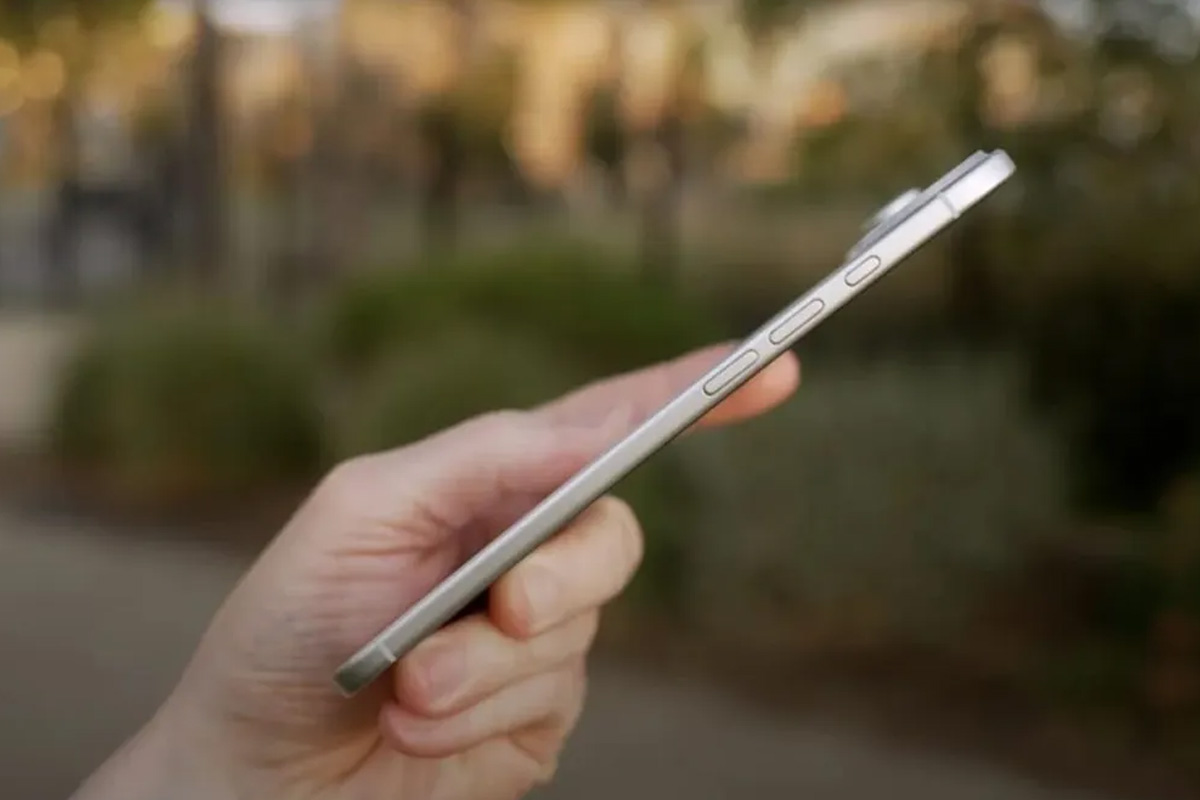
17 Air is just 5.5 millimeters thick.
This would position it as the thinnest phone developed by Apple
.
To achieve this, the company would have completely redesigned its internal architecture. The goal is to maintain performance without sacrificing portability. This change marks a new trend in the market. The priority becomes design, light weight and ease of use
.
New materials: titanium, aluminum and increased strength
The chassis would combine titanium and aerospace-grade aluminum. This would allow the structure to be supported despite the smaller thickness. In addition, the internal arrangement of components was optimized. Processor, memory and motherboard were reorganized to save space
.
The cooling system would include graphite sheets and vapor chambers. This seeks to avoid overheating in a more compact equipment
.
Battery and performance: how it compensates for its small size
One of the biggest challenges will be autonomy. The iPhone 17 Air would have a wider but thinner battery. This technology would allow us to maintain competitive performance. All without increasing the volume of the device.
The approach aims at a balance between power and efficiency. It's a key to sustaining the user experience
.
“Liquid glass” screen and immersive experience
The equipment would include a screen with liquid glass technology. This is an evolution of current OLED panels. This system reduces internal layers and brings pixels closer to the surface. The result would be a sharper image and a faster response
.
It would also have adaptive frequency and anti-reflection treatment. This improves visibility even in full sunlight.
Reinforced security and protected components
Apple advances hardware protection. Batteries, cameras and screens would have cryptographic identifiers. This would prevent its use on other devices without authorization. The measure aims to curb the illegal spare parts market
.
Redesigned camera: fewer lenses, more artificial intelligence
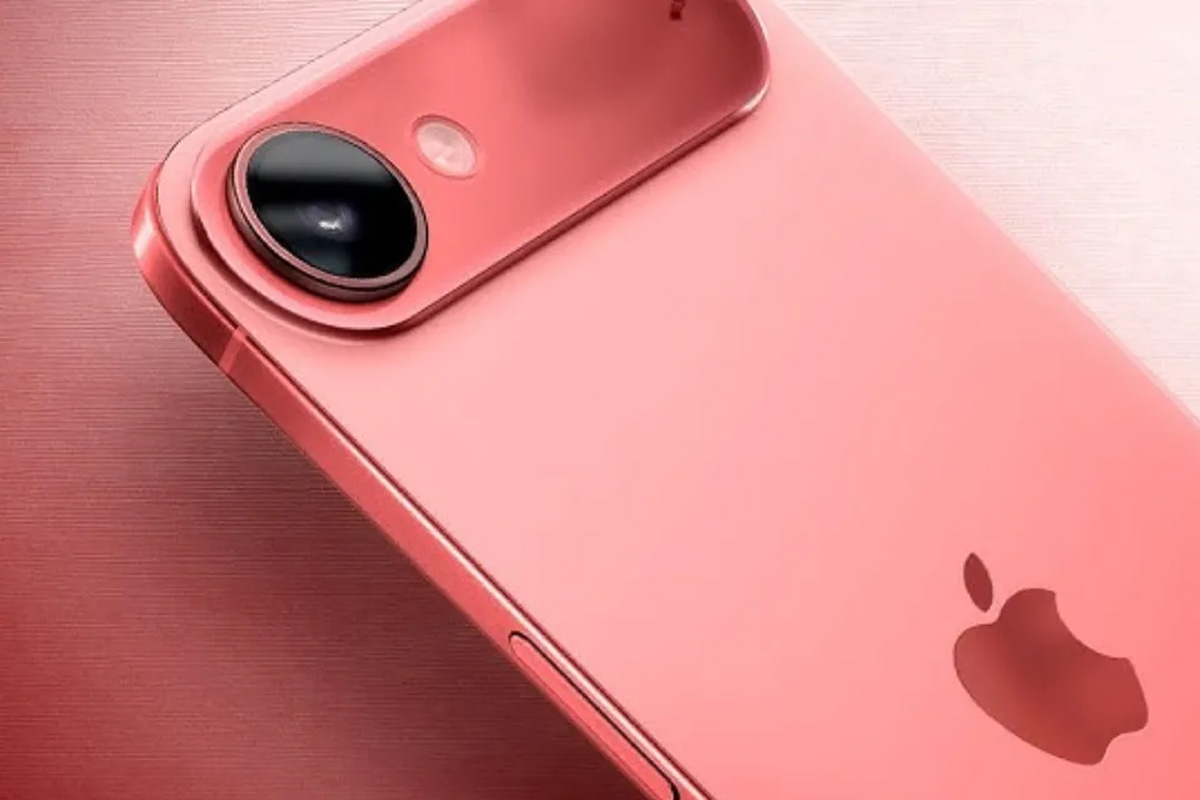
The camera module would change its classic design. The sensors would be located on top of the equipment. The focus would be on computational photography. Artificial intelligence would correct images and improve the final quality