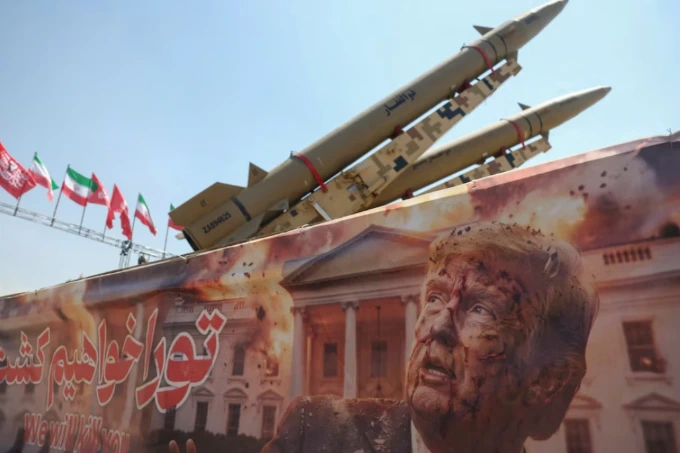
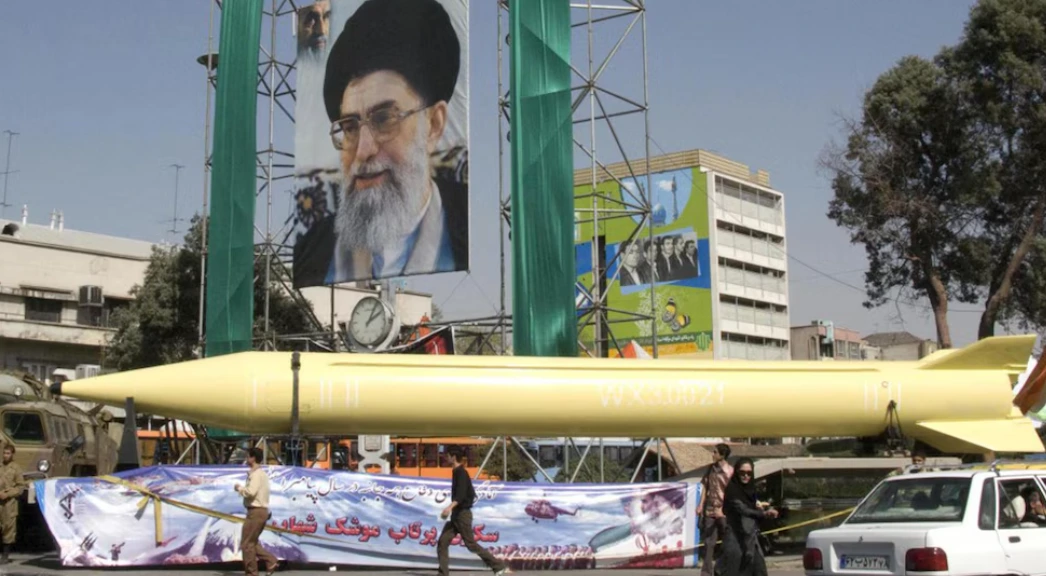
The Iranian regime is considering extending the war beyond the Middle East and attacking U.S. military targets in Europe if President Donald Trump decides to escalate the conflict further, according to sources close to Tehran cited by the Financial Times.
The threat arises as negotiations to reopen the Strait of Hormuz remain stalled and the perception within the Iranian regime grows that a new confrontation with Washington is increasingly likely.
According to the British outlet, Iranian forces have analyzed the possibility of attacking U.S. military assets located in southeastern European countries. Among the potential targets is Bulgaria, which recently authorized the use of the Bezmer airbase for U.S. refueling aircraft.
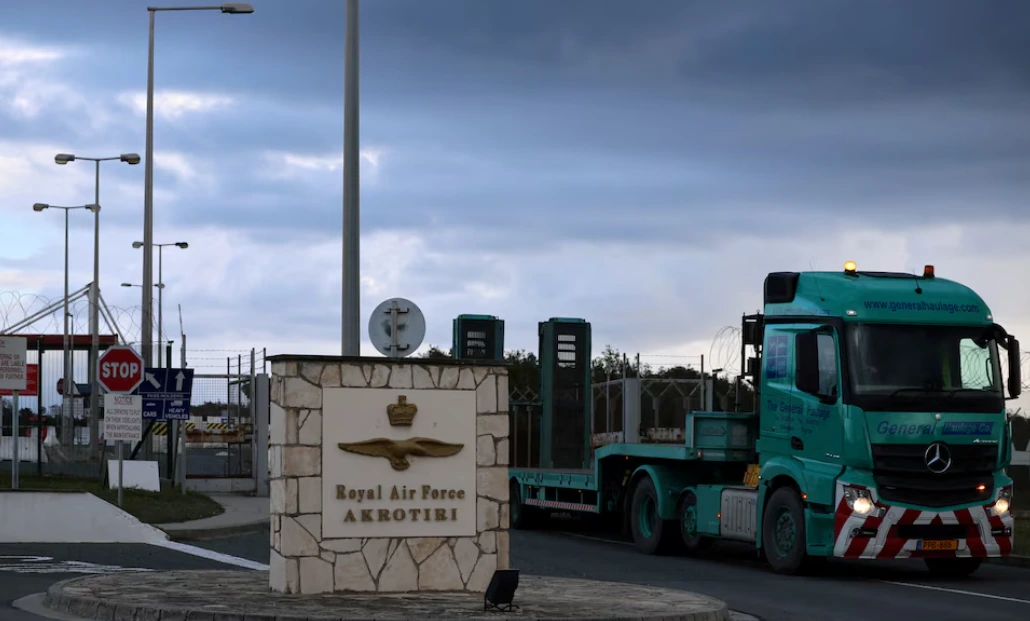
Cyprus is also said to have been included among the scenarios evaluated by Tehran. In March, a British airbase located on the island was hit by a drone during the military escalation.
Iran threatens to bring the war to Europe
The sources cited by the Financial Times also noted that Iranian forces have considered the possibility of attacking undersea fiber optic cables in the Strait of Hormuz if the conflict escalates again.
Iran threatens to bring the war to Europe
The threat represents a significant shift from the strategy previously employed by Tehran, which focused mainly on U.S. and Israeli targets within the Middle East.
Members of the Revolutionary Guard and other Iranian military sectors have already warned that a new war could elicit a much broader response. According to the sources, Tehran is considering attacking targets situated far beyond the region if the United States strikes Iranian infrastructure again.
One of the sources cited by the British outlet stated that if Washington “goes too far,” Iran could respond “beyond the region” and attack targets in Europe.
The Iranian warning is aimed directly at Trump
The scenario comes after Donald Trump warned that the United States would respond decisively to new Iranian actions in the Strait of Hormuz.
The U.S. president stated that Washington could destroy Iranian infrastructure in response to attacks on vessels transiting the strategic maritime route.
In Tehran, meanwhile, the regime of Mojtaba Khamenei deepened its alignment with hardline sectors and placed radical figures in key security and defense positions.
Trump recently asserted that there are no talks or negotiations planned with Iran, increasing uncertainty about the future of the conflict.
Experts believe the threat is possible but limited
Sidharth Kaushal, a researcher at the Royal United Services Institute in London, considered that Iran's capability to attack U.S. targets in Europe constitutes a “real but limited” threat.
Iran possesses medium-range ballistic missiles capable of reaching certain targets in southern and southeastern Europe. However, its ability to inflict significant damage decreases as the distance increases.
The regime has already demonstrated that it is willing to attempt attacks against targets located thousands of kilometers from its territory.
Experts believe that the threat is possible, but limited
Weeks after the war began, the United States accused Tehran of launching missiles at Diego Garcia, a joint U.S. and British military base located in the Indian Ocean, about 4,000 kilometers from Iran. None of the projectiles reached the target.
Additionally, Turkey reported that NATO air defense systems intercepted ballistic missiles launched from Iran, while the British base at Akrotiri in Cyprus was attacked by a drone.
Tehran threatens a limitless war
According to the sources cited by the Financial Times, the Iranian regime interprets its recent attacks as a demonstration that it can reach targets increasingly far from its borders.
One of the sources stated that the attack on a U.S. base in Jordan, which resulted in the deaths of three U.S. servicemen, was considered by Tehran as its most precise long-range attack to date.
The Iranian regime's warning is direct: if the United States attacks strategic infrastructure within Iran again, the response could cease to be limited to the Middle East.
In this way, Tehran seeks to use its missile capability and its influence over strategic routes like the Strait of Hormuz to raise the cost of any new U.S. offensive and warn Washington's European allies that they could become involved in the conflict.