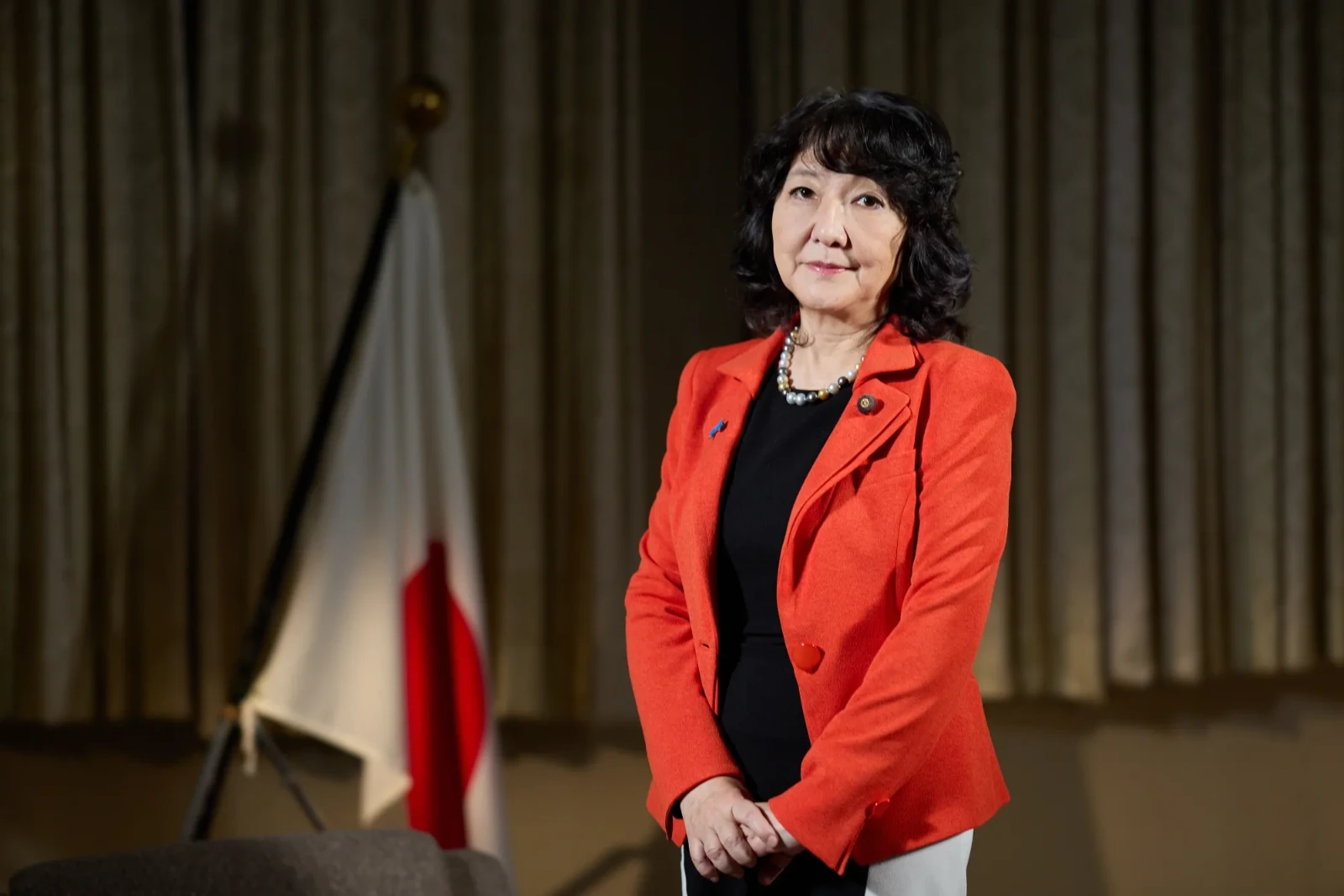
Finance Minister Satsuki Katayama stated that Japan will continue to welcome foreigners who respect the laws, but warned that those who commit crimes will have to leave the country
The Japanese Finance Minister, Satsuki Katayama, stated that the Government does not intend to move towards a migration model similar to that which, in her words, is observed in some European countries. The official maintained that Japan is willing to welcome foreigners who come to the country as “good friends,” but emphasized that those who violate the laws must leave the territory.
“We are not envisioning that situation [regarding immigration] in which our society will be like that of European countries”, Katayama said regarding Japanese immigration policy.
Finance Minister Satsuki Katayama
The statements come at a time when the Japanese Government is seeking to , while also maintaining programs aimed at attracting foreign workers to address the labor shortage. Japan has specific systems such as the “specific skilled worker” program, which sets language and professional skill requirements for certain sectors.
The official position thus combines the economic need to incorporate foreign workers with a stricter policy regarding residency and compliance with the laws. The Government is also considering a national integration program that includes Japanese language education and guidance on community norms for foreigners and their families.
The debate is also taking place under the administration of Prime Minister Sanae Takaichi, whose Government has prioritized immigration and foreign control among key issues. In August, authorities announced a package called “zero illegal immigrants plan”, aimed at strengthening measures against illegal residency and improving immigration control.
The comparison with Europe made by Katayama reflects a concern present in sectors of Japanese politics about the effects that higher immigration could have on security, social integration, and community norms.
Illegal immigrants arriving in Europe
The Government thus seeks to establish a distinction between legal immigration and integration, on one hand, and crime or irregular residency, on the other. Japanese authorities argue that both issues must be addressed separately and that the arrival of foreign workers does not imply abandoning controls over those who violate the laws.
Katayama's statements reinforce a policy that attempts to combine limited openness to foreign workers with greater demands for compliance with Japanese norms, in contrast to the European migration models that the minister referenced to explain the path that Tokyo does not intend to follow.