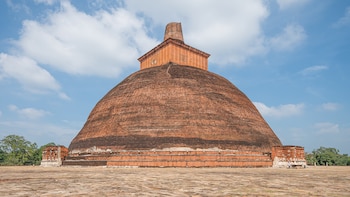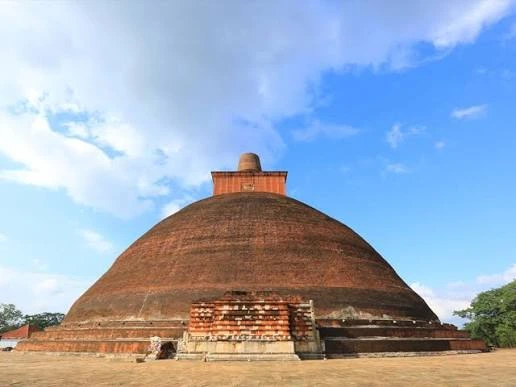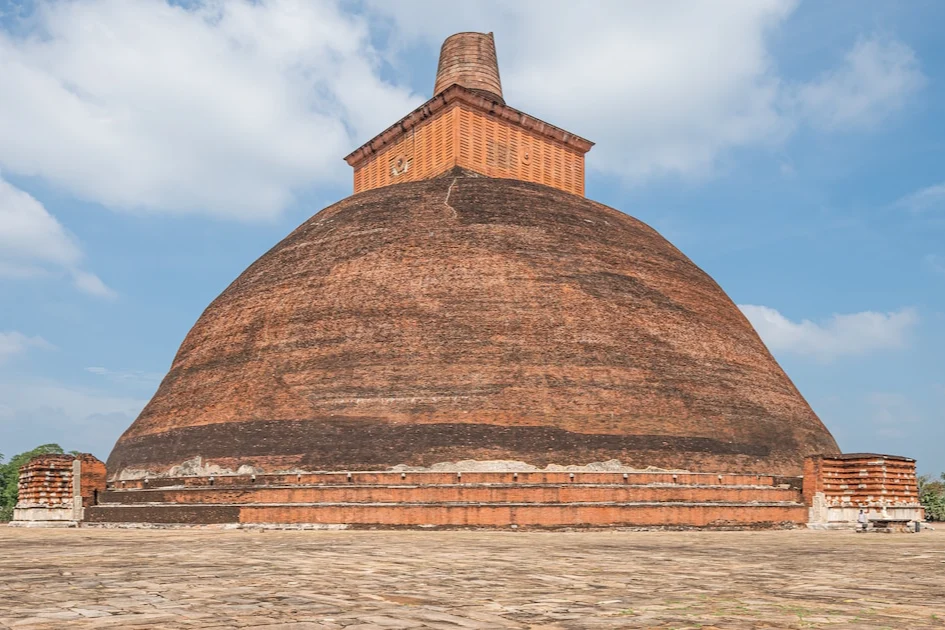

In the central-northern plains of Sri Lanka stands a brick dome that dominates the archaeological landscape of Anuradhapura. This is Jetavanaramaya, a Buddhist stupa completed around the year 301 AD that, at the time of its construction, was the third largest artificial structure on the planet. Only the Great Pyramids of Giza surpassed it in scale.
A stupa is a semi-spherical structure intended to house religious relics and serve as a space for worship and meditation. CNN described it as a “massive megastructure built for eternity,” placing it among the great landmarks of antiquity. Today, it remains the largest brick construction in the world by volume.
Anuradhapura was the first territory outside India to adopt Buddhism. For centuries, it served as the political and religious center of the island. This historical weight drove the elevation of large-scale monuments, expressions of both devotion and power. The archaeological park brings together monasteries, reservoirs, and shrines where pilgrims and monks still circulate, maintaining traditions that are over two thousand years old.
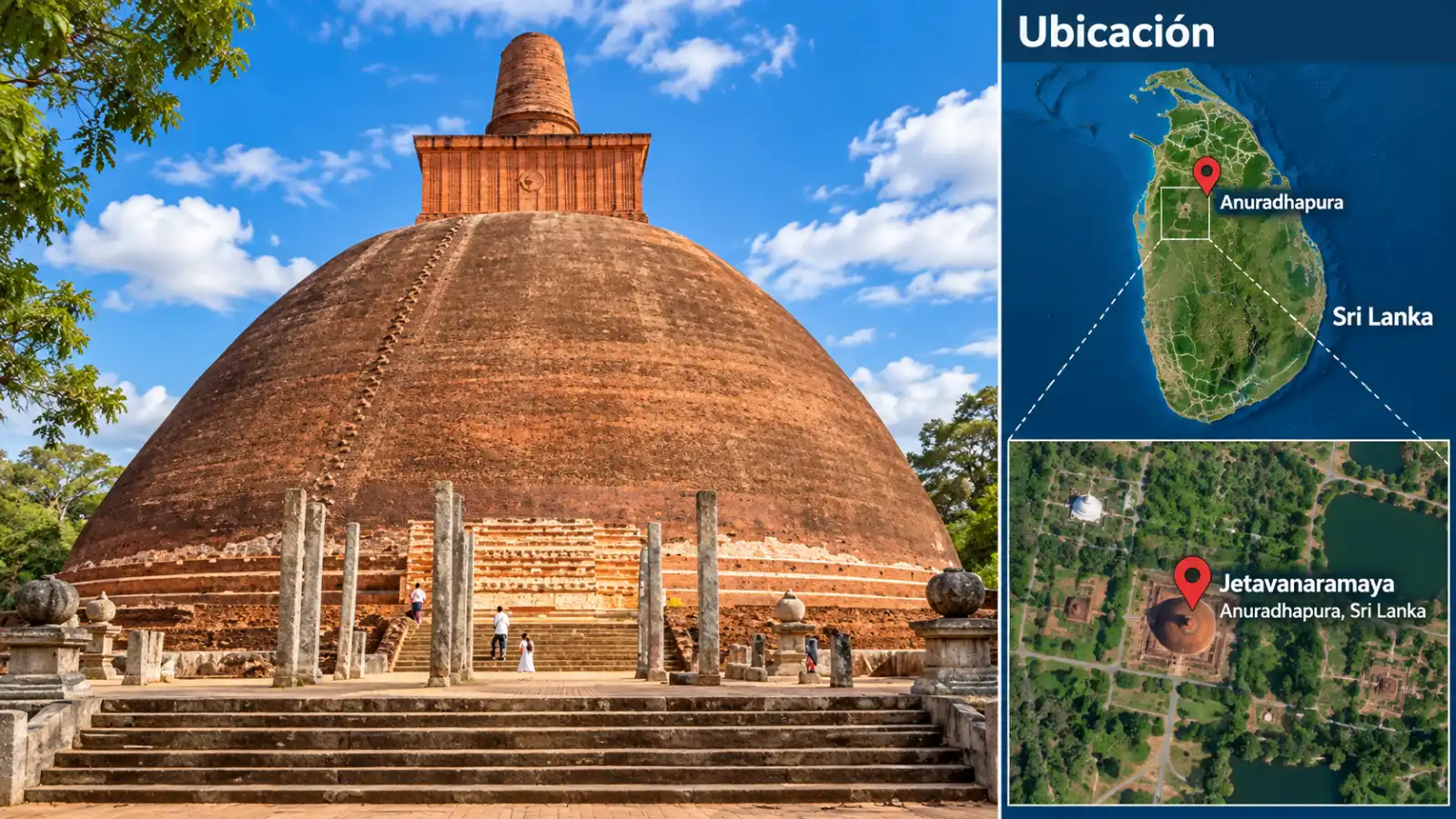
The construction required about 93.3 million baked clay bricks. Its original height was around 122 meters. Archaeologists estimate that those blocks would be enough to build a one-meter-high wall from London to Edinburgh, or from New York to Pittsburgh.
A complex designed for monastic life
The name Jetavanaramaya does not only identify the dome. It also designates the core of Jetavana Vihara, a large monastic complex designed to accommodate hundreds of religious individuals. Each building in the complex faced the central temple, so the monks always had it in front of them when leaving their residences. This arrangement reflected the spiritual and cosmological order that organized daily life.
The religious rivalry of the time influenced the construction drive. For nearly seven hundred years after its completion, no other building of comparable size emerged in Sri Lanka. This fact speaks to the human, technical, and organizational resources that the project demanded.