In his first Message to the Nation as president, he announced an unprecedented expansion of the railway network, new subway lines, roads, ports, airports, and water and irrigation works
The President of Peru, Keiko Fujimori, presented a comprehensive infrastructure plan aimed at transforming the country's transportation system and public services over the coming years.
In her first Message to the Nation after taking office, the leader stated that the modernization of infrastructure will be one of the main pillars of her government and asserted that new investments will improve competitiveness, generate jobs, and reduce development gaps between different regions of the Peruvian territory.
Keiko Fujimori at her inauguration
The leader also announced the launch of new commuter trains that will connect Lima with Ica and Lima with Barranca, two corridors considered strategic for facilitating passenger mobility and strengthening economic integration between the capital and other regions of the country. As she explained, these projects will reduce travel times, improve connectivity, and promote the development of new productive activities.
The plan also includes significant investment in road infrastructure. Among the mentioned projects are the completion of the New Central Highway and the execution of works such as national roads and highways. According to the government, these projects will improve connections between different regions, facilitate the transport of goods, and reduce logistical costs for the Peruvian economy.
In terms of productive and social infrastructure, Fujimori announced that she will reorganize programs for drinking water, sewage, electricity, telephony, and internet to expand coverage of basic services. She also promised to accelerate the construction and modernization of schools, hospitals, irrigation systems, dams, dikes, water treatment plants, and pumping stations, with special attention to regions that face the greatest needs.
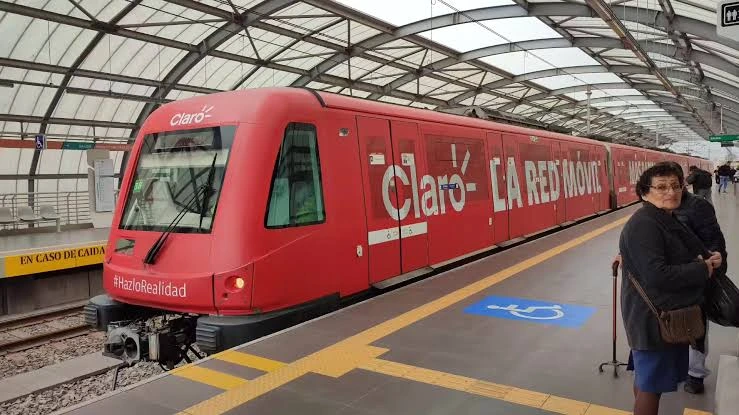
A train from the Lima metro
The president assured that her administration will promote both public and private investment to accelerate the execution of these projects and reduce the administrative times that often delay major works. In this regard, she announced measures for bureaucratic simplification and the creation of a National Digital Authority that will streamline procedures through technological tools and artificial intelligence, with the aim of facilitating investment execution and improving state services.
With this announcement, the new president placed infrastructure development at the center of her government program. The magnitude of the presented projects makes this plan one of the main bets of her administration, whose success will depend on the state's ability to obtain financing, coordinate with the regions, and execute the works within the expected timelines.