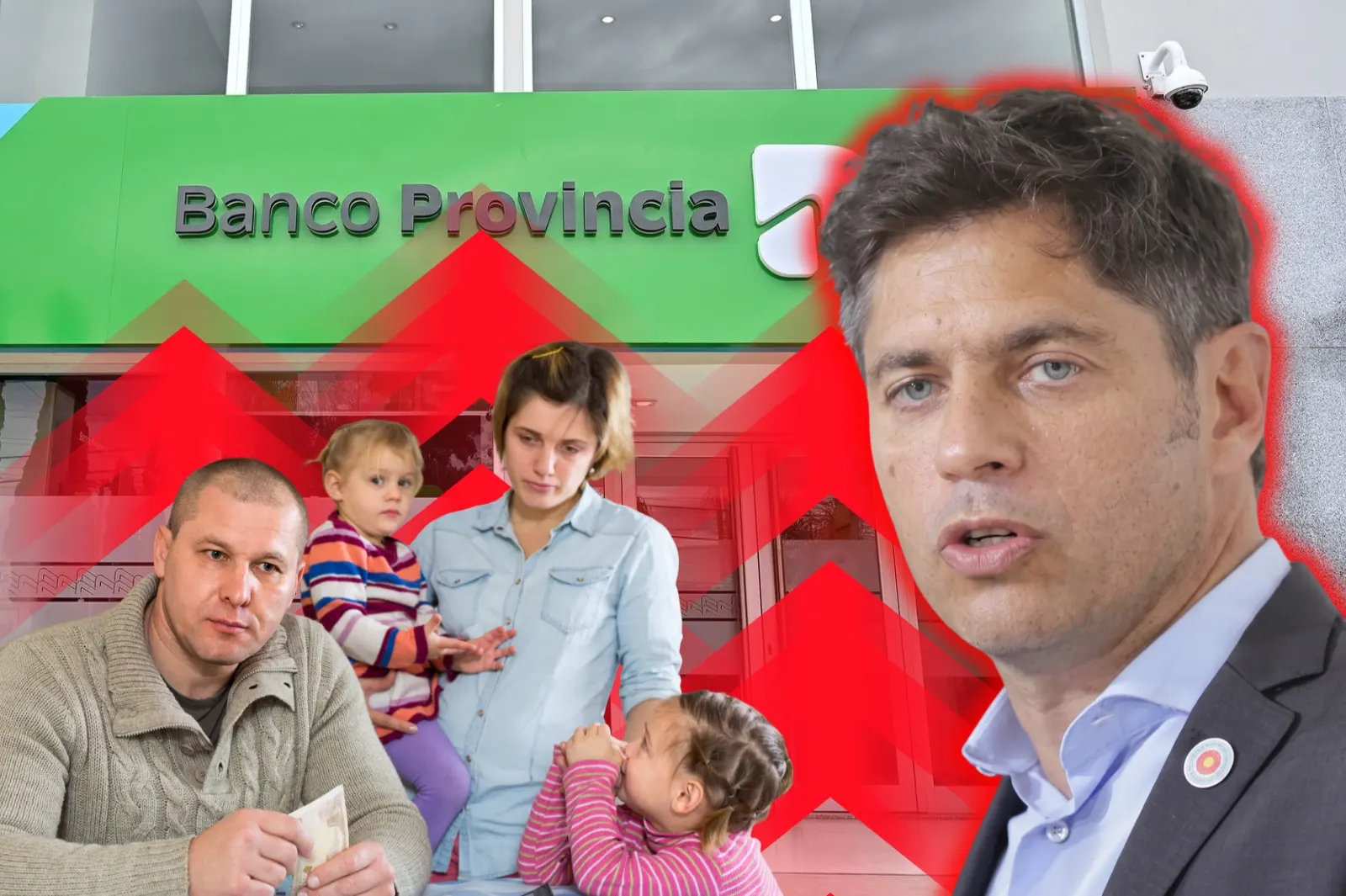
A comparison went viral on social media that highlighted the cost of loans offered by Banco Provincia under Axel Kicillof and Mercado Pago, amid the controversy over interest rates and the amount of the installments.
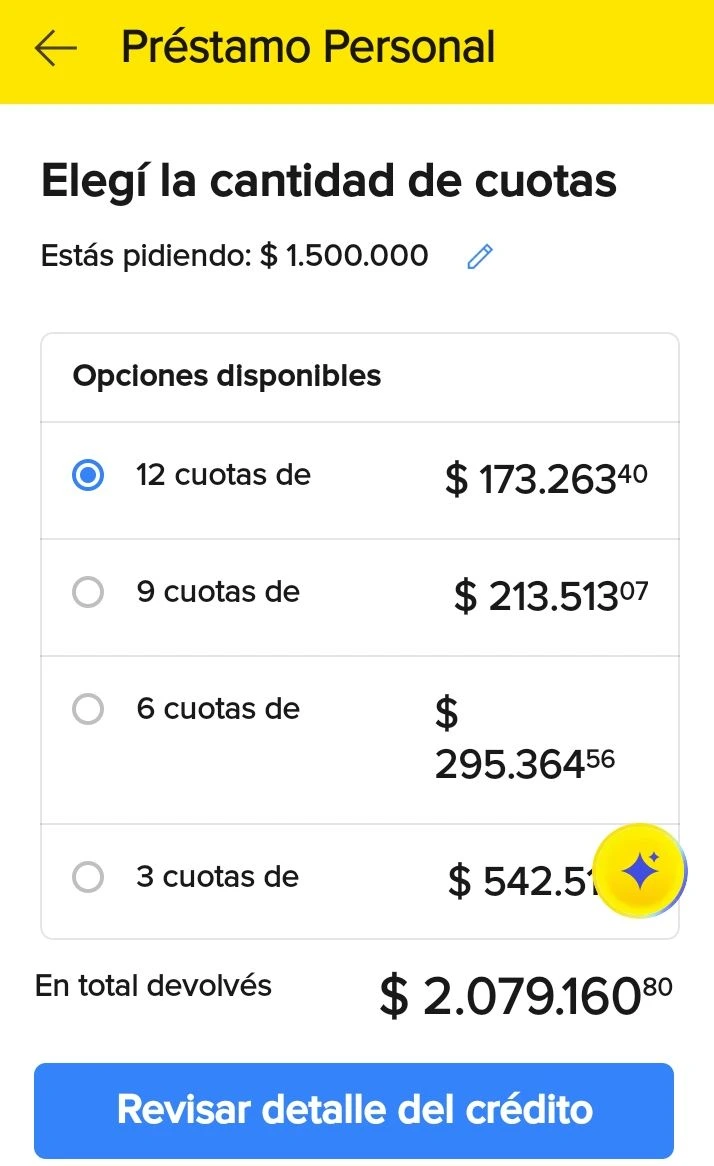
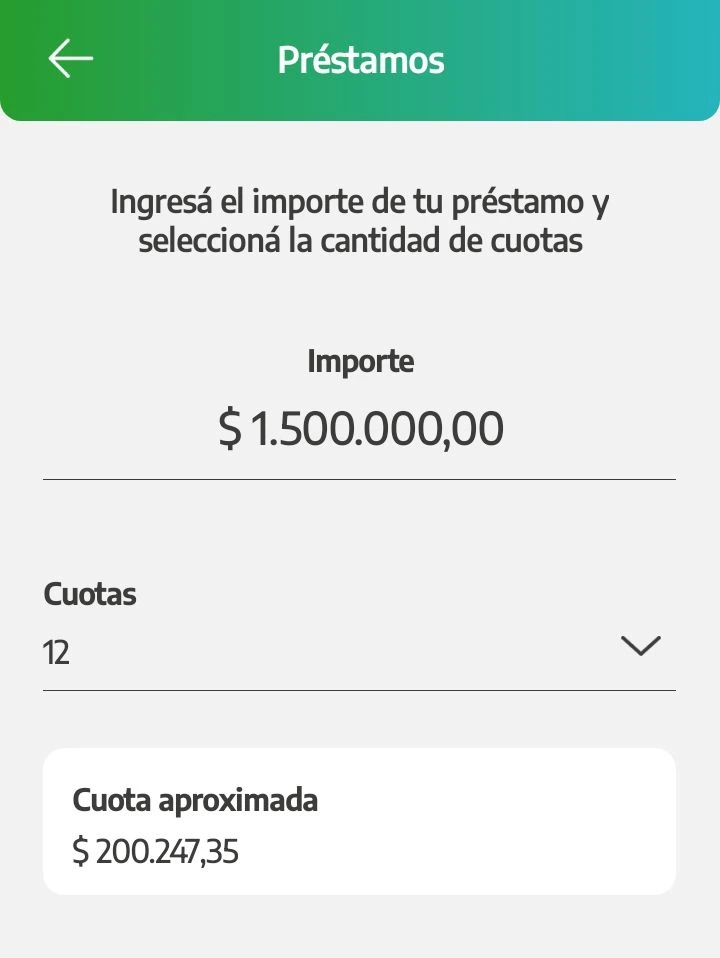
The comparison is based on simulations for requesting a loan of $1,500,000 in 12 installments, but with a significant difference in the final amount that the user would have to repay.
According to the findings, the loan offered through Mercado Pago includes 12 installments of $173,263.40, with a total of $2,079,160.80 at the end of the financing.
Axel Kicillof
In the case of Banco Provincia, the simulation for the same amount and the same number of installments shows an approximate installment of $200,247.35. If that value is taken for the 12 installments, the total disbursement would reach approximately $2,402,968.20.
Thus, the difference between both options is around $323,807.40, and the Banco Provincia option is 15% more expensive.
Loan in Mercado Pago
The comparison began to circulate amid strong criticisms from Kirchnerism directed at Mercado Pago in recent days for the cost of its loans. The debate focused particularly on the interest rates and the final amount that users who take financing through virtual wallets must face.
In this context, the comparison raised questions about the significant difference in treatment towards different financial entities.
Loan at the Kicillof Provincial Bank
While Mercado Pago, linked to Mercado Libre and its founder Marcos Galperin, was at the center of the criticism for the cost of its credits, the comparison exposes that Banco Provincia, an entity under the control of the Province of Buenos Aires managed by Axel Kicillof, represents a higher cost but has not received any criticism.
The key point is that, for the example shown, Mercado Pago presents a monthly installment approximately $26,984 lower than Banco Provincia. In the total of the 12 installments, that difference exceeds $323,000.
The comparison has reignited the discussion about the cost of financing and raised questions about the criticisms directed exclusively at fintechs and the double standards of Kirchnerism when it comes to pointing out the culprits.