In this way, one of the fundamental pillars of the reformist model, which had guaranteed the representation of students, graduates, and professors in decision-making, was dismantled.





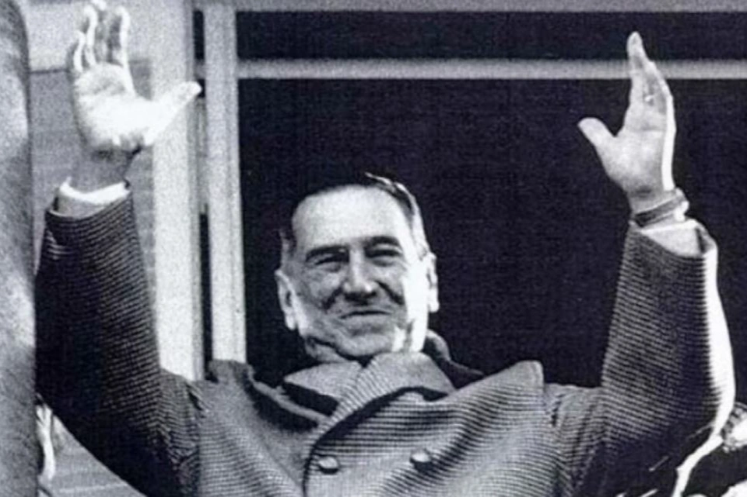

The law established a state control scheme that broke with the principles of the University Reform of 1918.
In this way, one of the fundamental pillars of the reformist model, which had guaranteed the representation of students, graduates, and professors in decision-making, was dismantled.





The enactment of Law 13.031 in 1947, known as Guardo Law, marked a turning point in the history of the Argentine university system.
Driven during the first presidency of Juan Domingo Perón, the regulation effectively meant the elimination of university autonomy.
The law, named after the deputy Gabriel del Mazo Guardo, established a framework for direct state control over universities that broke with the principles of the University Reform of 1918, based on autonomy, shared governance, and academic freedom. Following its implementation, the national government took on a central role in the management of educational institutions.
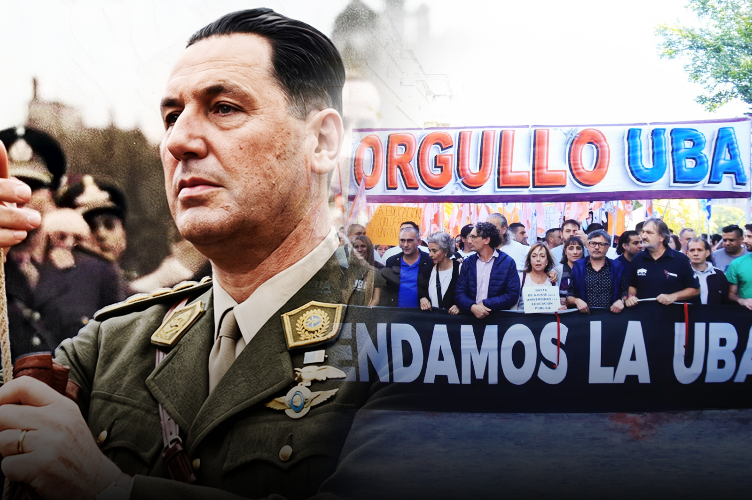
One of the most significant changes was the appointment of authorities. The Guardo Law granted the Executive the power to directly appoint rectors and deans of faculties, eliminating the internal election mechanisms that had previously been in the hands of the university community.
This modification implied the elimination of the internal democratic system and a direct subordination of universities to the Peronist government.
At the same time, the regulation restricted university shared governance. Student participation in governing bodies was eliminated, concentrating power in teaching sectors aligned with the ruling party.
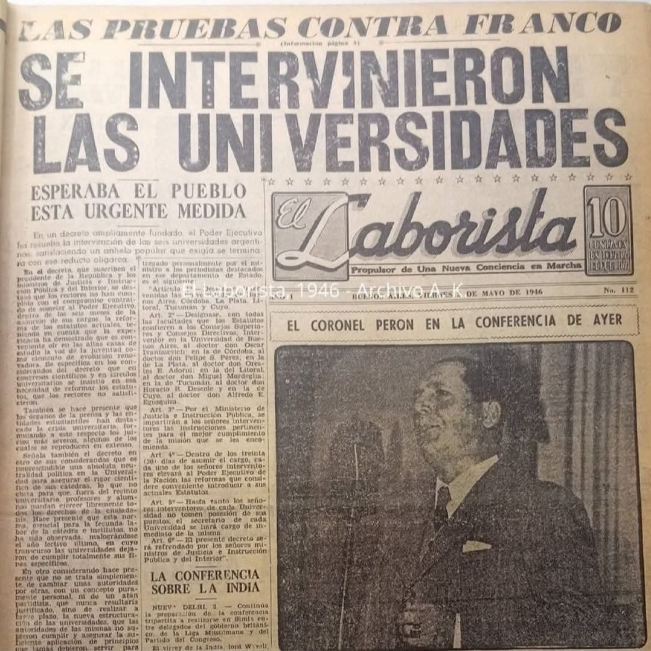
Control also extended to the academic realm. Although the law referred to “technical, teaching, and scientific autonomy,” in practice it imposed an ideological orientation by requiring universities to direct their teaching towards the consolidation of a “national consciousness” defined by the State.
This criterion limited academic freedom and conditioned educational content, subordinating academic production to the political objectives of Perón's government.
The implementation of the Guardo Law thus consolidated a centralized university model, where key decisions were no longer in the hands of the educational community but depended on the Executive Power.
This scheme remained in effect until the end of the Peronist cycle. Following the so-called “Liberating Revolution” in 1955, the de facto government repealed the law enacted during that period.
In that context, the validity of the old Avellaneda Law was restored and the principles of the University Reform of 1918 were recovered, returning autonomy and the shared governance system to the institutions.