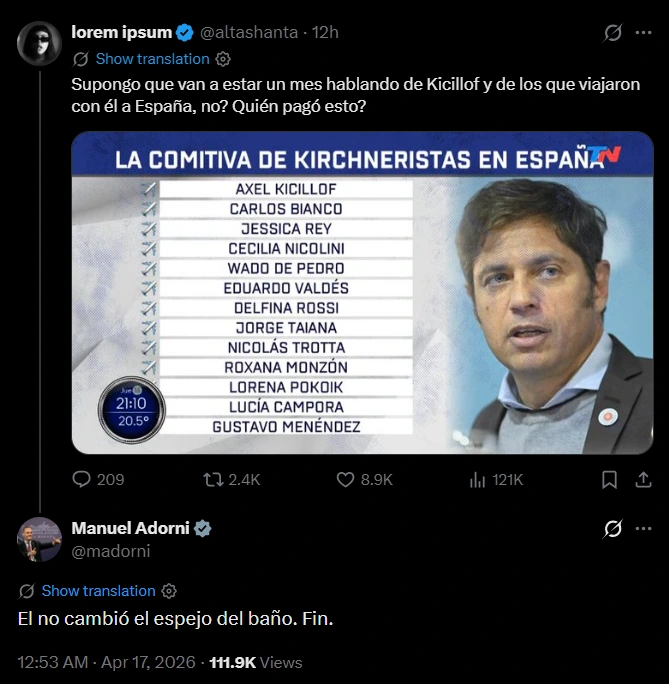
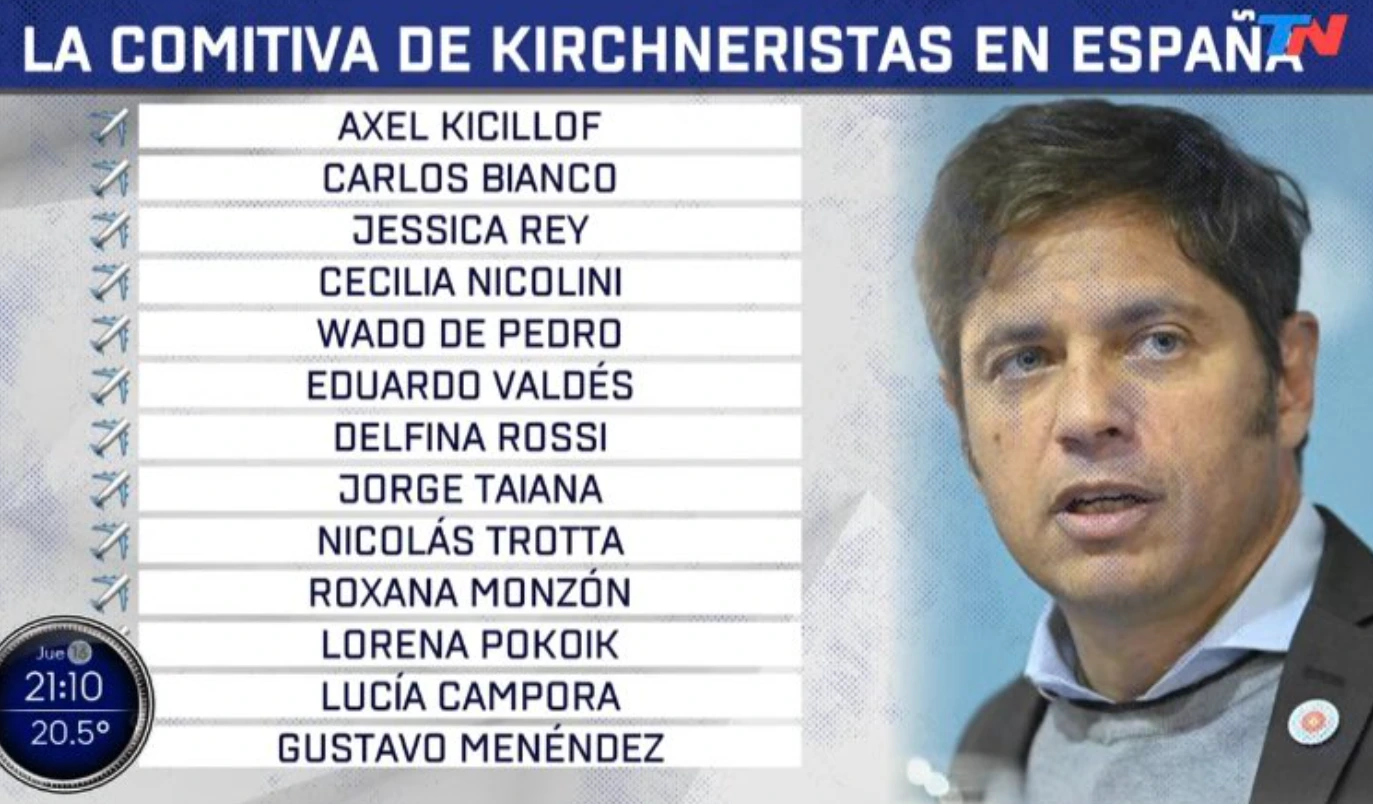
The dissemination of the list of leaders who accompanied Axel Kicillof on his trip to Spain once again exposed a scheme that combines discretionary use of public resources, lack of transparency and an obvious double standard of media.
This level of investment is not neutral: it configures a system where a large part of the media depend, to a greater or lesser extent, on these public funds.
Within this scheme, Grupo Clarín received approximately 5% of the total Buenos Aires standard, with allocations distributed among Canal 13, TN, Radio Mitre and the Clarín newspaper, among others.
Although he does not top the ranking, these are millionaire amounts that place him among the main recipients of funds from the provincial government.
Even in monthly cuts, the flow is constant: in periods such as June, companies linked to the group received tens of millions of pesos in the official Buenos Aires standard.
A system without controls that conditions the agenda
The underlying problem is not just the amount, but the discretion. In Argentina, there is no robust law that establishes objective and transparent criteria for the distribution of the official pattern
.
This allows governments to use these resources as a tool for indirect influence on the media.
In this context, the lack of research on Kicillof's trip — its cost, its usefulness and its entourage — ceases to be a coincidence and begins to appear to be part of a pattern.
A case that once again puts media credibility in crisis The
episode not only impacts the figure of Kicillof, but also the entire Argentine news system
.
The combination of million-dollar patterns, lack of controls and selective coverage ends up eroding public trust and fueling the perception that certain political sectors enjoy media protection.
In a context of economic crisis, where every peso of the State should be under scrutiny, silence in the face of this type of situation only deepens disbelief.
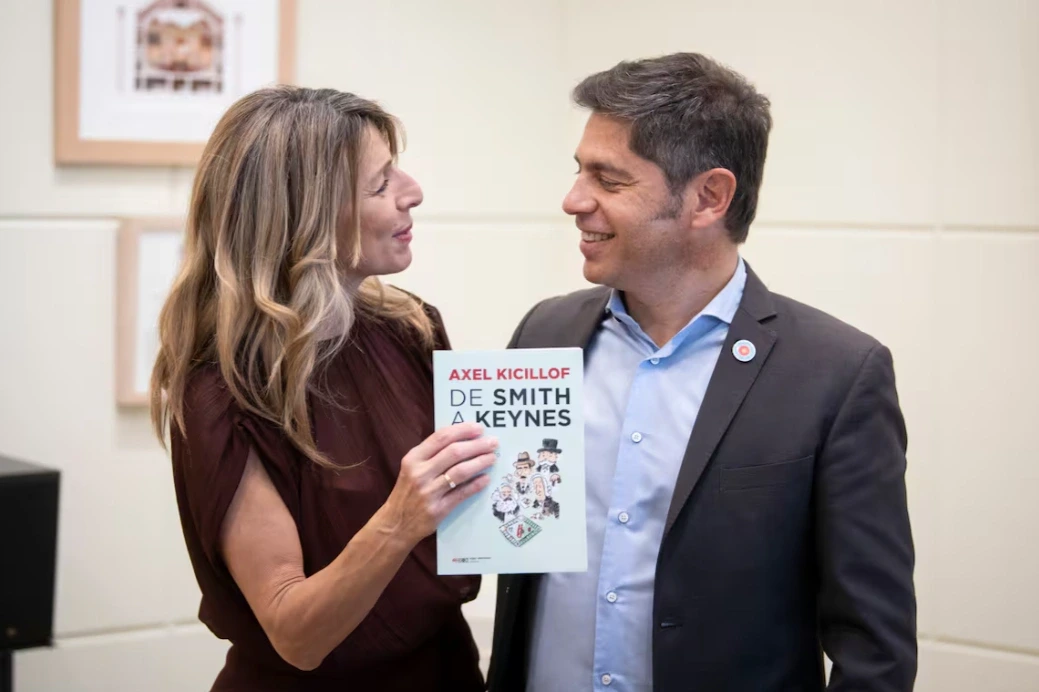
The list of Kirchner officials and leaders who were part of the entourage that accompanied the Buenos Aires governor, Axel Kicillof, on his tour of Spain, began to circulate on social networks.
The list includes names from his closest political circle, which quickly ignited public debate: not only because of the size of the group, but also because of the lack of clear explanations about the specific objective of the trip and its results.
The questions are basic but compelling: Who paid for that trip? What specific benefit did the province of Buenos Aires obtain? Why was such a large entourage necessary
?
So far, there are no clear official answers.
Double rod: when it's Adorni, it's a scandal; when it's Kicillof, silence
The contrast with other cases is inevitable. National government officials, such as Manuel Adorni, are often subject to permanent coverage, with criticism and questioning even for
minor issues.
However, an international trip with a large political entourage, potentially financed with public resources, had practically no treatment in the mainstream media.
This double standard is not new, but it is once again clearly stated: the rod changes according to the political sign.
The official pattern: the key behind the media shield
To understand this silence, we must look at a central fact: the volume of official guidelines that the province of Buenos Aires manages
.
According to official figures released in 2025, Kicillof's management spent between $58.3 billion and more than $62.4 billion in official advertising in a single year, an all-time record for communication spending.