President Javier Milei dismantled this Friday the political and media operation surrounding private credit delinquency and rejected that the deterioration recorded in recent months can be directly attributed to the economic policy of his Government.
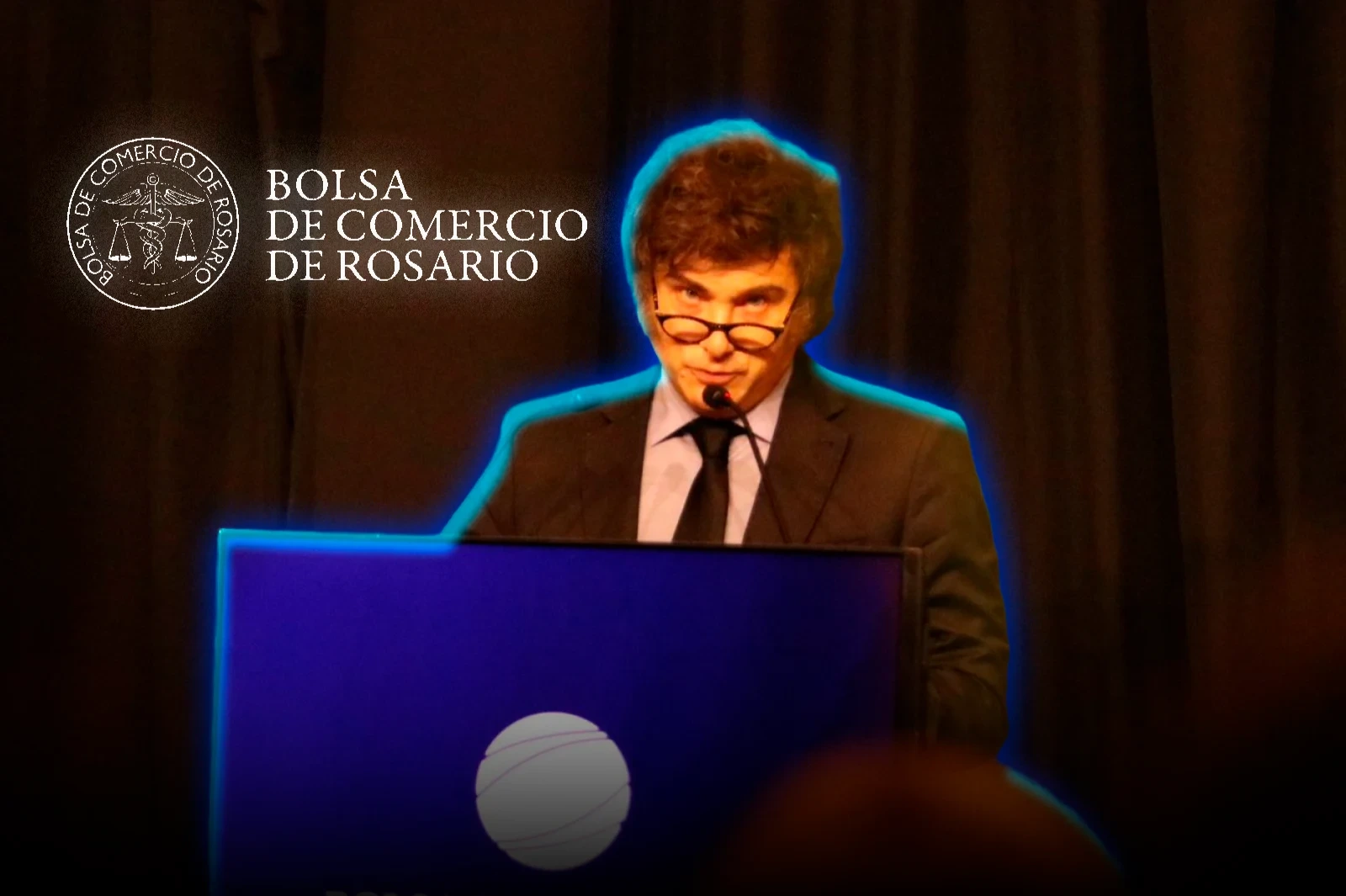
During his speech for the 142nd anniversary of the Rosario Stock Exchange, the president dedicated a good part of his presentation to explaining the functioning of the credit market and questioned the diagnosis that presents the increase in delinquency as an exceptional crisis. “There are no elements to blame the Government's policy for what is happening in terms of delinquency”, he stated.
Javier Milei spoke at the Rosario Stock Exchange: “I announced my policy and I fulfilled it”
Milei pointed out that Argentine levels must be analyzed in an international perspective and asked “why so much noise?” around the indicator. As he explained, the current delinquency is mainly linked to loans originated during 2024, when many operations were agreed upon under expectations of significantly higher inflation.
“Since the economic program was more successful than expected, the dilution was not what was anticipated”, he maintained. In other words, debtors had taken financing with rates that incorporated an inflation expectation that ultimately fell much faster than expected.
The presidential argument also coincides with a change in the trend of the latest official data. According to the Central Bank, in June the irregularity of bank financing to the private sector decreased to 7.6%, while among families it remained stable at 12.8%, interrupting a sequence of 19 consecutive months of increases.
In credit cards, delinquency even fell to 12.6%. Milei compared these values with the level that, as he pointed out during his presentation, credit cards record in the United States, close to 13%, to reject that Argentina is going through an extraordinary anomaly.
Milei rejected that taxpayers pay private debts
The president was equally forceful in response to proposals for state intervention to assist debtors or financial entities. “Why should we reach into the pockets of all citizens to rescue banks, to rescue non-bank entities?”, he posed.
Milei warned that a forgiveness or rescue financed by the State would create a problem of “moral hazard”, by transferring the cost of contracts made between private parties to society as a whole. “If I make a deal with my counterpart and I make a mistake, why the hell should all of you pay? It’s immoral”, he asserted.
Without resorting to a socialization of losses, the President announced that the financial system is working on mechanisms to renegotiate debts, with rates around 20% and terms of up to three years. Additionally, he noted that the Government is advancing in tools to improve the information available when taking out loans and strengthen financial education.
For Milei, behind the establishment of the issue there is also a political component looking towards 2027. “We are entering the election year,” he warned, and accused his opponents of using delinquency to generate uncertainty and preserve “the prebendal and corrupt status quo”.