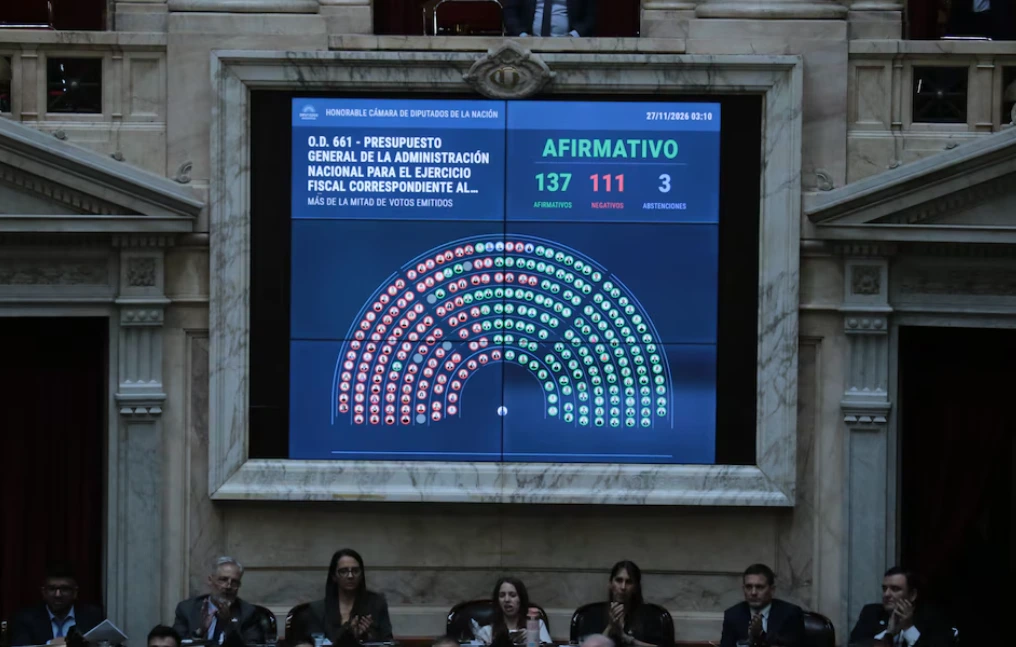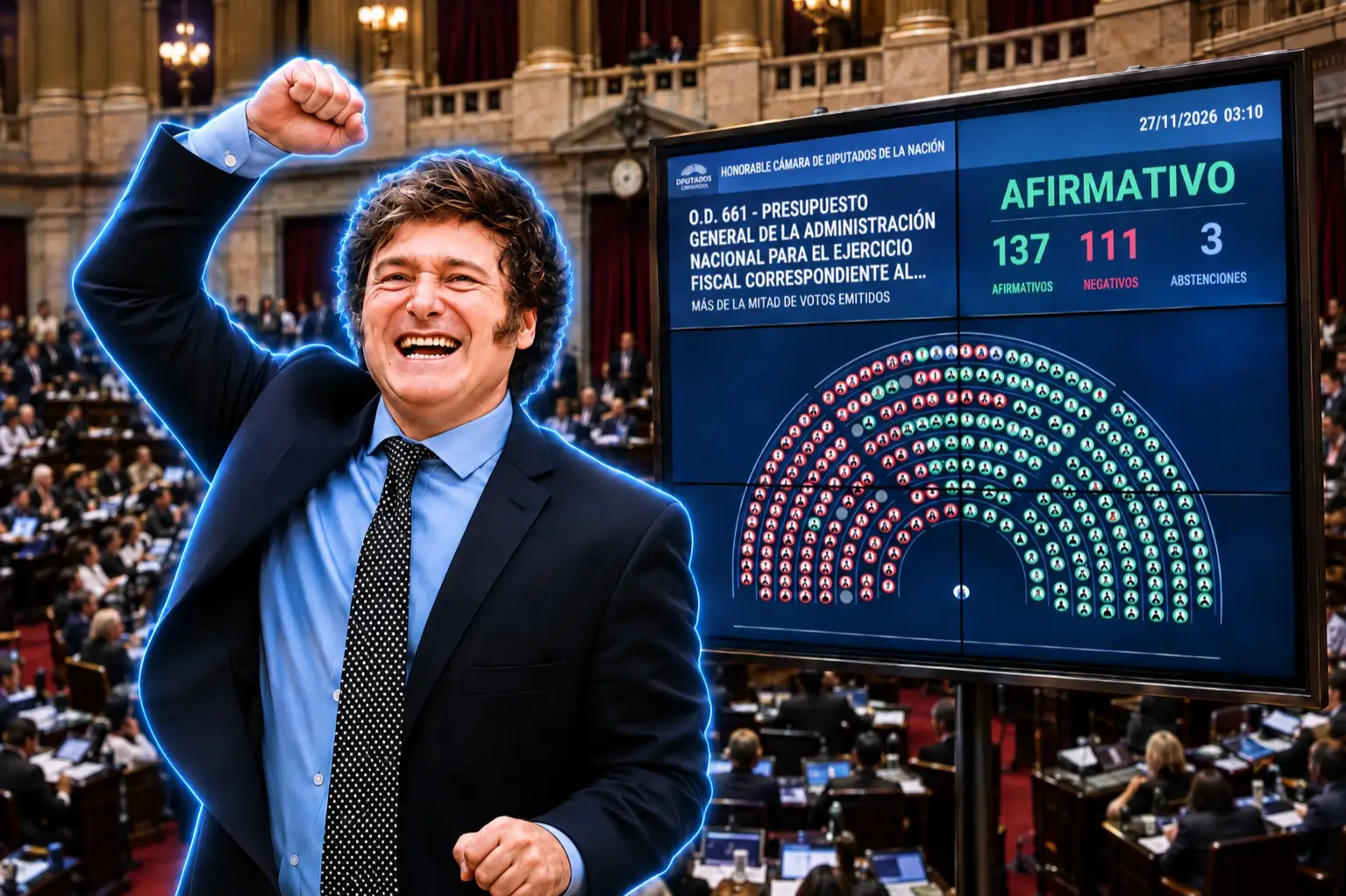

The government of Javier Milei achieved an important legislative victory by obtaining the preliminary approval of the 2027 Budget in the Chamber of Deputies, after a debate that lasted more than twelve hours. The project received 137 affirmative votes, 111 negative votes, and three abstentions, with the support of allied blocs and dialoguing governors.
The approval represents a fundamental advance for the libertarian administration, which seeks to consolidate the balance of public accounts as the main tool to sustain macroeconomic stability and leave behind decades of fiscal deficit and monetary financing of the State.
The so-called "law of laws" establishes a projected growth of the Gross Domestic Product (GDP) of 4%, an annual inflation of 18%, and an estimated official dollar at $1,847.60 for December 2027.
Zero deficit is once again at the center of the government's economic planning, which aims to maintain fiscal order, reduce the weight of the State, and create conditions of predictability for private investment.
The 2027 Budget consolidates Milei's economic program
During the presentation of the project, Deputy Bertie Benegas Lynch, president of the Budget Committee and spokesperson for the ruling party, highlighted the three fundamental principles that guide the government's economic policy: zero deficit, reduction of public spending, and predictability.
As he explained, for 2027, consolidated resources are projected at $219.3 trillion and total expenditures at $216 trillion, with an estimated financial surplus of 0.2%.
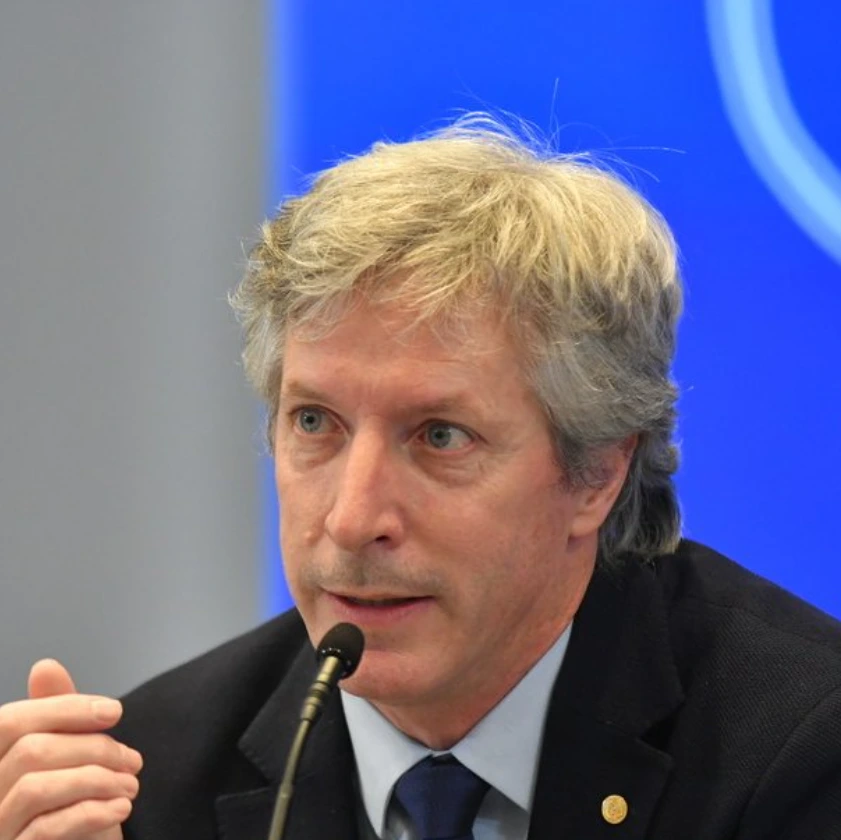
The legislator stated that, if the forecasts are met, Argentina would achieve four consecutive years of financial surplus, an unprecedented result in the country's recent economic history.
Benegas Lynch also defended the process of reducing the State and assured that society recognizes the benefits of the monetary and fiscal order promoted by Milei.
The official strategy seeks to maintain a scheme in which the State does not spend more than it collects, avoiding resorting to monetary issuance to cover budgetary imbalances.
Bornoroni defended fiscal balance as a state policy
The closing of the debate was led by Gabriel Bornoroni, president of the La Libertad Avanza bloc, who defended the government's economic orientation and questioned the models that led Argentina to successive fiscal crises.