
Argentinian companies are increasingly looking towards international markets. Almost 70% of companies currently operating exclusively within the country plan to start exporting in the next three years, according to the Santander Global Trade Barometer 2026, a survey that reflects the growth expectations of the business sector.
The study, presented by the Spanish bank Santander, showed that 66% of Argentinian companies without international activity are considering expanding into other markets. This trend is combined with positive expectations about business evolution: 55% of the surveyed firms expect to increase their revenues in the next 12 months.
The results show a shift in the perspectives of Argentinian entrepreneurs, who are identifying new business opportunities outside the domestic market. China emerges as the primary destination of interest, followed by Chile, Brazil, Mexico, and Canada.
The survey is known in the context of a transformation of the Argentinian economy, with the government of Javier Milei promoting an agenda of trade openness, deregulation, and seeking closer ties with international markets. Although the report does not directly attribute business expectations to official policies, its results reflect companies' interest in expanding their operations and finding new sources of growth.
Argentinian companies project growth and conquest of new markets
Optimism is also evident in the recent evolution of revenues. Over the past 12 months, 46% of the surveyed Argentinian companies reported an increase in their billing. For the next year, that expectation rises to 55%.
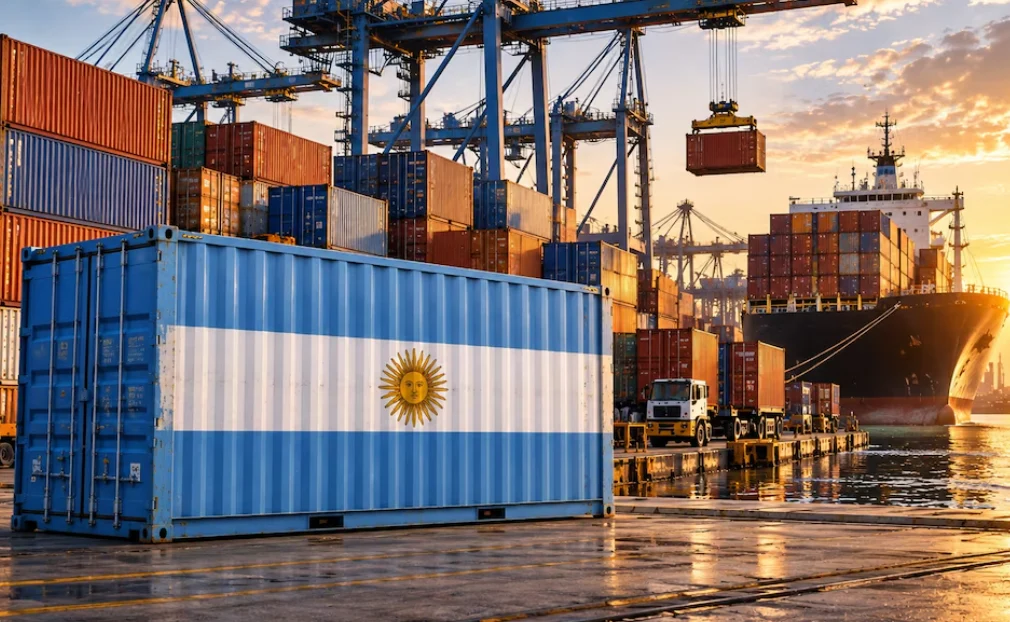
However, internationalization still represents a challenge for a significant part of the private sector. Only 18% of Argentinian companies expect that more than half of their revenues will come from international markets in the coming year, compared to 25% recorded in the average of the surveyed countries.
Regarding commercial destinations, China leads the opportunities identified by Argentinian companies, while Chile and Brazil complete the top three spots. Mexico and Canada also appear among the markets that attract the interest of companies.
The study collected responses from 302 Argentinian business leaders, within an international sample of 6,059 participants distributed across nine markets. The fieldwork was conducted between August 10 and September 14, 2026.
Ana Botín, president of Santander, highlighted in the introduction of the report that, despite economic fragmentation and international political tensions, companies continue to identify growth opportunities beyond their borders.
The executive stated that the political debate could convey the impression that global trade is losing relevance, but noted that companies continue to bet on international expansion.
Inflation and bureaucracy still represent obstacles
The survey also identified the main problems faced by Argentinian companies in expanding their operations.
Inflation tops the list of current concerns, mentioned by 35% of respondents. This is followed by the costs of transporting goods and financing, both cited by 21%.
For the next 12 to 24 months, concerns focus on low global economic growth and geopolitical risks in major markets, with 32% mentions in each case. Exchange rate volatility ranks third, with 28%.
Bureaucracy also constitutes one of the main barriers to internationalization. 27% of companies identified it as an obstacle to realizing their expansion plans. Next are difficulties in identifying the most suitable markets, at 24%, and effective access to new destinations, at 19%.