The agreement also incorporates special criminal laws. This package includes the Legal Regime of Intellectual Property, the illegal practice of veterinary medicine, and the protection and conservation of wildlife.







The Nation and the City signed two agreements to transfer criminal competencies and expedite the judicial response
The agreement also incorporates special criminal laws. This package includes the Legal Regime of Intellectual Property, the illegal practice of veterinary medicine, and the protection and conservation of wildlife.





One of the most relevant points is the transfer of Juvenile Criminal Justice. The City’s judiciary will exclusively take on the adjudication of crimes committed by adolescents aged 14 to 18, as well as the adoption of protective measures for minors under 14 involved in acts classified as crimes.
Furthermore, in cases where both minors and adults are involved in the same incident, the local judiciary will assume jurisdiction to investigate and adjudicate, so that the case is not divided. This point directly aims to avoid delays, overlaps, and conflicts between jurisdictions.

Tapia stated that the City is being transferred “the judicial competencies that correspond to it” and that, 30 years after autonomy, they were still administered by the Nation. He also affirmed that the agreement will allow for the consolidation of public policies to restore order and security, with an efficient and accessible justice system.
The measure comes after President Javier Milei delegated to the Ministry of Justice the authority to negotiate and sign agreements with the City to advance the transfer of criminal competencies. The decision was formalized through Decree 547/2026 and will allow local crimes to be handled by the local judiciary in the Autonomous City of Buenos Aires.
The Ministry of Justice of the Nation and the Ministry of Justice of the Autonomous City of Buenos Aires signed two agreements to transfer new criminal competencies to the local judiciary, in a key step to deepen the autonomy of the City, streamline response times, and address an institutional debt that has lasted for decades.
The agreements were signed by Juan Bautista Mahiques and Gabino Tapia, and include the transfer of crimes from the National Penal Code, offenses provided for in special criminal laws, and competencies related to Juvenile Criminal Justice. To come into effect, both agreements must be approved by the National Congress and the local Legislature.
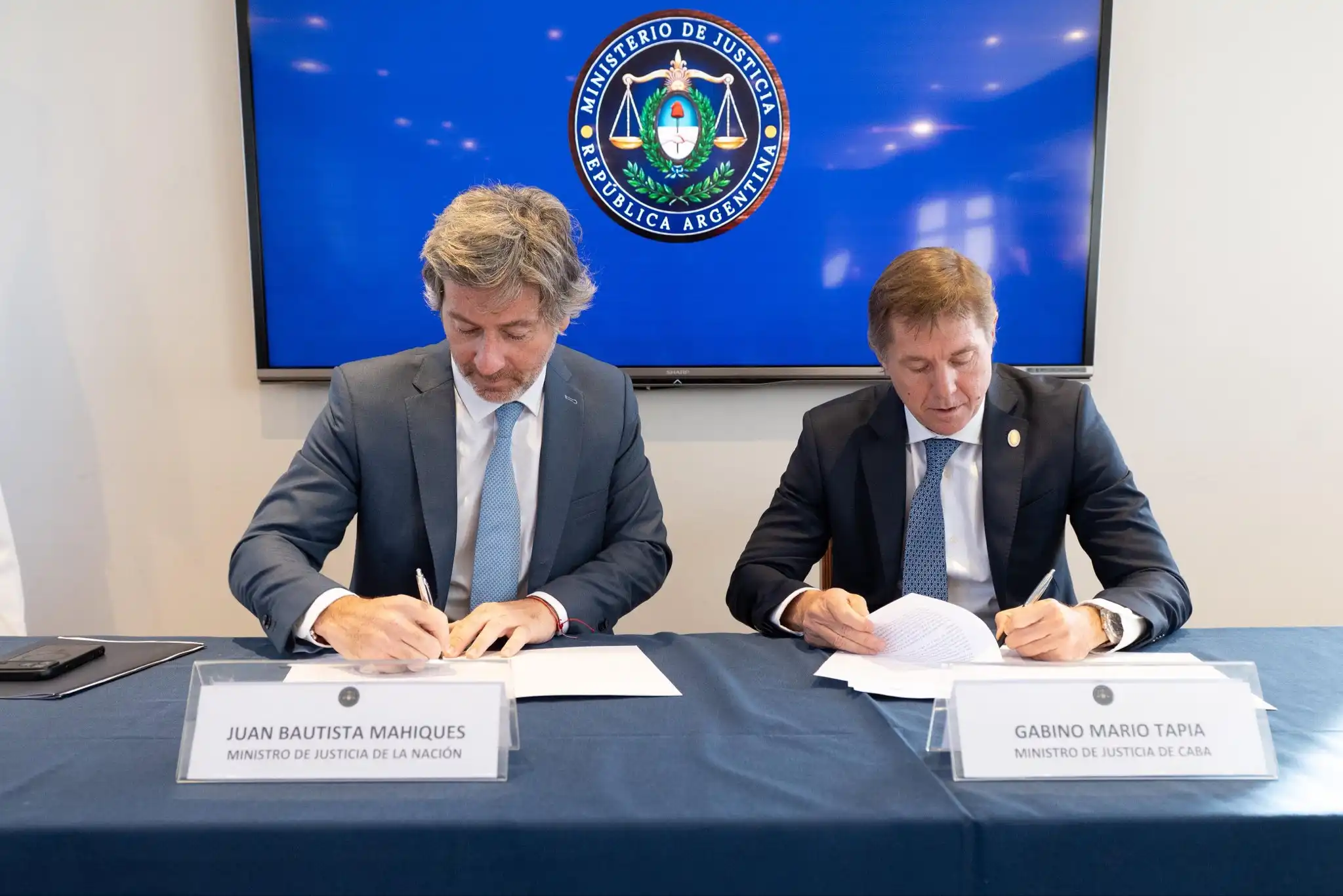
The central objective is for the City to take on cases related to non-federal crimes that, despite the local autonomy recognized since 1994, were still under national administration. In practice, the aim is to achieve a closer justice system, with better resource distribution and a faster response.
Among the crimes that will fall under local jurisdiction are crimes against honor, such as defamation and slander. It also includes crimes against sexual integrity, including sexual abuse, sexual abuse followed by death, corruption of minors, promotion or facilitation of aggravated prostitution, exploitation of prostitution, and kidnapping.
The transfer also covers crimes against liberty, such as reduction to servitude, unlawful deprivation of liberty, abduction of minors, and coercive threats. Additionally, it includes crimes related to traffic safety, such as obstructing the normal functioning of transportation.