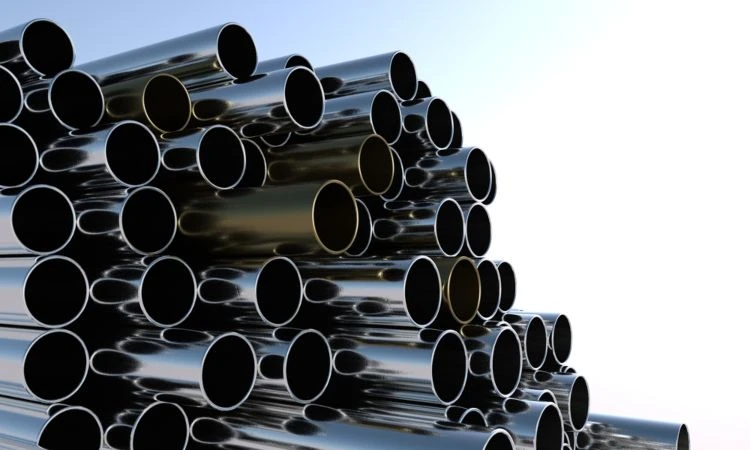
The Government of Javier Milei has removed a new obstacle inherited from the administration of Alberto Fernández and Cristina Kirchner, regarding a key input for the industry. The Ministry of Economy has concluded the review of the antidumping regime applied since 2020 to aluminum tubes from China and decided to lift the surcharges that made their entry into the country more expensive.
The decision comes just days after the libertarian administration officially announced the elimination of export duties for nearly 1000 industrial products, through Decree 566/2026. That measure affected sectors such as the chemical, petrochemical, steel, automotive, and metallurgical industries, among others, and marked a new advance in the agenda of fiscal relief and competitiveness improvement.
Less than a week ago, Milei's administration eliminated tariffs on 1000 industrial products.
Now, the Government complements this policy with a reduction of costs on fundamental inputs for the national industry. On one hand, the administration removes taxes so that the industry can export under better conditions; on the other hand, it eliminates artificial surcharges so that companies can produce with more competitive inputs.
The regime that has just been lifted was imposed in 2020, during the administration of Alberto and Cristina, under the argument of protecting local production against prices considered unfair. At that time, the antidumping duties for Chinese aluminum tubes reached 75.52%, a burden that practically blocked the entry of that product into the Argentine market.
According to the analysis of the National Commission on Foreign Trade, during the validity of the measure, Chinese imports accounted for less than 2%, when they previously represented about 35% of the market. In parallel, local production gained market share and came to cover more than half of domestic consumption supported by taxpayers.
The antidumping duties for Chinese aluminum tubes reached 75.5%
Aluminum tubes are used by multiple production chains, including white goods, automotive, transportation, furniture, sports equipment, and other industrial goods. Therefore, access to this input under better conditions directly impacts sectors with greater scale and higher employment generation capacity.
The CNCE also noted that local production specific to aluminum tubes remained at a reduced structure, close to 10 workers, while the industries using the input have a much broader weight within industrial activity. It also observed that not all products imported from China directly competed with the national offer, as in some cases they served as complements due to differences in specifications or uses.
The review had been requested by Aluminium Manufacturers Express S.A. once the stipulated period for the regime had elapsed. According to the official analysis, the company maintained adequate profitability levels during the protection period, improved its revenues, and did not show significant investments or a relevant export strategy during the evaluated period.
The measure benefited an industry with 10 employees while increasing the production costs for thousands.
Although the agency acknowledged that there could be a risk of dumping recurrence if the measure was eliminated, it concluded that the impact of maintaining protection on the market and on the user sectors was too significant to justify its continuation.
In this way, the Government deepens an industrial policy based on removing taxes, opening competition, and dismantling regulations. After eliminating export duties on 1000 industrial products, Milei now advances on another legacy of Kirchnerist interventionism.