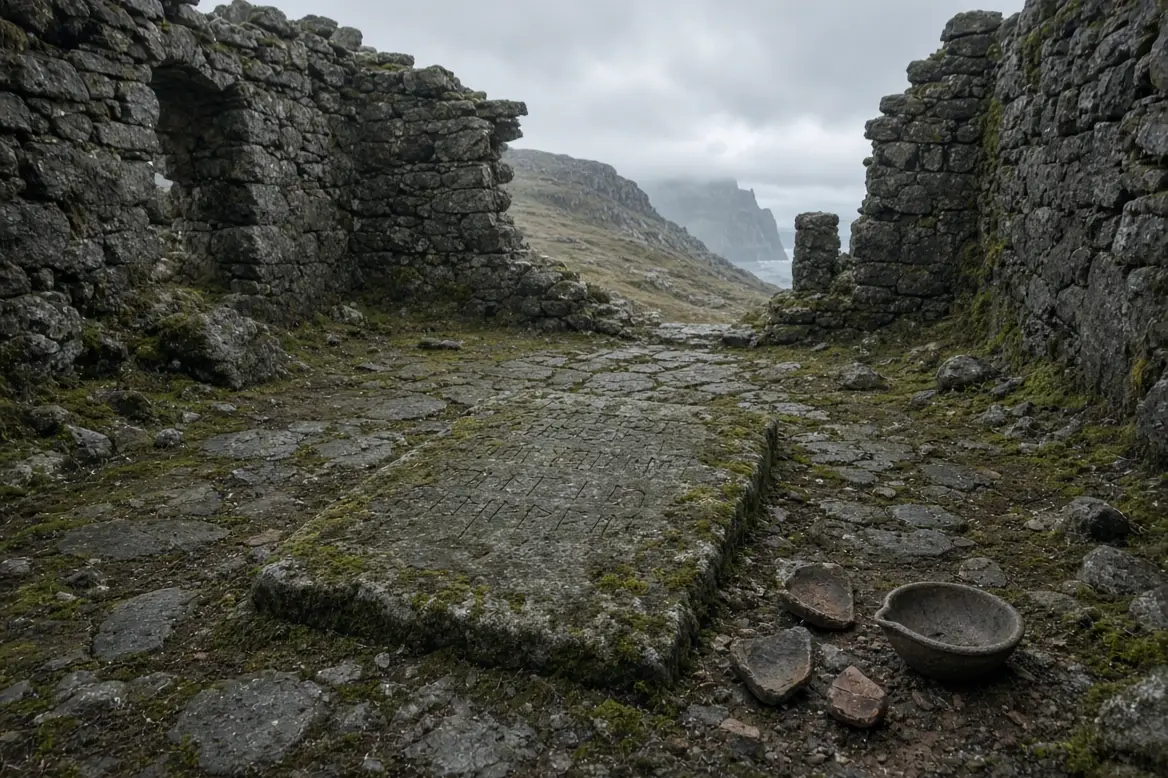
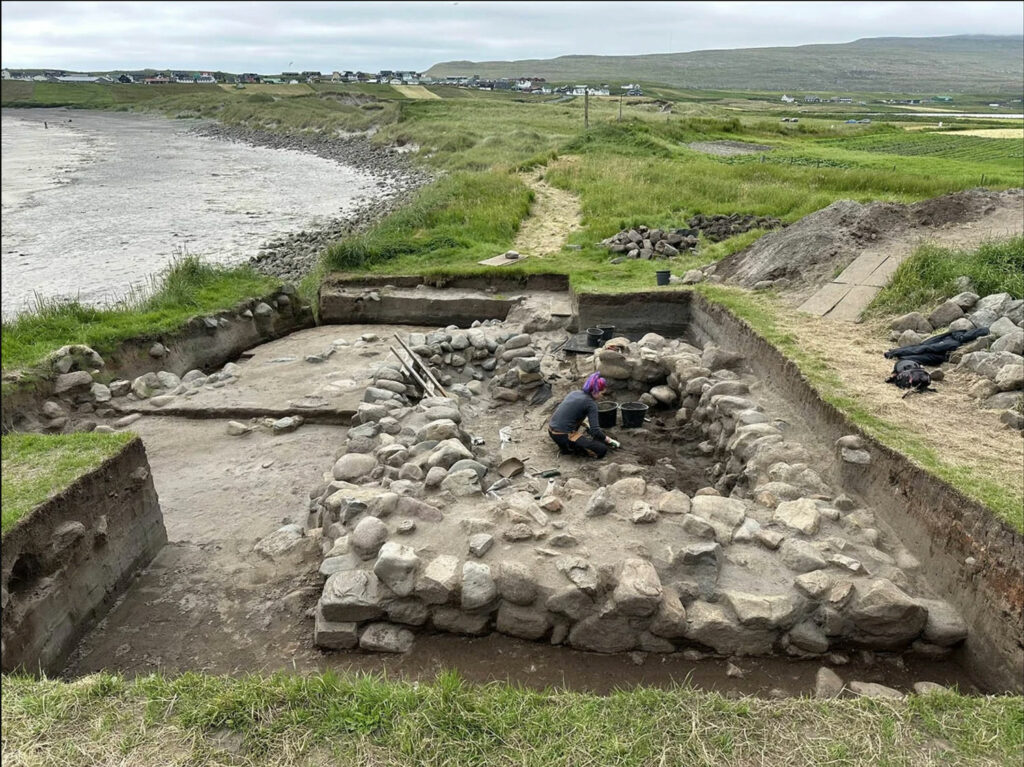
Archaeologists unearthed a centuries-old runestone in the ruins of a medieval prayer house located in Á Sondum, on the island of Sandoy, in the Faroe Islands. The object was embedded in the floor of the chapel-like structure and represents a rare find in the archipelago.
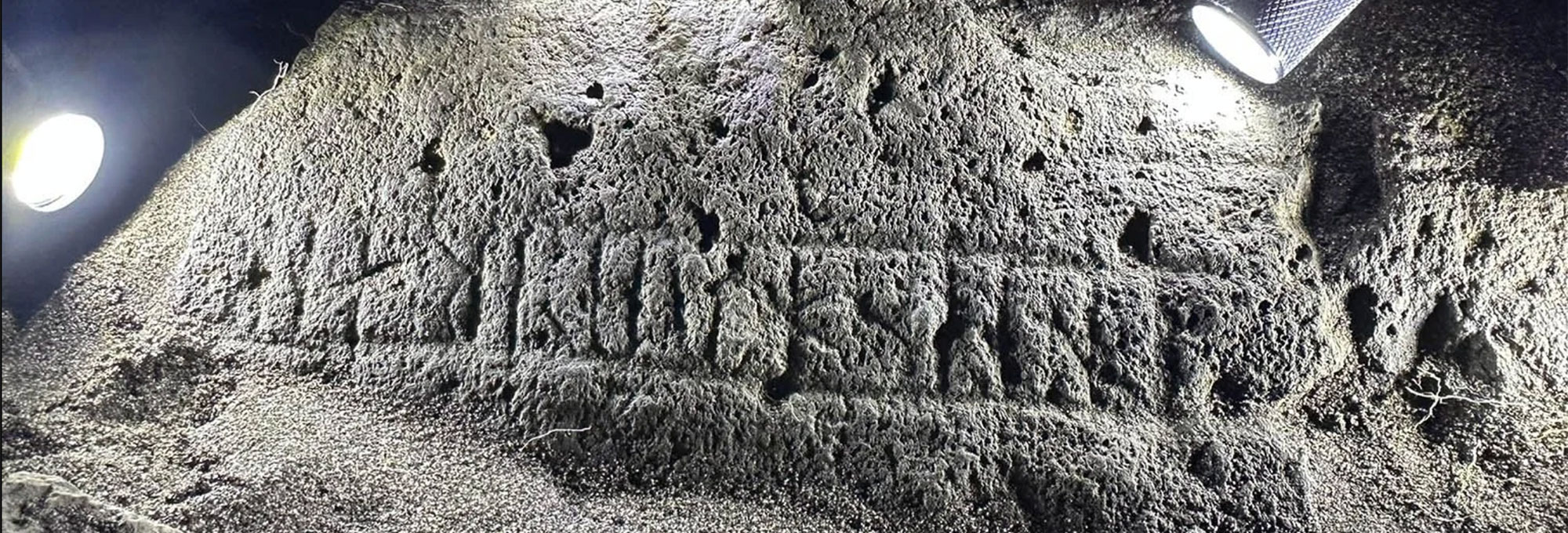
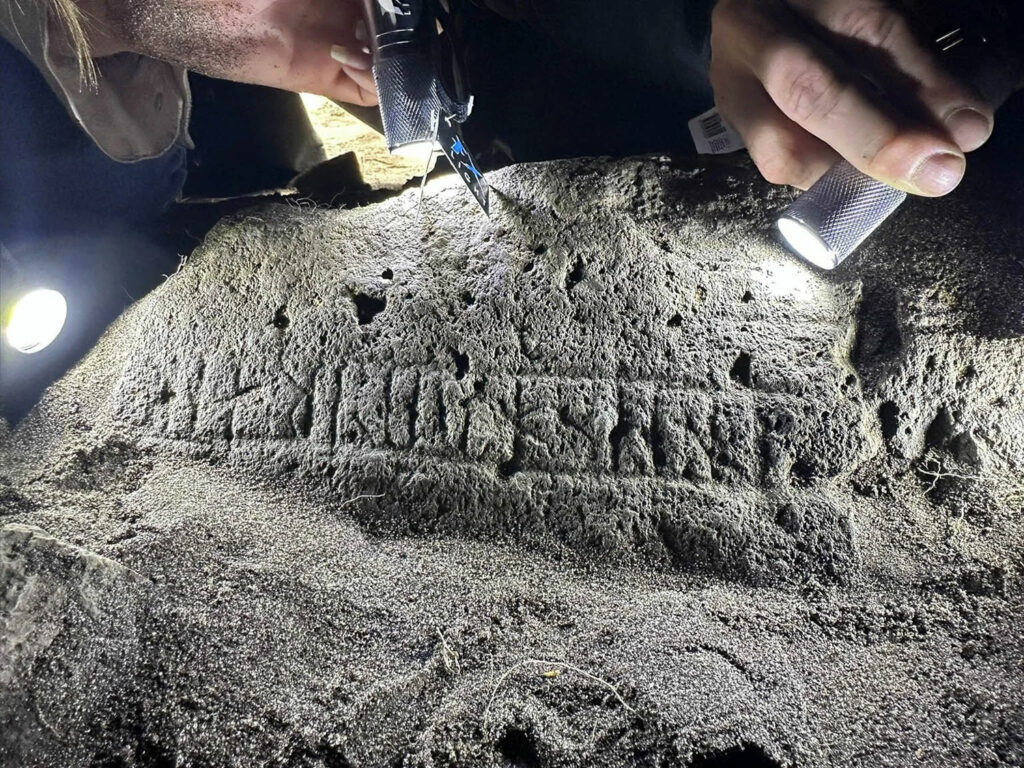
Runic inscriptions are exceptionally scarce in the Faroe Islands. So far, only a few examples are known. Specialists from the National Museum managed to partially translate the text. Some legible characters seem to correspond to the Old Norse phrase “Her hvílur,” which means “Here lies” or “Here rests.”
Researchers believe that the stone may have served as a grave marker for a significant individual. Its location within the floor of the building reinforces the idea that it was part of a ritual or commemorative context linked to the Christian use of the site.
Alongside the runestone, other interesting objects were recovered. Among them are fragments of a small sculpture depicting the Virgin Mary holding the child Jesus, as well as a kola, a small oil lamp typical of the time.
A Testament to Religious Transition
The building and the materials found inside date back to around the year 1000. This period is key to understanding how Norse pagan traditions gradually merged with Christianity in the Faroe Islands.
The site offers scholars a fresh perspective on the early Christian times in the archipelago. The combined presence of a runic inscription with funerary references and a Marian image illustrates the overlap of practices and beliefs during this stage of cultural change.
The rarity of runes in the area makes this discovery a significant contribution. Each new example allows for a finer understanding of the use of runic writing in island communities that maintained strong ties with the continental and Scandinavian Norse world.
Work in Á Sondum continues to provide data about the daily and religious life of those who inhabited Sandoy over a thousand years ago. The stone, although only partially deciphered, is already shaping up to be a central piece for reconstructing that past.
Context of the Discovery
The site is located in an area that preserves remains of a simple-plan construction, interpreted as a space for prayer. The fact that the runestone was integrated into the floor suggests that it was not a discarded element, but rather a deliberate part of the structure at some point during its use.
The Marian sculpture and the oil lamp complete a set that speaks of devotional practices characteristic of early Christianity. At the same time, the survival of the runic formula “Here lies” recalls the continuity of funerary memory forms inherited from the pre-Christian world.
This type of finding allows specialists to closely observe the process of cultural syncretism that characterized the Christianization of the North Atlantic islands. Far from a sudden replacement, it was a progressive adaptation in which ancient objects and formulas coexisted with new images and rituals.
The research is ongoing. Future analyses of the stone and the stratigraphic context are expected to provide more precision regarding the exact date of its placement and the identity of the person to whom it may have been dedicated. For now, the discovery already significantly enriches the scarce corpus of known runic inscriptions in the Faroe Islands.