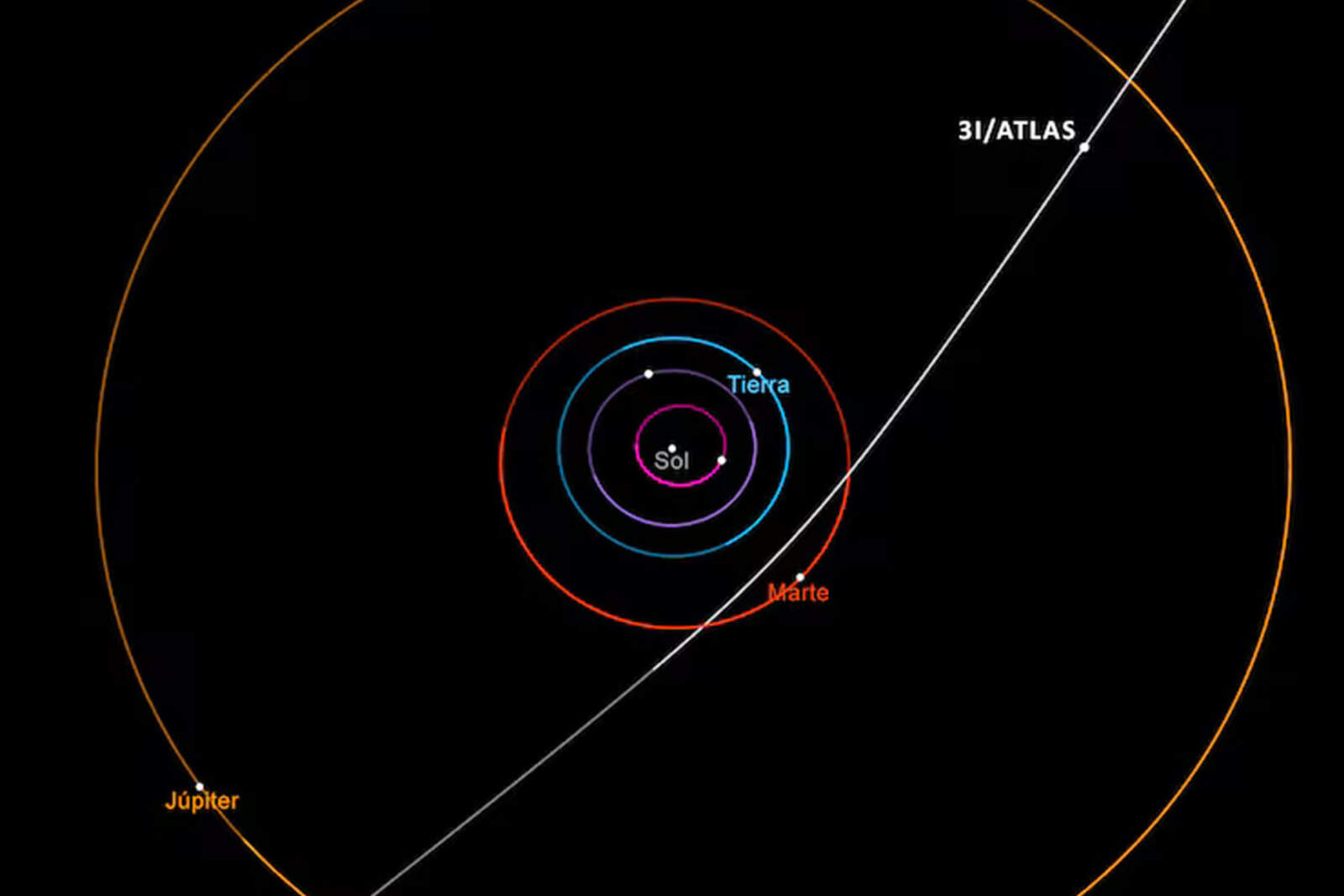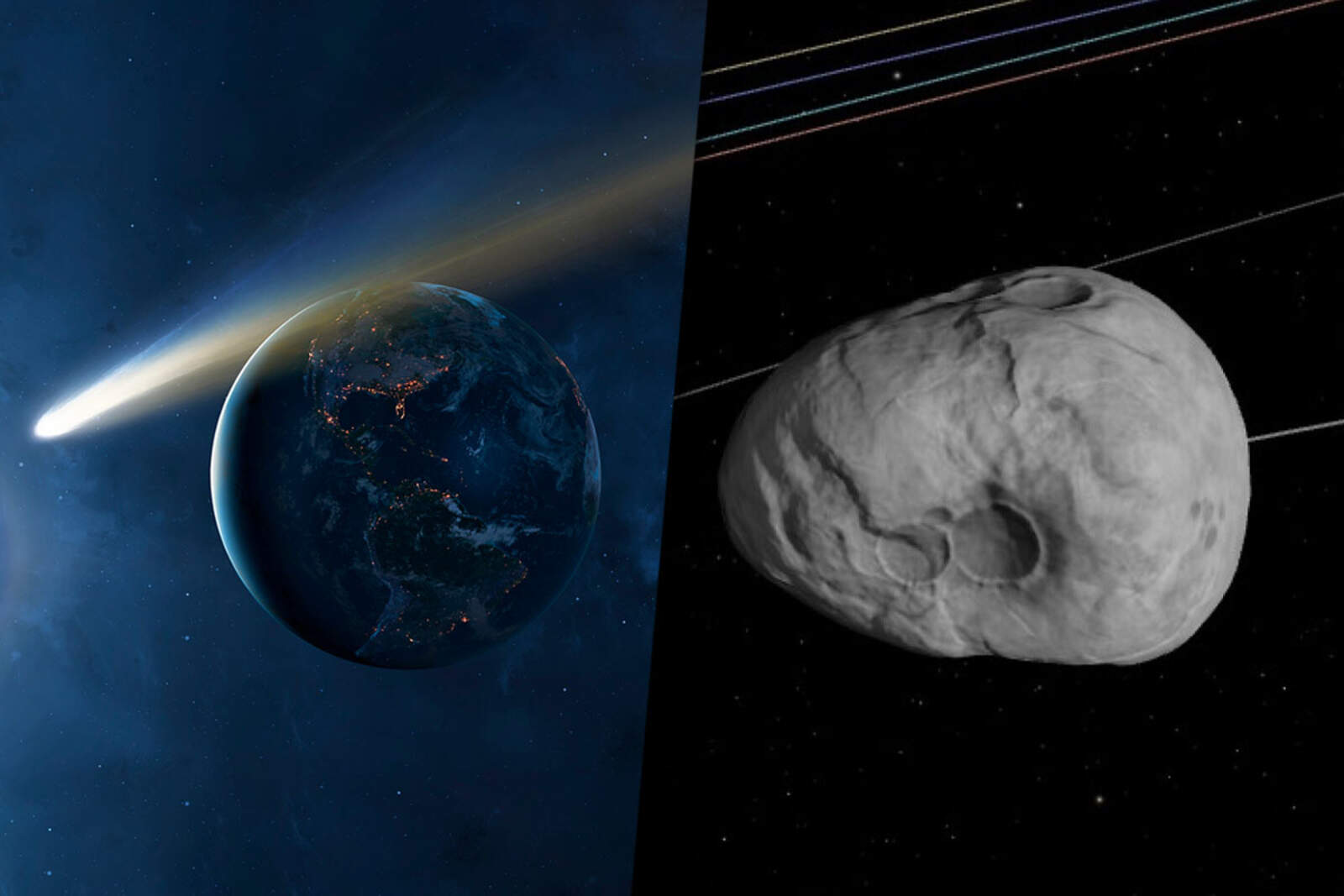

The interstellar comet 3I/ATLAS has kept the scientific community on edge since its discovery in July 2025. It is the third interstellar visitor detected in our solar system, after 1I/‘Oumuamua and 2I/Borisov.
Its unusual behavior, combined with its estimated size of between 5 and 11 kilometers (3.1 and 6.8 miles) in diameter, has sparked various theories. The observations scheduled for December will be key to solving the mystery.
An “anti-tail” that puzzled astronomers
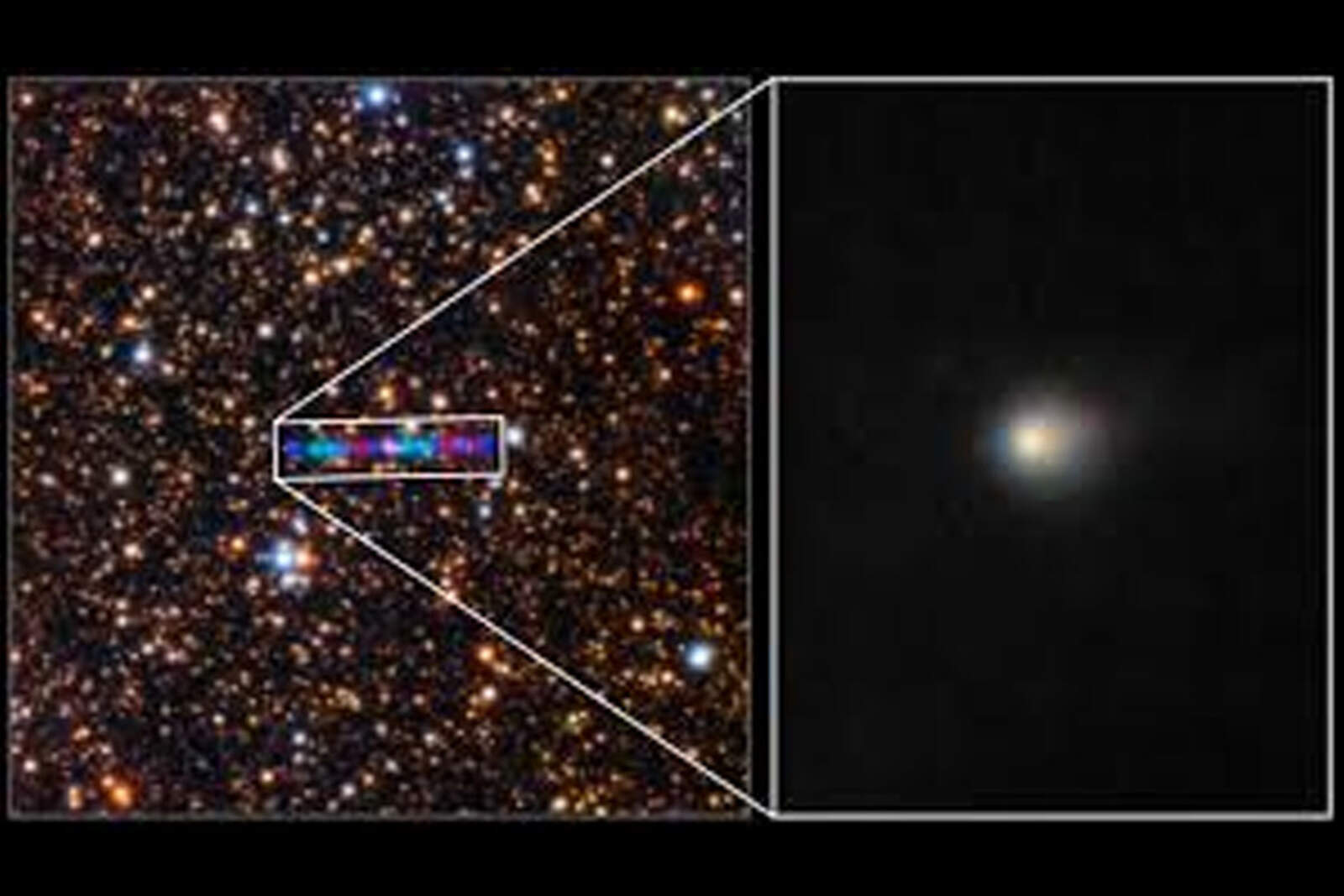
In its first months of observation, 3I/ATLAS displayed an elongated structure that pointed directly at the Sun. This “reverse tail” contradicts the typical behavior of a comet, whose trail should point away from the star.
Even the Perseverance rover managed to capture images of that trail from Mars, which increased global scientific interest.
Unexpected transformation on the way to the Sun
In September, the comet underwent a remarkable evolution. The Nordic Optical Telescope recorded the disappearance of the anti-tail and the formation of a conventional tail oriented to the east.