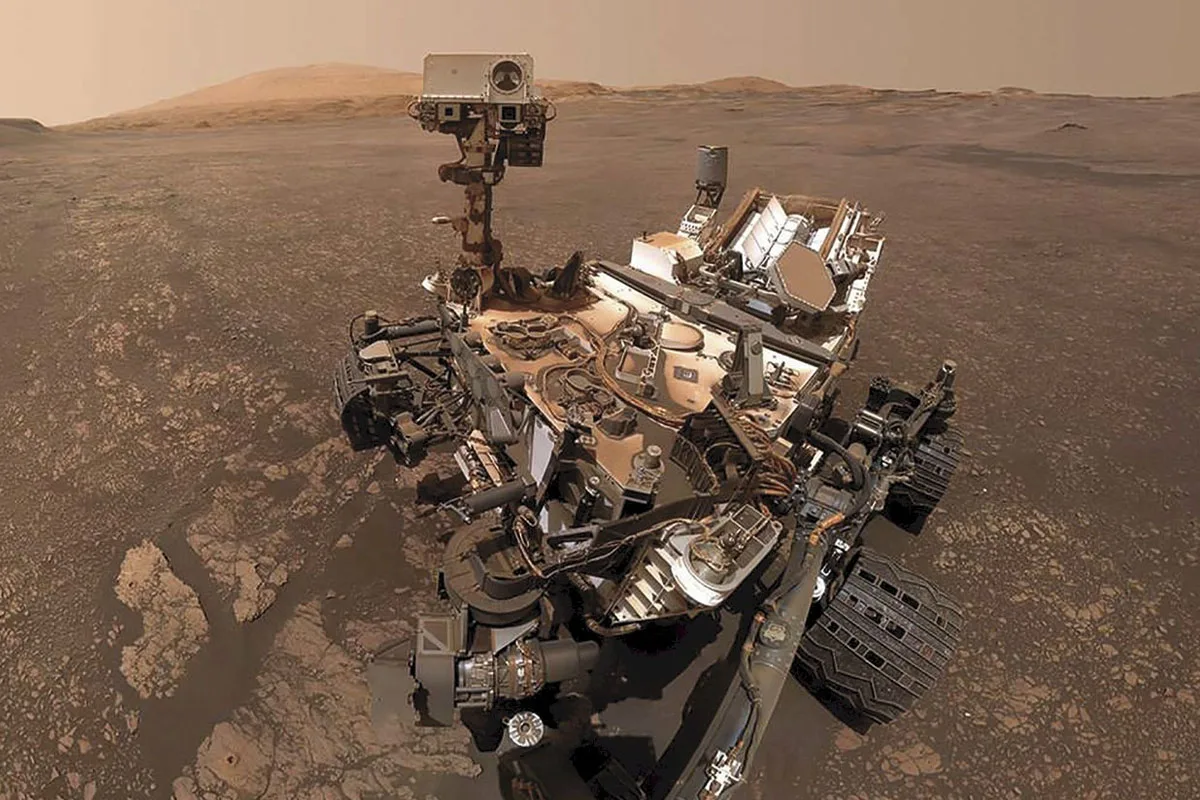
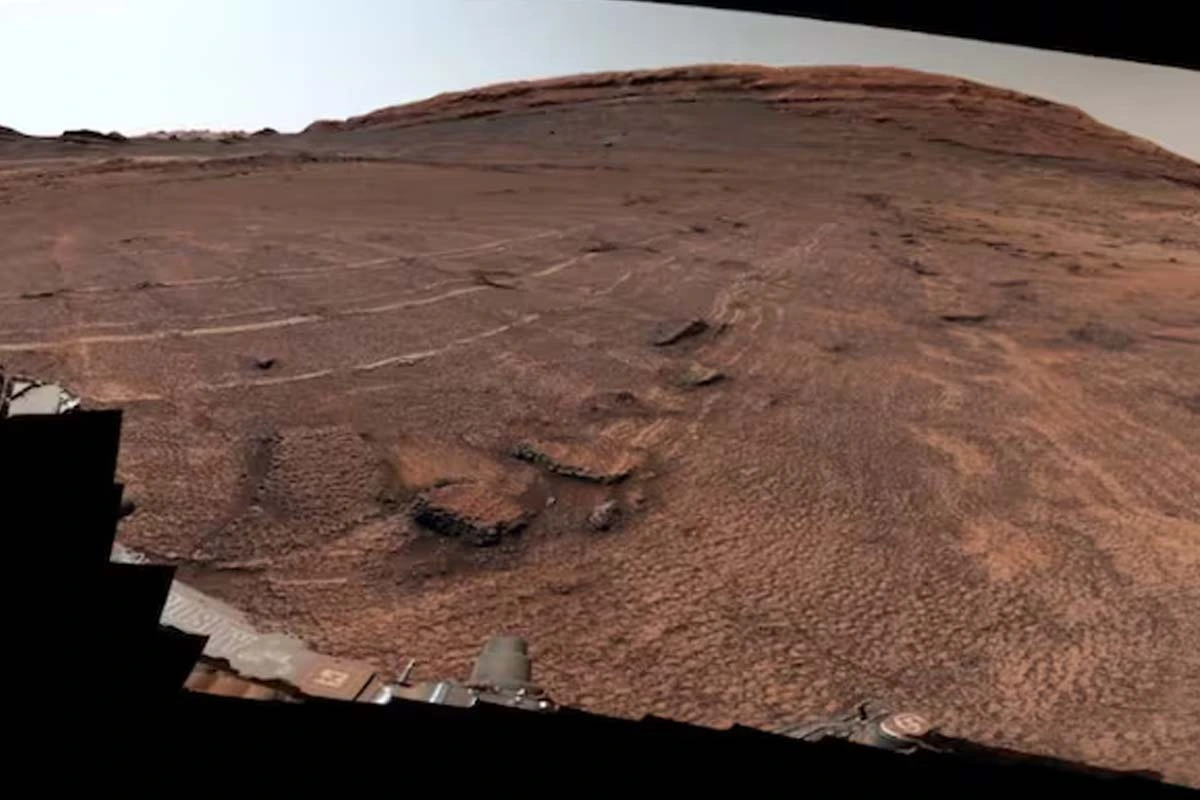
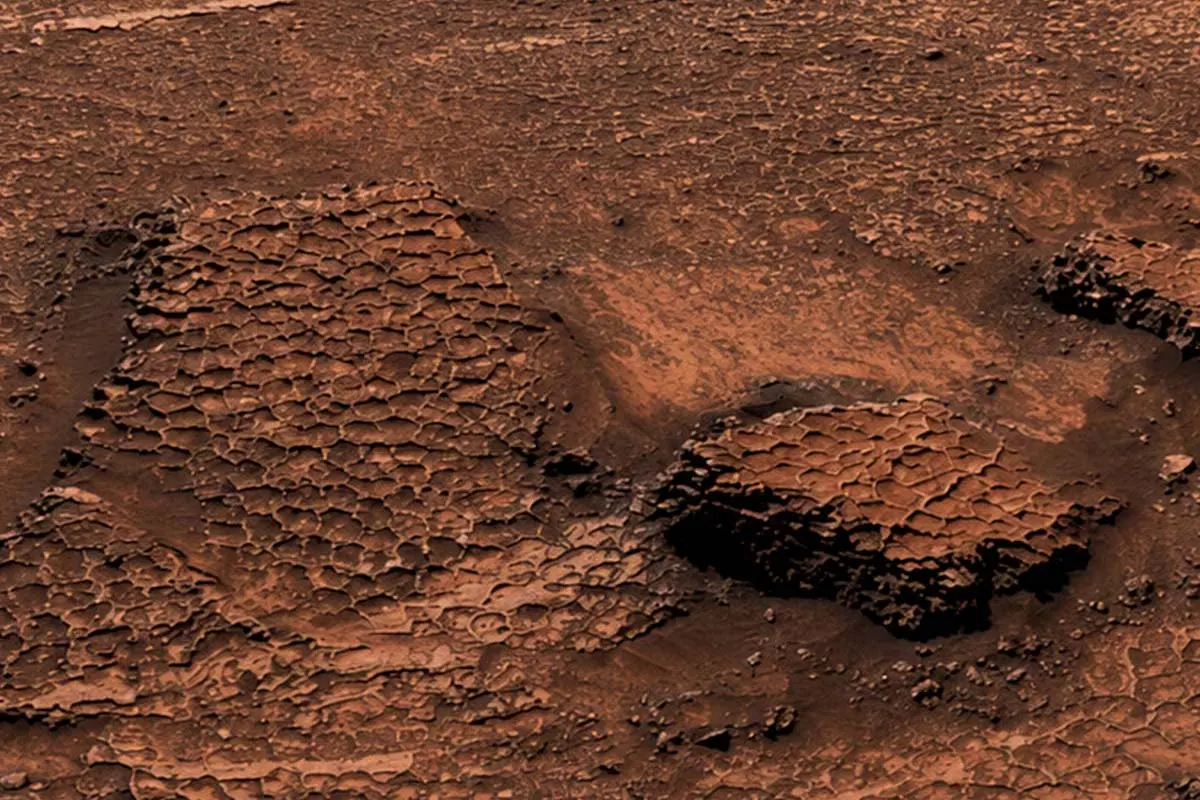
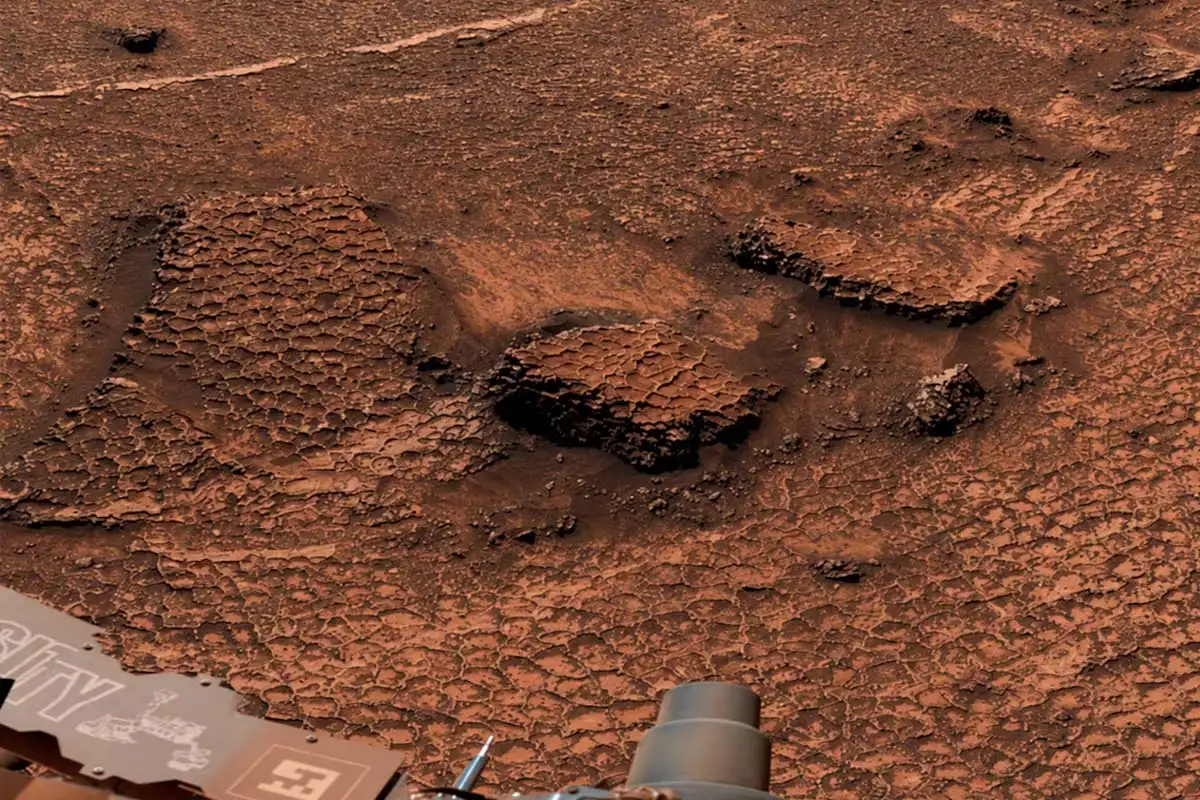
The Curiosity rover from NASAphotographed an extensive field of geometric formations shaped like a honeycomb on the surface of Mars. The structures, measuring between 4 and 8 centimeters wide, stretch across a region known as Valle Grande and make up the largest set of polygonal shapes observed so far by the mission.
The landscape was captured in a panorama, composed of 340 photos taken by the vehicle's Mastcam. The images were sent back to Earth and stitched together into a single shot.
The Curiosity rover photographed an extensive field of honeycomb-shaped formations
What the largest field of polygons detected on Mars looks like
Curiosity had previously photographed small concentrations of these shapes at other points in Gale Crater. However, this time the repetition covers the terrain to the rover's limit of vision and surrounds Miraflores, a six-meter-high hill topped with a thick layer of sand.
From the vehicle's position, the lines create an irregular pattern on the ground that extends toward the rising horizon. The scale of the set distinguishes this finding from previous records and offers a much broader area to compare sizes, shapes, and composition.
"We have seen many fascinating landscapes through Curiosity's eyes, and this sea of polygons took our breath away," said Ashwin Vasavada, a scientist on the Curiosity project at NASA's Jet Propulsion Laboratory.
How is the largest field of polygons detected on Mars
How the honeycomb-like patterns could have formed
Polygonal fractures can originate through various processes. Some similar areas previously studied by other rovers have been interpreted as mud cracks, the marks left by wet soil as it loses water and contracts.
Cycles of warm and cold temperatures can also expand and contract the material until it breaks. Another possibility points to the compaction of buried sediments, where pressure would have expelled trapped water between the particles and left the fractures imprinted in the rock.
How could honeycomb-like patterns form
The geometry alone does not yet allow for determining which of these mechanisms acted in Valle Grande. Therefore, NASA continues to analyze the chemistry of the terrain and the characteristics of each polygon.
What clues the polygons provide about water on Mars
The discovery occurred during Curiosity's ascent of Mount Sharp, a five-kilometer-high mountain located in the center of Gale Crater. The rover has been traversing its slopes since 2014 and examining rocks formed during different periods of Martian history.
Scientists believe that lakes and streams covered the lower areas of the mountain billions of years ago. Throughout its journey, the vehicle has found chemical clues that support the existence of that water-rich environment.
What clues do polygons provide about water on Mars
In April 2026, NASA reported that a rock drilled by the vehicle contained 21 carbon-containing molecules. Seven of them had never been detected on Mars, and among the identified was a nitrogen heterocycle, a type of chemical structure considered a precursor to RNA and DNA.
These compounds can be generated through biological or geological processes, so their presence does not prove that life existed. The extensive field of Valle Grande now adds another piece to that reconstruction, which could clarify how water evolved in Gale Crater.