NASA has given the green light to the ambitious Lunar Crater Radio Telescope (LCRT) project, a radio telescope that will be built on the far side of the Moon. The goal is to capture the oldest echoes of the universe from a location free from Earth's interference.
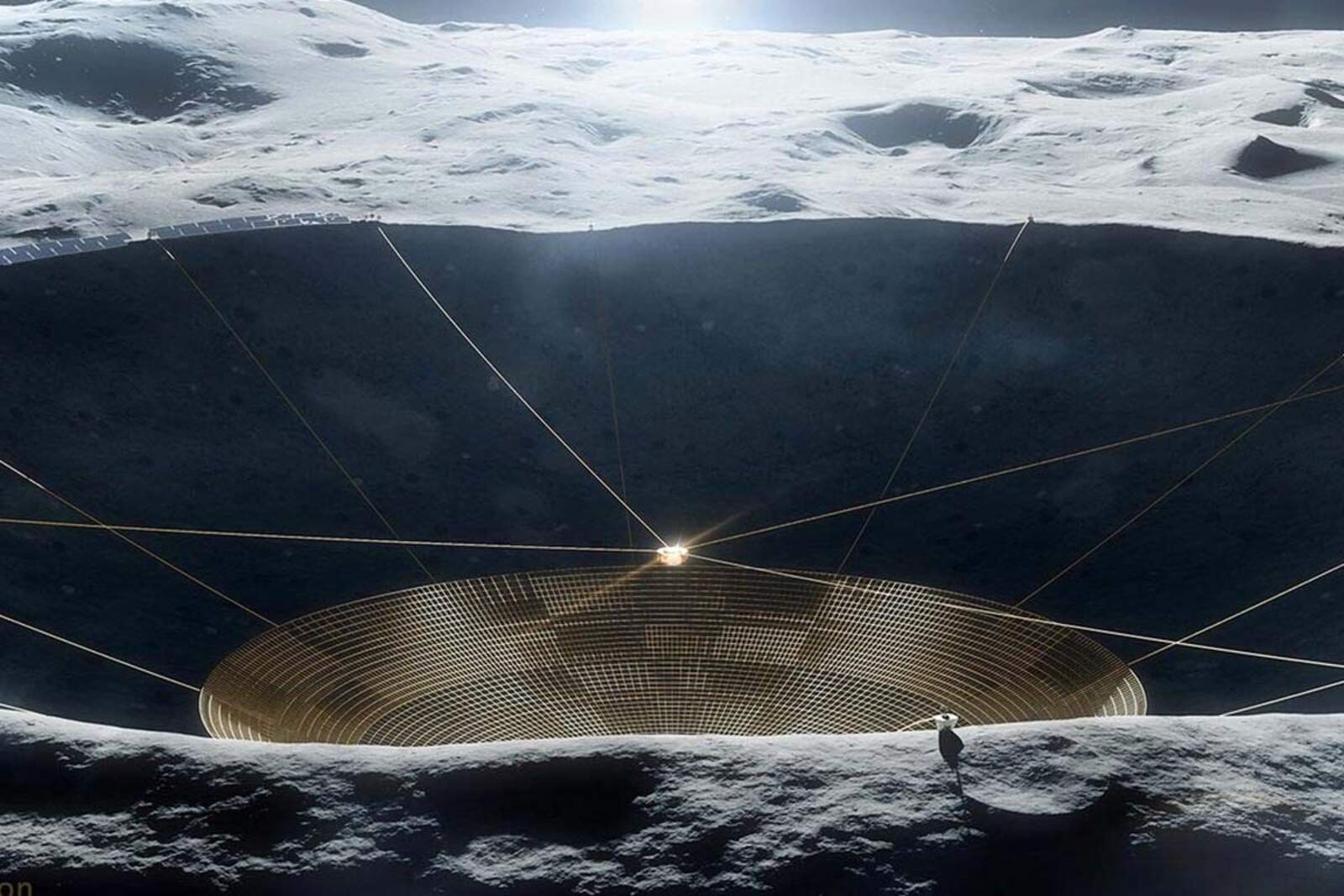
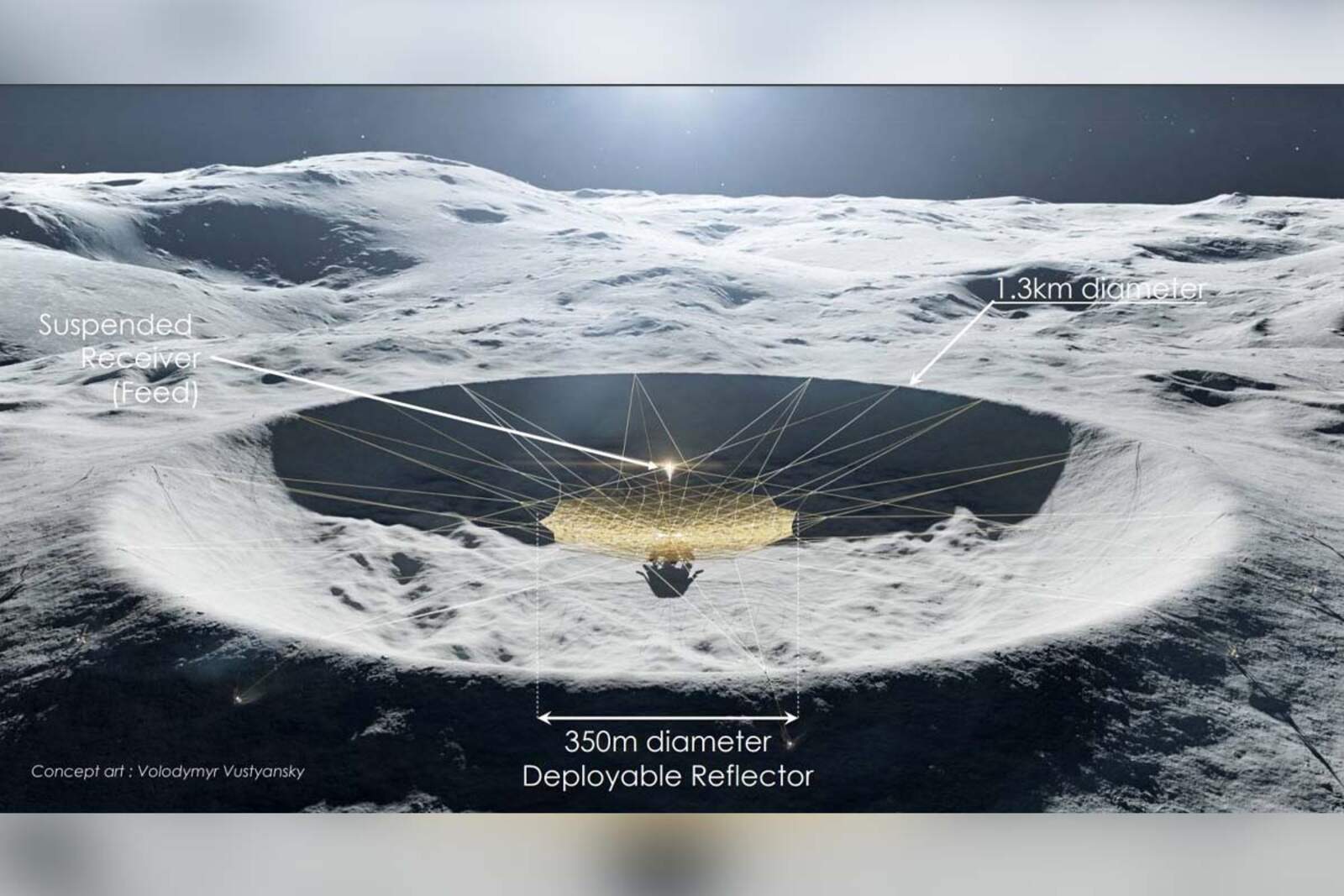
The project, valued at 2.6 billion euros (2.87 billion dollars), will take advantage of a natural crater 1.3 km (0.81 miles) in diameter to deploy a 350-meter (1,148 feet) metallic mesh reflector, assembled by autonomous robots.
La NASA dio luz verde al ambicioso proyecto Lunar Crater Radio Telescope (LCRT)
A giant ear on the dark side of the Moon
The LCRT will be located on the far side of the Moon, isolated from terrestrial radio emissions and shielded from direct solar radiation. This will allow the study of long-wavelength radio waves and the exploration of the dark era of the universe, before the birth of the first stars and galaxies.
Currently, observation from Earth is limited by megaconstellations of satellites that saturate the radio spectrum and could cause certain observation windows to be lost forever.
Design and construction
The Jet Propulsion Laboratory (JPL) team in California developed a design with a metallic mesh suspended by cables inside the crater. There will be no astronauts building it; autonomous robots will assemble the structure, reducing risks and taking advantage of lunar geography.
Initial tests with ROLSES-1 demonstrated that it is possible to capture signals from the Moon, although only from its near side. This is why NASA is targeting the far side for the final version of the telescope.
Development phases and funding
The project began in 2020 as a theoretical proposal and has already passed two funding phases of the NIAC program, with a total investment of 625,000 dollars. Currently, work is underway on a 1:200 scale prototype, while the exact location of the crater remains secret.
El proyecto nació en 2020 como propuesta teórica
If everything goes according to plan, the LCRT will become the largest lunar radio telescope and a new ear capable of exploring the oldest secrets of the universe.