What went wrong in the mission attempting to rescue Swift
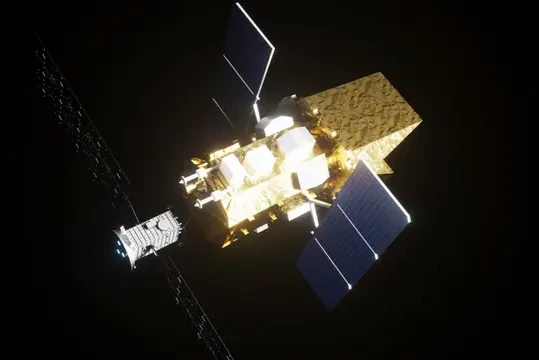
At the end of July, LINK suffered problems with its attitude control system, responsible for keeping the spacecraft properly oriented in space.
The preliminary investigation determined that two of its three reaction wheels became inoperative and a partial loss of functionality was also detected in the cold gas thruster system. As a result, LINK began to spin, and communications became intermittent.
Engineers were later able to significantly reduce that rotation using one of its electric thrusters and attempted to adapt the software to work with the new configuration.
However, the issue turned out to be too significant to safely execute the most complex part of the mission.
NASA and Katalyst ultimately determined that LINK will not attempt to capture or elevate Swift. Instead, it will seek to perform approach operations to gather information that may be useful in future orbital service missions.
The project had been particularly demanding from the start. Katalyst had less than a year to design, build, test, and launch the spacecraft that was to perform the maneuver.
When could NASA's telescope fall
Determining exactly when re-entry will occur is still complex. NASA reported on Friday, August 28, that Swift has resumed scientific observations with two of its three instruments, after they were turned off in February to minimize drag and prolong its time in orbit while awaiting rescue.
The agency's estimates had indicated that this strategy would allow the observatory to remain above 300 kilometers until October 2026.
This number is important: once Swift descends below that height, operating the telescope will become increasingly complicated and its descent rate will begin to increase rapidly. With the resumption of observations, NASA estimates that it could reach that threshold in the next one or two months.
The U.S. space agency had initiated an ambitious operation to prevent this outcome. In September 2025, it contracted Katalyst Space Technologies to develop a robotic spacecraft capable of reaching Swift, capturing it, and elevating it to a safer orbit. The contract was for approximately 30 million dollars.
However, the mission did not go as planned. The LINK spacecraft, specially designed for the rescue, suffered technical problems after its launch and will no longer be able to capture or elevate the telescope.
An impressive image captured by the Swift telescope (NASA/Swift)
NASA confirmed on August 19 that the attempt to raise Swift's orbit has been canceled, although LINK will still attempt to approach the observatory to test technologies that could be used in future satellite maintenance missions.
Why NASA's Swift telescope will fall to Earth
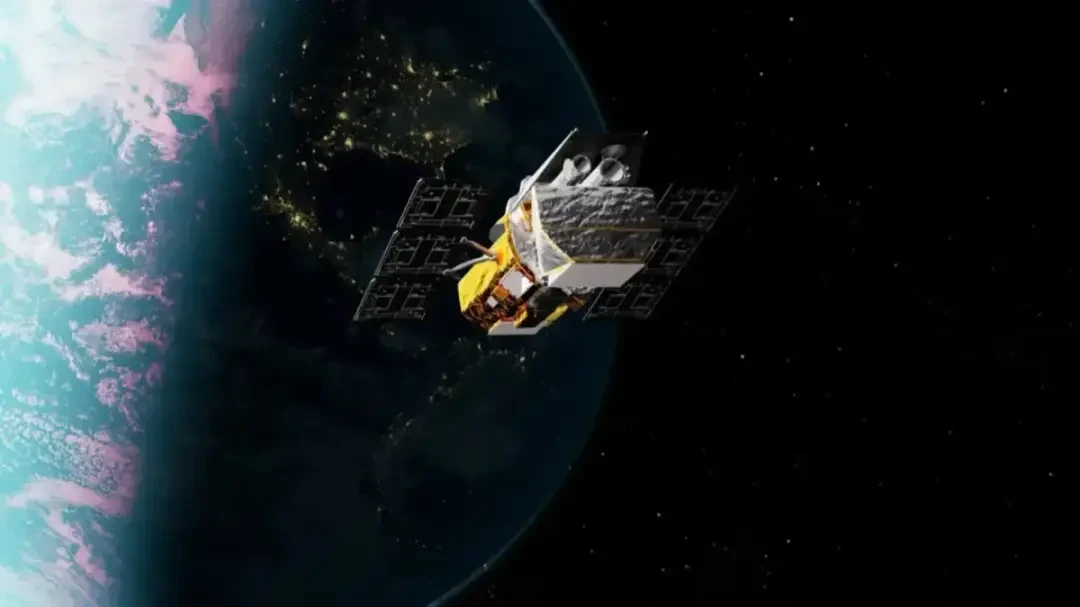
Swift was originally placed in an orbit of approximately 600 kilometers in altitude. Unlike other satellites, it does not have a propulsion system that allows it to perform the necessary maneuvers to regain lost altitude.
All objects in low Earth orbit are subjected, to a greater or lesser extent, to friction with particles present in the upper layers of the atmosphere. Over time, this drag can cause a gradual decrease in orbit.
In Swift's case, the recent increase in solar activity accelerated the process. Energy from the Sun can expand the upper layers of the atmosphere, increasing the drag experienced by satellites and causing them to lose altitude more quickly.
There would no longer be any possibilities of saving him
In light of this scenario, NASA decided to attempt something that had never been done in this way: send a commercial robotic spacecraft to capture a satellite from the agency that was originally not designed to receive maintenance in space.
The Swift Boost mission formally began when LINK was launched on July 3, 2026 aboard a Northrop Grumman Pegasus XL rocket from the Kwajalein Atoll in the Marshall Islands.
The spacecraft was to rendezvous with Swift, secure it using its robotic systems, and progressively raise its orbit. If successful, in addition to extending the scientific life of the observatory, it would have demonstrated a new capability to rescue and maintain aging satellites. But a few weeks after the launch, problems began.