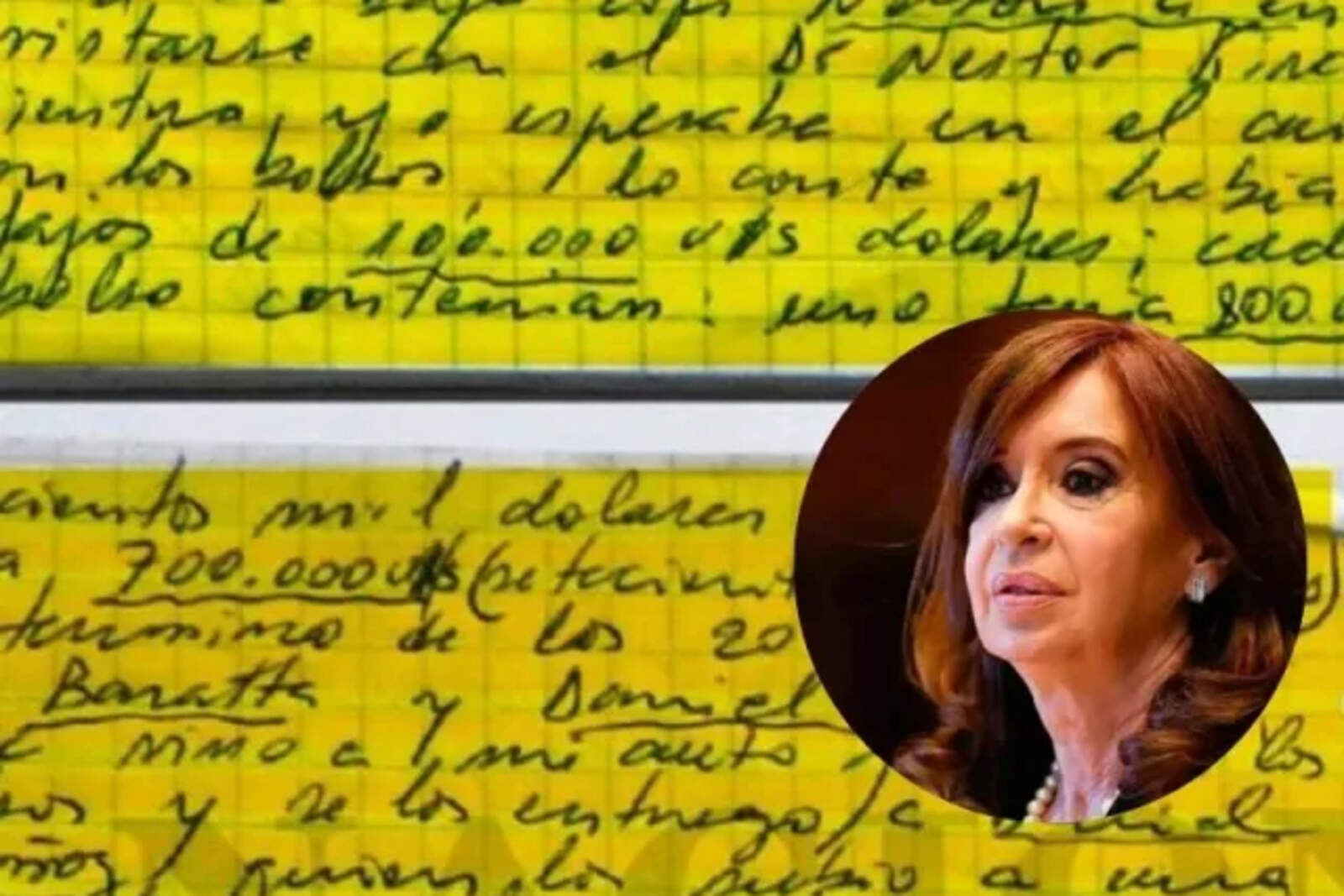
The highest criminal court ordered the acceleration of the case regarding the 'Bribery Notebooks,' in which Cristina Fernández and former officials face serious corruption charges
Compartir:
The Federal Criminal Cassation Chamber intervened this Tuesday to accelerate the oral trial for the "notebooks" case, which is judging the largest political corruption scheme in Argentine history. The resolution requires the Oral Court involved to hold hearings more frequently, to conduct them in person, and to eliminate the summer judicial recess, in a measure aimed at preventing delays in a process involving 87 defendants, including the former president and already convicted of corruption, Cristina Fernández deKirchner.
The decision comes amid specialized criticism regarding the pace of the debate on its first day. The trial began on Thursday, November 6 with a virtual hearing held on Zoom and broadcast live on the YouTube channel of the Supreme Court of Justice of the Nation. At the outset, the first prosecutorial accusation was read, a document of 225,000 words prepared in 2019 by then-federal prosecutor Carlos Stornelli.
If the current schedule of one hearing per week is maintained, the mere reading of these charges could extend until the beginning of next year and would cause stagnation in the progress of the evidence phase.
Cristina mostrándose luego de ser retada por el juez
The Cassation judges Daniel Petrone, Gustavo Hornos, Ángela Ledesma, Carlos Mahiques, and Mariano Borinsky called an urgent meeting with the members of the Federal Criminal Oral Court No. 7 (TOF 7), composed of Enrique Méndez Signori, Germán Castelli, and Fernando Canero. The meeting is scheduled for Tuesday, November 18, in order to adopt the necessary measures for greater efficiency in the development of the oral debate.
Among the concrete proposals, the scheduling of at least three weekly hearings, all in person, using the AMIA courtroom at the Comodoro Py courts, stands out. This courtroom, not yet inaugurated, could be operational by the end of this month. Cassation's intervention also seeks to prevent interruption due to the summer judicial recess.
The "Notebooks" case is considered the largest corruption file in Argentine democracy. It emerged in 2018 from the handwritten notes of driver Oscar Centeno, which detailed alleged multi-million dollar bribes paid by public works businessmen to Kirchnerist officials between 2005 and 2015, that is, events that occurred between 10 and 20 years ago.
Causa Cuadernos.
The investigation, initially led by prosecutors Luciani and Stornelli, points to a systematic bribery scheme that would involve 10% of state contracts, with figures such as Cristina Fernández at the center of the charges for illicit association and fraudulent administration.
To date, the trial has progressed at a very slow pace: the virtual Thursday hearings have hindered interaction and public scrutiny, in a context where the convicted and other defendants are, surprisingly, demanding procedural guarantees. The acceleration sought by Cassation could mark a turning point, allowing the production of key evidence in the coming months and preventing the case from getting bogged down in formalities.
This measure responds to institutional and social pressures for a more agile justice system, certainly fostered by the new era the country is experiencing since Javier Milei became president. Despite the logistical challenges of bringing together the 87 defendants, their defense teams, and judicial staff, TOF 7 will be forced to adjust its schedule, and concrete decisions are expected on November 18 to bring the debate closer to resolution.