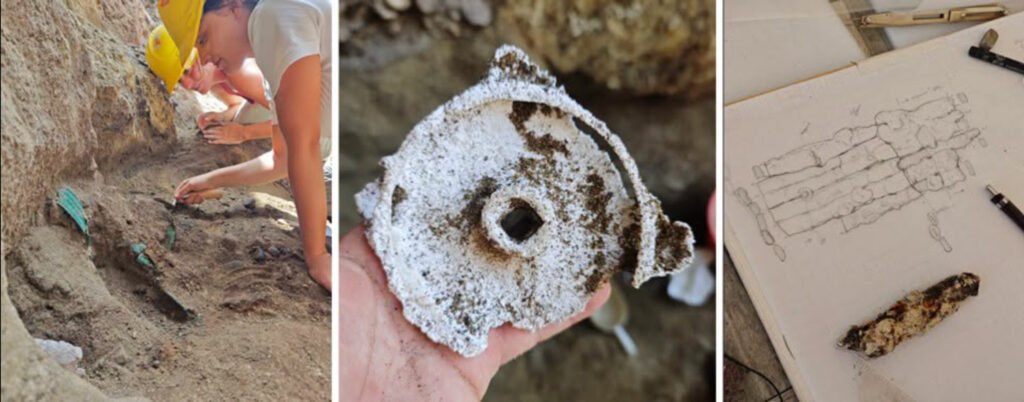

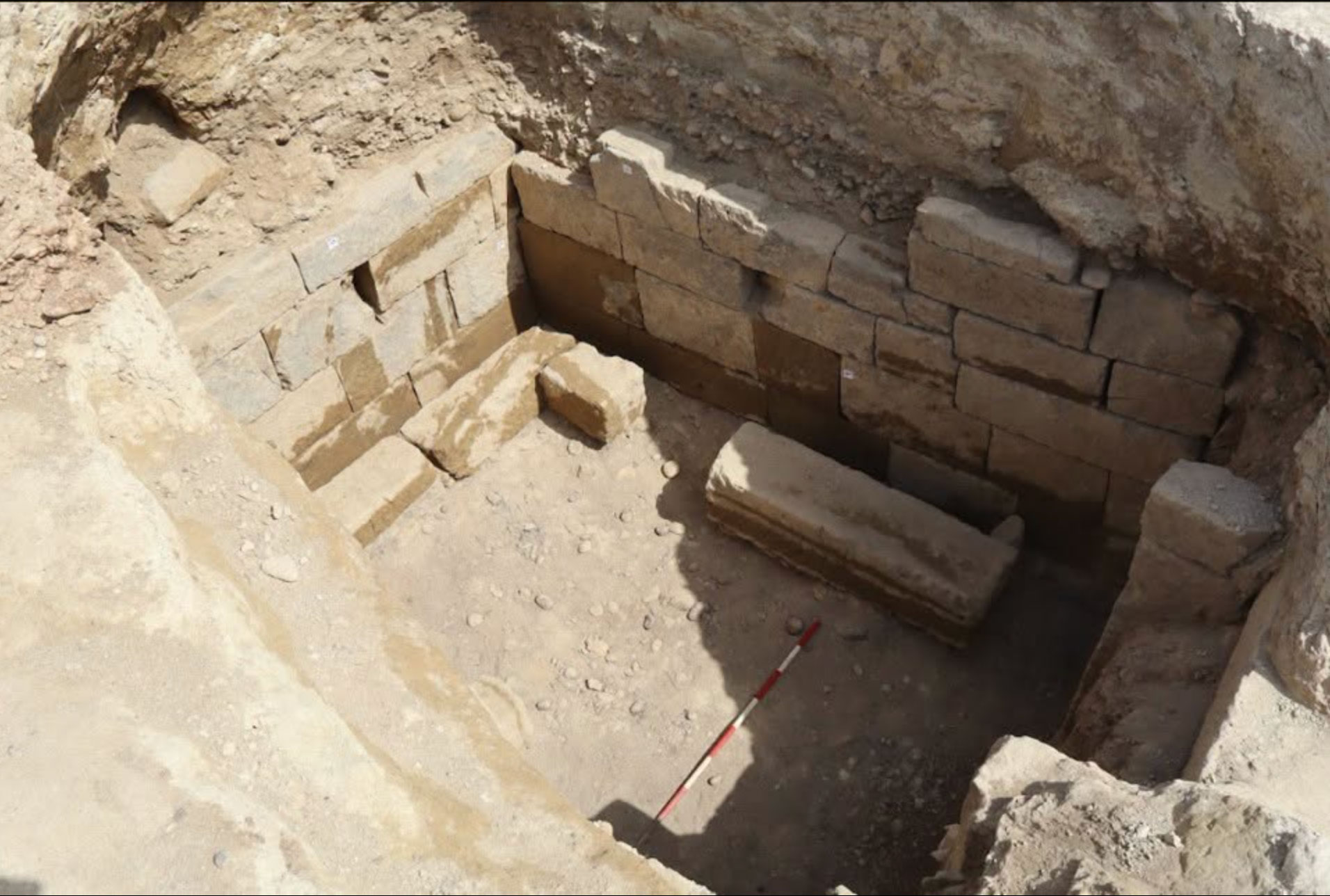
An international team of archaeologists discovered a tomb from the late 7th century BC in a necropolis near the ancient Etruscan city of Vulci, Italy. The structure, built with large blocks of volcanic stone, originally had three chambers. Repeated looting in the 20th century caused the roof and walls to collapse, but the resulting debris ended up protecting what remained of the burial goods.
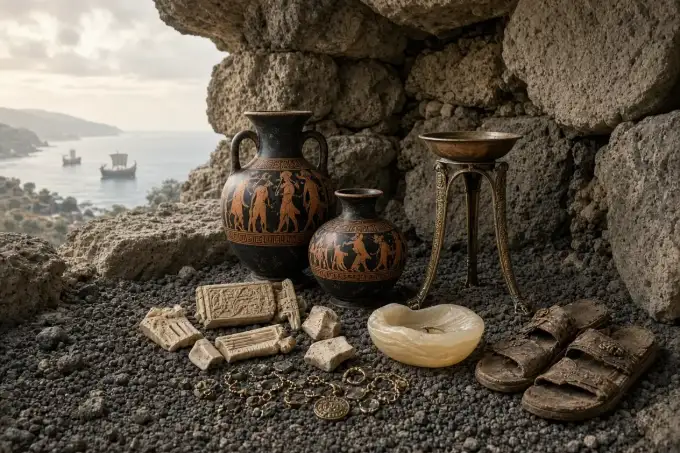
Researchers from Sapienza University of Rome, the French School of Rome, and the British Museum managed to recover a varied set of objects. Among them are locally produced ceramics alongside imported pieces from Athens and Corinth, ceremonial vessels for banquets, weapons, chariot fittings, a bronze tripod, and a lamp carved from alabaster plaster.
Worked bone and ivory items, jewelry, and women's footwear were also found. These remains allow for the reconstruction of funerary and prestige practices of the Etruscan elite of that time. The presence of foreign goods confirms Vulci's integration into the trade networks that spanned the Mediterranean.
Experts note that the alabaster lamp may have arrived from Naucratis in Egypt or from the Greek island of Rhodes. This possible origin reinforces the idea of long-distance trade contacts. The findings clearly show how Mediterranean trade influenced the daily and ritual life of Etruscan communities.
Accidental Protection and Scientific Value
Although looting destroyed much of the tomb, the collapse of roofs and walls created layers of debris that partially sealed the remaining objects. This circumstance allowed the current team to recover materials that would otherwise have been completely lost.
The Attic and Corinthian ceramics, along with the bronze tripod and ivory ornaments, indicate a high level of wealth and external connections. The chariot fittings and weapons also suggest the military or prestige role of the occupants of the burial.