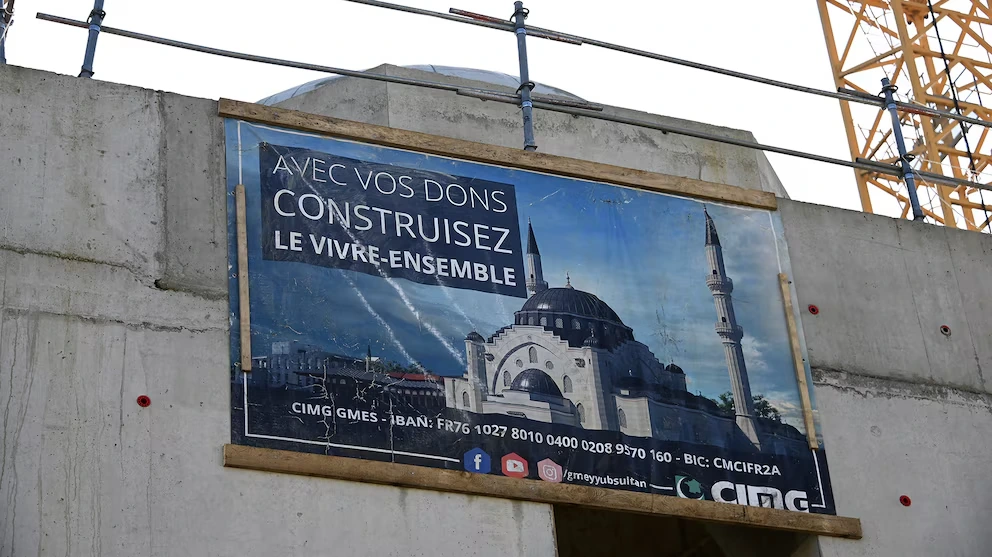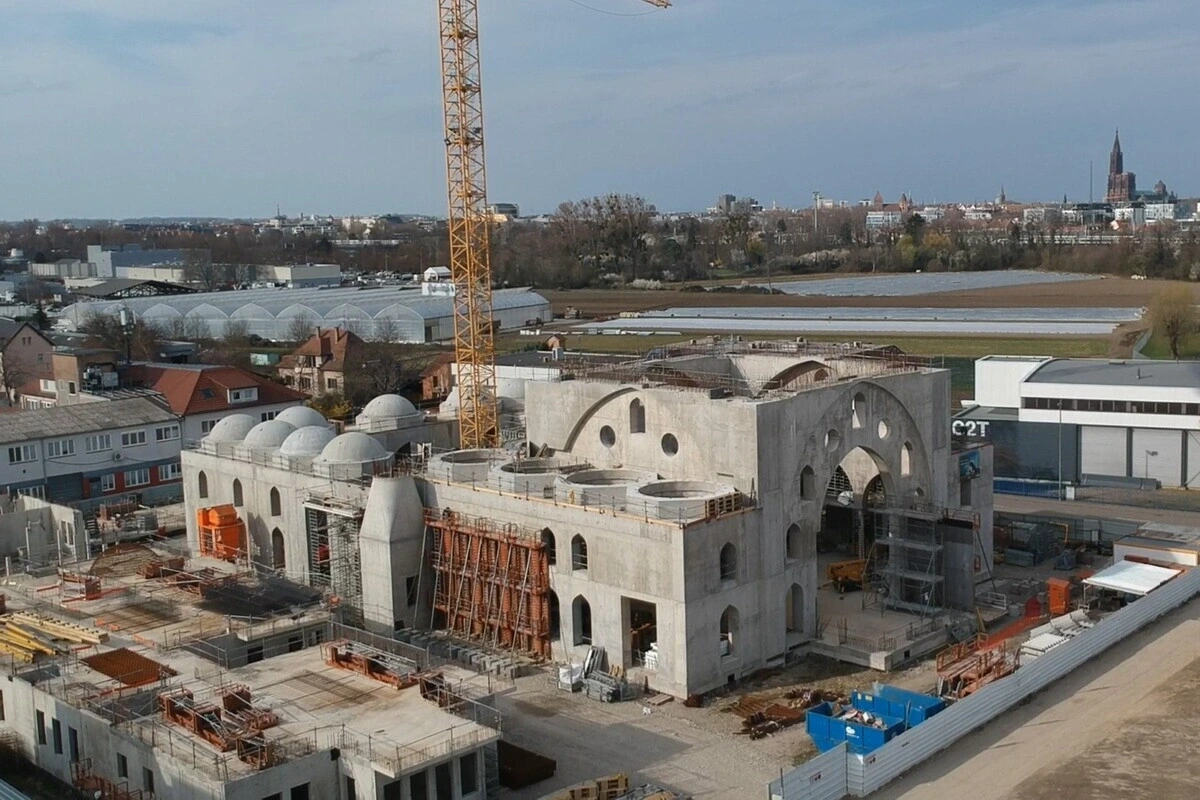

The debate on immigration and cultural sovereignty is once again shaking Europe, this time around a project that has become a symbol of a much deeper discussion: the advance of political Islam on the continent. Amid growing questioning of migration policies, the construction of the largest mosque in Europe in France set off alarms both politically and socially. The protagonist is the Eyyûb Sultan, or Grand Mosque of Strasbourg, promoted by the Turkish-Islamist organization Millî Görüş. The complex is built in Strasbourg, in the Meinau neighborhood, under the direction of the Islamic Confederation of Millî Görüş (CIMG), a federation of Turkish origin with a strong presence in Europe. The project, started in 2017, includes a prayer room for thousands of faithful, minarets over 40 meters high, educational and community spaces and architecture inspired by the Ottoman
tradition.According to its developers, the complex will occupy more than 15,000 m² and will cost an estimated 32 million euros (about 37.8 million dollars). Once completed, it will exceed in size any other mosque on the continent, becoming a visible symbol of Islam in the heart of Europe, a few kilometers from the European Parliament.
The works are progressing at a steady pace: in 2025, the minaret auctions were installed and donation campaigns intensified, which have raised millions of euros in a few days.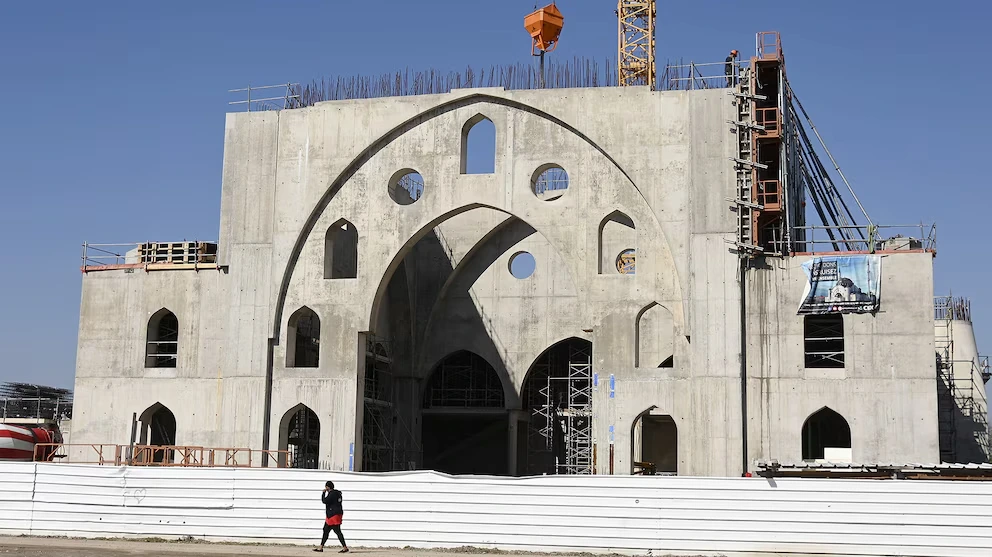
The project was at the center of a strong political controversy from its early stages. In 2021, the Strasbourg City Council approved, by 42 votes in favor and 7 against, a grant of approximately 2.5 million euros (also referred to as 2.56 million euros) to finance construction. The decision, driven by the environmental management of Europa Ecología Los Verdes (EELV), sparked
an immediate reaction from the national government.The then Minister of the Interior, Gérald Darmanin, publicly denounced that it was a matter of “financing foreign interference on French soil”, and warned: “The green mayor of Strasbourg finances a mosque supported by a federation that refused to sign the charter of principles of Islam in France and that defends a political Islam. I hope everyone opens their eyes and that the separatism law will be voted on and enacted soon.”
Along the same lines, the Minister of Citizenship, Marlène Schiappa, argued that “the mayors of the EELV party are on a very slippery slope with respect to radical Islam” and that environmentalists “flirt more and more dangerously with the theses of radical Islam”.