The Private Consumption Index of Universidad de Palermo showed a year-on-year increase of 3.9% in October and has accumulated an impressive +12.2% in 2023
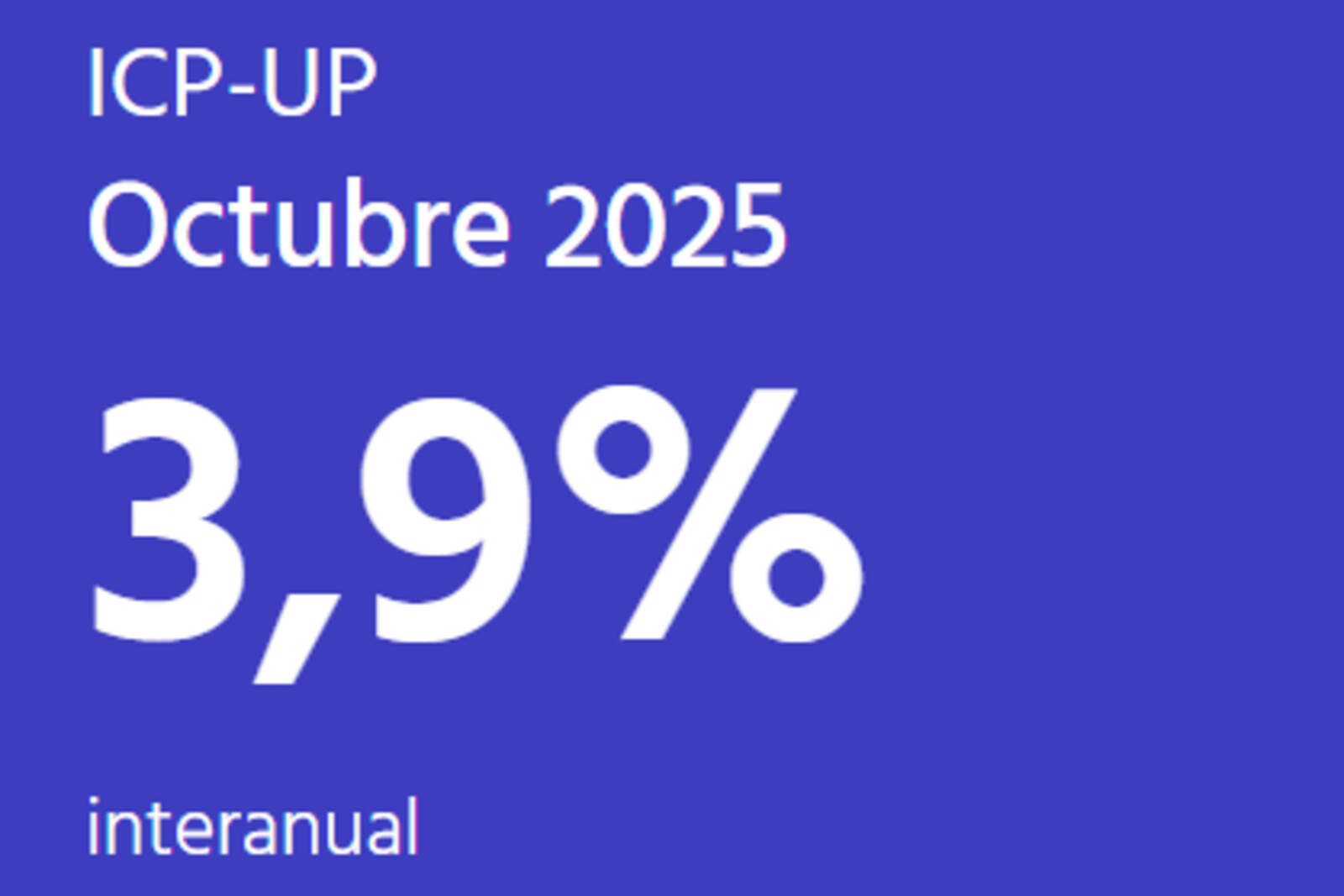
Argentine private consumption continues to show signs of strength under President Javier Milei's administration. According to the Private Consumption Index (ICP-UP) developed by the Business School of Universidad de Palermo, October closed with year-on-year growth of 3.9% and an impressive accumulated increase of 12.2% in the first ten months of the year compared to 2024.
These figures make October 2025 the best result in the last eight years, second only to the peak of October 2017. Although the indicator showed a slight monthly decrease of 1.5%, this decline comes after significant fluctuations in August (-2.8%) and September (+1.8%), within a context that specialists describe as "typical volatility of economic transition."
El consumo privado creció 3,9% interanual en octubre.
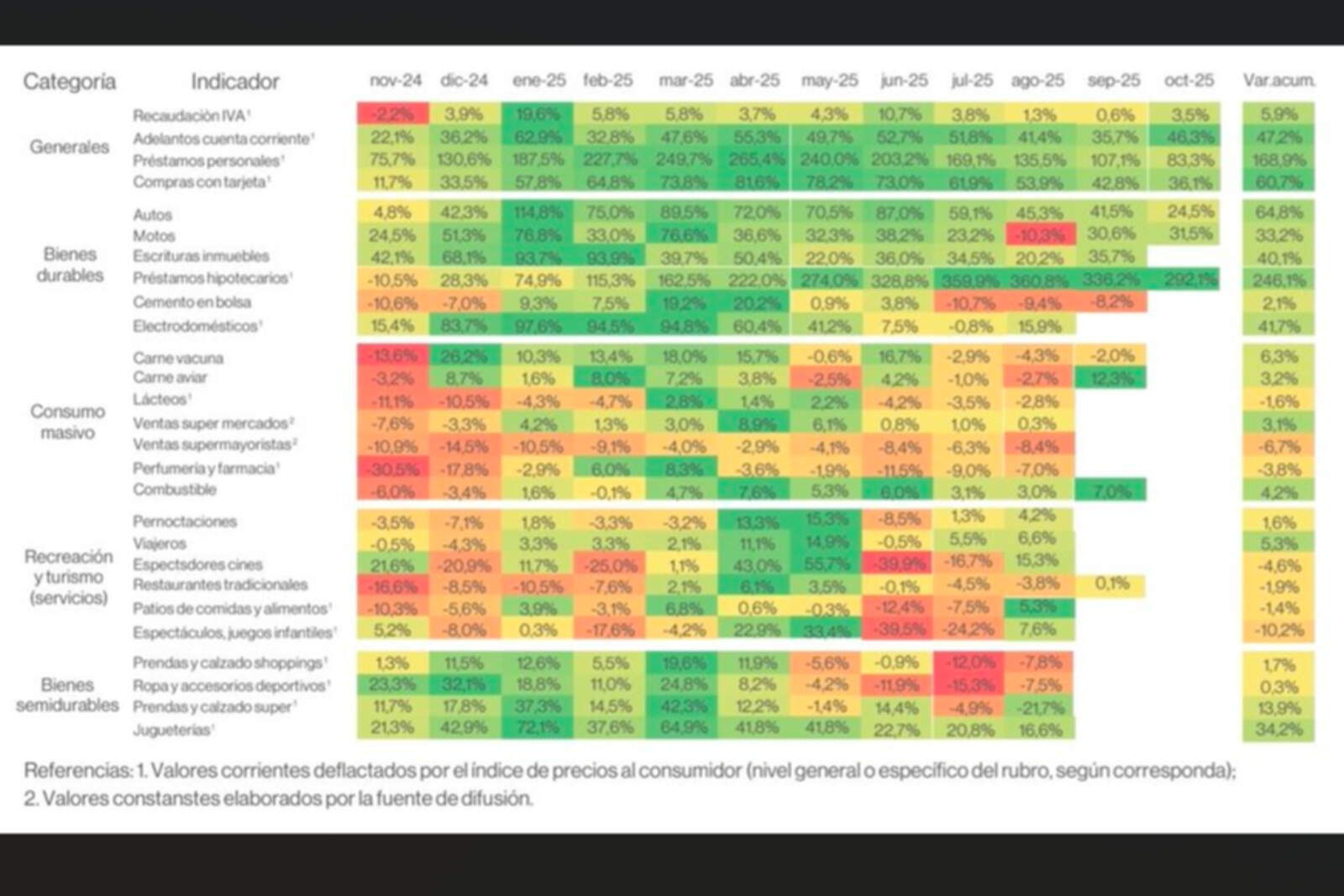
Sectoral data reinforce the reading of an economy in the process of normalization. Among the general indicators associated with consumption:
Real VAT collection: +3.5% year-on-year.
Card purchases: +36.1% year-on-year in real terms.
Personal loans: extraordinary increase of 83.3%, reflecting a return of consumer credit.
Although growth rates showed a slight deceleration compared to the previous month, dynamism remains significant. Durable goods maintain their position as the leading segment of Argentine consumption during 2025. In October:
Car registrations: +24.5% year-on-year.
Motorcycle registrations: +31.5% year-on-year.
In contrast, there is weakness in bagged cement shipments, with three consecutive months of year-on-year declines through September, associated with smaller-scale construction projects.
Mass consumption: mixed signals but with a rebound in fuel and poultry meat
In September, mass consumption categories showed a heterogeneous combination:
Fuel sales: +7.0% year-on-year, the best performance since April 2025.
Beef: decline of 2.0%, accumulating three consecutive decreases.
Poultry meat: +12.3% year-on-year, regaining ground after two months of decline.
El consumo privado creció 3,9% interanual en octubre.
These behaviors are partly due to the recomposition of relative prices that continues to be organized under the libertarian economic program.
The index of traditional restaurants in CABA remains practically unchanged compared to the previous year, completing four months without recovery.
However, other sector indicators show a much more dynamic trend: domestic tourism, moviegoers in shopping malls, food court sales, all with increasing year-on-year rates since August after the declines recorded during the middle of the year.
Semi-durable goods: shopping centers (clothing, footwear, accessories) declines of more than 7.5% year-on-year in August, toy stores, solid growth of 16.6% in real sales during the same month.
The ICP-UP functions as a high-frequency indicator designed to anticipate the behavior of private consumption, given the lack of an official monthly figure from INDEC, which only publishes quarterly data with a three-month lag.
For its development, a nowcasting model is used based on a multiple linear regression, built from 57 observations between the first quarter of 2011 and the first quarter of 2025. The model incorporates various monthly economic series linked to household spending, durable goods, mass goods, general indicators, production, and services.
The UP Business School highlights that this tool is "innovative and necessary to closely measure the pulse of private consumption in Argentina."