
Every civilization transforms nature. A house replaces virgin soil, a crop modifies an ecosystem, and a dam alters the course of a river. Even producing medicines, food, or energy requires intervening on resources that previously had another destination. The sensible question was never how to live without leaving a footprint, because that would only be possible by ceasing to produce. The real question is which institutions allow progress while holding accountable those who cause real harm.
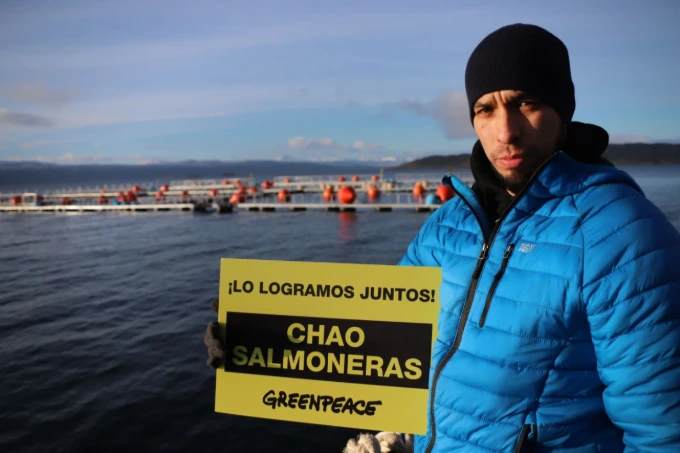
The discussion about salmon farming raises that dilemma again. The government of Tierra del Fuego banned industrial salmon farming in 2021, and Greenpeace celebrated the decision as an environmental precedent. When the province partially relaxed that ban in 2025, the organization denounced an “environmental regression.” Meanwhile, in the Falklands, a consultation is underway regarding a project that contemplates initially producing 50,000 tons of salmon annually at 16 locations.
The environmental risks are not imaginary. Salmon farming can generate waste, escapes of non-native species, and health problems, and Greenpeace has documented these effects for years. In the Falklands, even local organizations question the available information and demand more rigorous environmental assessments before proceeding. Recognizing those risks, however, does not force one to conclude that the only rational response is to prohibit the activity.
Here lies the difference between conservation and extreme environmentalism. Conservation means managing risks; extremism seeks to eliminate the risk by eliminating the human activity that produces it. Under that logic, uncertainty ceases to be a problem that must be resolved through knowledge, technology, and responsibility, and automatically becomes an argument to prevent.
The problem is that all innovation begins under uncertainty. No one knows in advance all the consequences of a new technology, an industry, or a productive method. If the condition for allowing an activity were to demonstrate beforehand that it will never cause harm, a good part of economic progress would have been impossible. A society that demands zero risk also ends up achieving zero innovation.









