

The Argentine Republic is immersed in the fastest and most decisive debt reduction process in its recent history. After decades of financial mismanagement that seemed terminal, the economic team of President Javier Milei has achieved a technical feat: the consolidated net debt held by private entities and external organizations has experienced a drastic drop, going from a burdensome 99.4% of GDP at the end of 2023 to a healthy 39.1% in April 2026.
This reduction of 60 percentage points in the debt/GDP ratio is the direct result of a policy of "Zero Deficit" and an unrestricted defense of the fiscal surplus, pillars that have restored predictability to the nation.
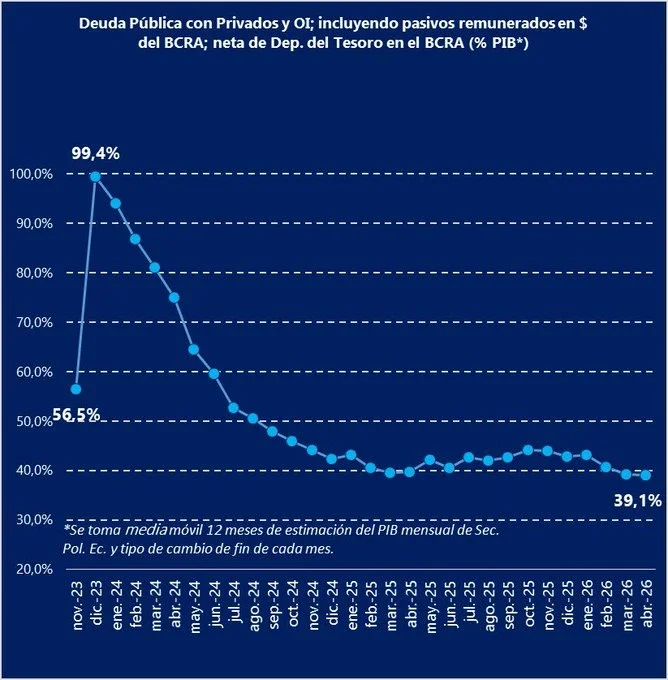
This resounding success is based on the cleaning up of the balance sheet of the Central Bank of the Argentine Republic (BCRA) and the elimination of monetary issuance to finance the Treasury. According to the official methodology that includes remunerated liabilities in pesos of the BCRA and discounts the Treasury deposits, between November 2023 and September 2025, the debt contracted by USD 27.486 billion.
The management of Santiago Bausili at the head of the monetary authority has been key, achieving a reduction of liabilities close to USD 56 billion, which more than compensated for any nominal variation.
When analyzing historical performance, the comparison is devastating for previous administrations: