
The race for AI will be won by the countries that unleash innovation.

The race for AI will be won by the countries that unleash innovation.
Imagen de Editorial Team
porEditorial Team
Argentina

The new global economy does not wait for countries trapped in statism.

Nuevo
Agregar La Derecha Diario en
Compartir:

Artificial intelligence, biotechnology, automation, and new energy sources are accelerating technological changes at a speed rarely seen in modern history. But behind every advance lies a much deeper question than mere technological novelty: what institutions allow that innovation to truly improve human life?

History shows that technological development does not occur in a vacuum. Societies that manage to transform innovation into prosperity tend to share certain quite clear institutional traits: economic stability, respect for private property, predictable rules, freedom to undertake, competition, and the ability to attract capital and talent.

Technology alone does not guarantee progress.

The same advance can generate growth, investment, and well-being in one country, or be completely stalled by bureaucracy, state controls, legal insecurity, and tax pressure in another. The difference often lies not in the talent of the people, but in the institutional environment where that talent tries to develop.

Artificial intelligence is probably the best current example of this.

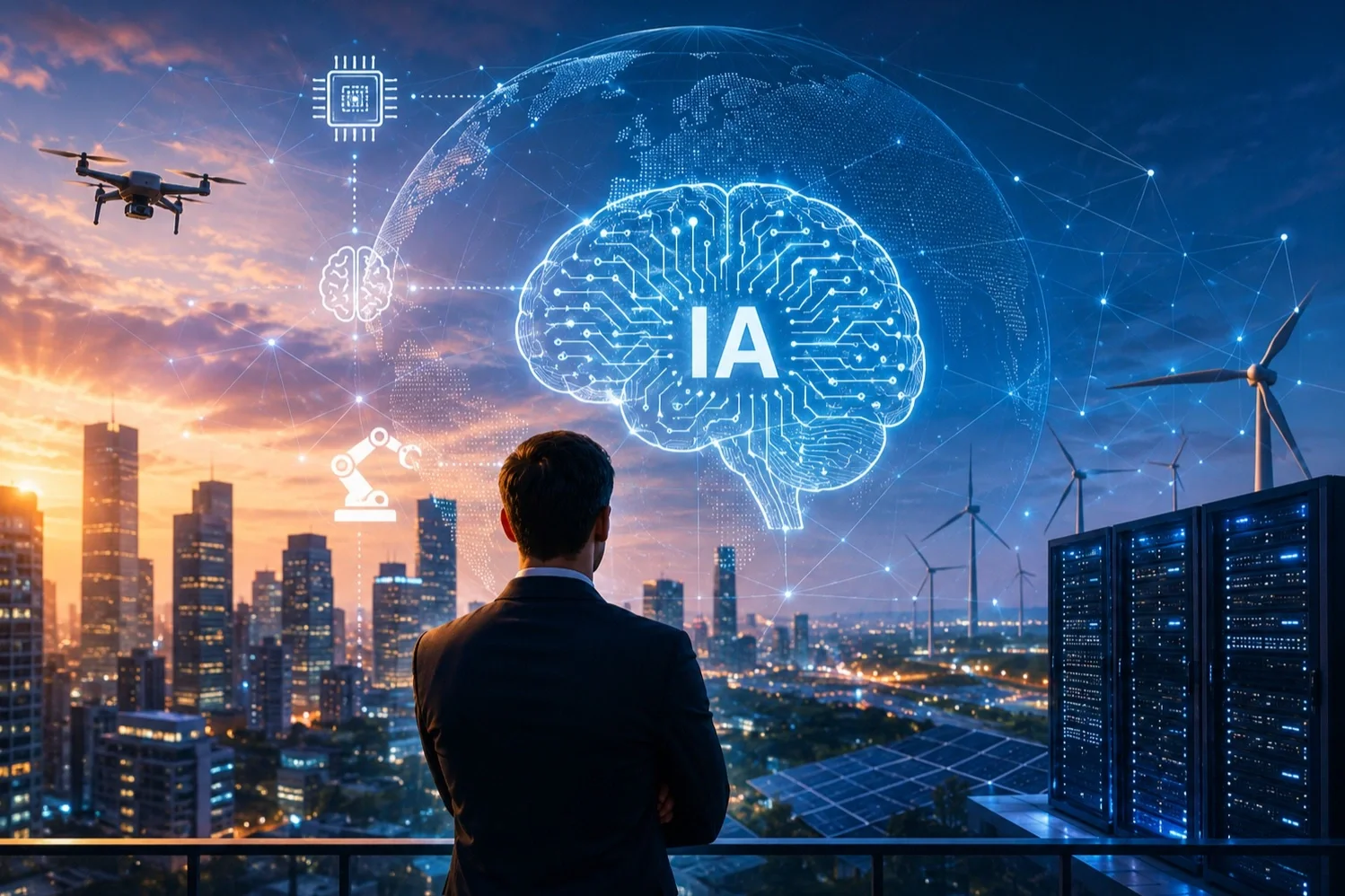
Today, global economic power is beginning to concentrate around those who control computational capacity, energy, chips, data centers, and AI models. The companies and countries that lead this race are not necessarily those with the most natural resources, but those that offer better conditions for innovating, investing, and scaling technology.

That is why the global discussion is no longer just about cheap wages or traditional trade advantages. It is starting to revolve around something more important: which countries allow creativity, capital, and innovation to work without being trapped by slow and stifling state structures.

Here lies one of Argentina's great historical challenges.

For decades, the country combined extreme tax pressure, chronic inflation, regulatory instability, currency restrictions, and a political system that often punished investors more than those speculating with privileges. The result was quite evident: capital flight, falling investment, loss of talent, and an economy unable to sustain long-term technological growth.

While other economies competed to attract strategic industries, Argentina debated price controls, currency clamps, and increasingly complex regulations.


In this context, part of the economic logic driven by Javier Milei's government seeks to precisely modify that scheme.

Beyond the daily political discussion, the government aims to reinstall a rather simple idea: without macroeconomic stability, without respect for the rules, and without incentives to invest, it is impossible to participate in the new global economy that is beginning to emerge around artificial intelligence, energy, and technological infrastructure.

This explains initiatives aimed at attracting large investments in strategic sectors, reducing regulations, and rebuilding a certain level of economic predictability. The logic behind these decisions is that the world is undergoing a new global competition for capital, innovation, and critical resources, and that Argentina needs to stop expelling investment if it wants to integrate into that transformation.

The problem is that often the local debate remains trapped in categories of the past.

While the world discusses artificial intelligence, industrial automation, modular nuclear energy, and gigantic data centers, much of Argentine politics still revolves around subsidies, controls, and short-term distributive disputes. It is a difference in focus that could ultimately define which countries lead the next economic stage and which simply lag behind.

Innovation needs more than brilliant scientists or entrepreneurs.

It needs institutions capable of allowing experimentation, competition, capital accumulation, and sufficient stability to take long-term risks. No company invests billions of dollars in technological infrastructure in economies where the rules change constantly or where business success is viewed with political suspicion.

At its core, the discussion about technology is also a discussion about economic freedom and institutional quality.

Because the societies that innovate the most tend to be those that impose the fewest obstacles on those who want to create, produce, invest, or develop new ideas.

And in a world where artificial intelligence begins to redefine economic and geopolitical power, that difference can become decisive much faster than many imagine.


La Derecha Diario logo
ESX logoInstagram logoYouTube logoTikTok logoFacebook
ARGENTINABOLIVIAECUADORISRAELMEXICOURUGUAYDERECHA DIARIO TV
  • ES
    XInstagramYouTubeTikTokFacebook
  • DERECHA DIARIO TV
  • Secciones
  • ARGENTINA
  • BOLIVIA
  • ECUADOR
  • ISRAEL
  • MEXICO
  • URUGUAY
  • Países
  • La Derecha Diario logoLA DERECHA DIARIO
  • La Derecha Diario México logoLA DERECHA DIARIO MÉXICO
  • La Derecha Diario Uruguay logoLA DERECHA DIARIO URUGUAY
  • La Derecha Diario Ecuador logoLA DERECHA DIARIO ECUADOR
  • La Derecha Diario Bolívia logoLA DERECHA DIARIO BOLÍVIA
  • La Derechadiario República Dominicana logoLA DERECHADIARIO REPÚBLICA DOMINICANA
  • La Derecha Diario Israel logoLA DERECHA DIARIO ISRAEL
  • La Derecha Diario Estados Unidos logoLA DERECHA DIARIO ESTADOS UNIDOS
  • Temas
  • GUERRA EN IRÁN
  • JUICIO POR YPF
  • El Diario
  • QUIENES SOMOS
  • AUTORES
  • PUBLICIDAD
  • DONAR
La Derecha Diario logo
TwitterInstagramYouTubeTikTokFacebook
Derecha Diario TV

Nosotros

  • Quienes Somos
  • Autores
  • Donar

Privacidad

  • Protección de datos
  • Canales
  • Sitemap
  • RSS

Contacto

  • info@derechadiario.com.ar
PUBLICIDAD

Noticias relacionadas

The casualties continue at River: Matías Viña is injured and will miss the final of the Apertura Tournament 2026.

The casualties continue at River: Matías Viña is injured and will miss the final of the Apertura Tournament 2026.

Xi Jinping trained Russian troops for drone warfare in Ukraine

Xi Jinping trained Russian troops for drone warfare in Ukraine

The strong comparison by 'Pipo' Rossi about the photo of Di Maria in the van with the cup: 'Exactly the same effect'

The strong comparison by 'Pipo' Rossi about the photo of Di Maria in the van with the cup: 'Exactly the same effect'

The Spanish Justice system charged Zapatero with criminal organization in the Plus Ultra case.

The Spanish Justice system charged Zapatero with criminal organization in the Plus Ultra case.

The United States removed enriched uranium from Venezuela in an international operation.

The United States removed enriched uranium from Venezuela in an international operation.

Saphirus invests US$ 3 million in the country and bets on growth with Disney.

Saphirus invests US$ 3 million in the country and bets on growth with Disney.