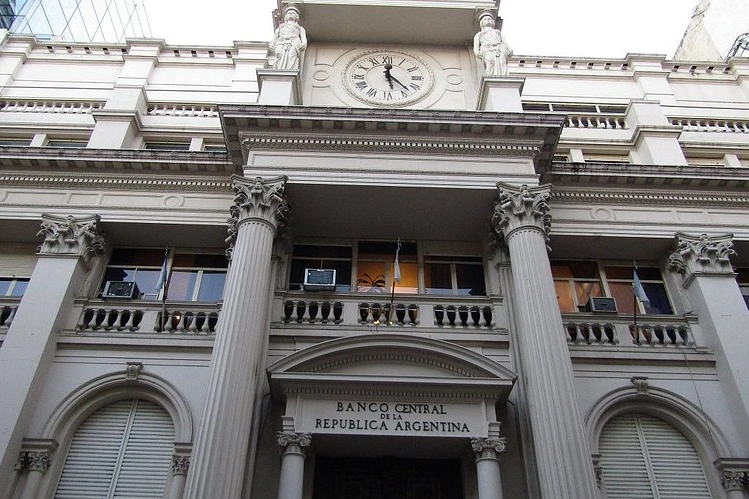
In parallel, the Central Bank established a daily limit for the purchase of foreign exchange equivalent to 5% of the volume traded in the Free Exchange Market, supplementing this strategy with agreements outside the wholesale market to avoid distortions. This approach allowed us to sustain a constant rate of accumulation without generating exchange rate tensions
The Central Bank of the Argentine Republic (BCRA) once again consolidated its reserve accumulation strategy by finalizing a purchase of USD 172 million, the highest amount recorded so far in March. With this result, the bank had 53 consecutive days with a positive balance and raised the cumulative total in 2026 above
USD 3.7 billion.
The data marks a structural change compared to the dynamics of recent years. Since the beginning of the fourth phase of the economic program, in January, the BCRA has already increased its assets by USD 3,786 million, reaching approximately 36% of the expected annual goal. This performance contrasts with the sustained deterioration of reserves left by the Kirchner economic model.
Santiago Bausilli, president of the BCRA.
Unlike previous schemes, where unbacked issuance and disorderly intervention generated pressure on the exchange rate, current management advanced a program based on fiscal balance, monetary discipline and the absorption of liquidity by the Treasury. In recent tenders, the Ministry of Economy avoided injecting pesos into the market, helping to contain inflation and stabilize financial
.
The foreign exchange flow that fuels this process comes mainly from the liquidation of the agro-export sector and from access to finance by companies and provincial governments. Since the legislative elections of October 2025, private debt placements have accumulated USD 11 billion, reflecting an improvement in
market confidence. The president's economic plan is consolidated.
In this context, the wholesale exchange rate continues to show stability. On the last day, the dollar fell 0.3% and closed at $1,390.50, the lowest level in the last month. This behavior reinforces the idea that the accumulation of reserves not only strengthens the Central Bank's balance sheet, but also helps to anchor expectations
.
Official projections predict that the net accumulation of reserves could be between USD 10,000 and 17,000 million in 2026, depending on the demand for pesos and foreign exchange income. If this trend is sustained, the Government will consolidate one of the central pillars of its economic program: rebuilding the reserve stock after years of imbalances