A controversial regulation intends to exchange debts for apartments under the guise of urban compensation
Nuevo
Agregar La Derecha Diario en
Compartir:
The Deliberative Council of Córdoba is moving against private property with a project that seeks to confiscate urban structures under state control. Radical legislator Juan Balastegui's proposal hides behind an alleged regularization a direct attack on investors' rights. This regulation imposes absolute control by the municipality over civil works that suffered from the constant economic crises of municipal public administration.
The plan creates the Registry of Abandoned Properties and Urban Deterioration to monitor buildings that have been paralyzed for more than a total of 2 years. The Secretariat of Urban Development will be the executive arm in charge of identifying these units in order to subject them to suffocating tax pressure. This way, it is intended to harshly punish developers who couldn't complete their projects because of the country's instability during Kirchnerism.
The central mechanism allows the municipality to take ownership of finished housing units as part of a dubious payment of administrative fines. This is a forced exchange in which the municipal State obtains properties without investing funds, harming investors' legitimate profitability. Councilman Balastegui is promoting this handover of apartments for alleged social purposes, ignoring the prior contracts of each development.
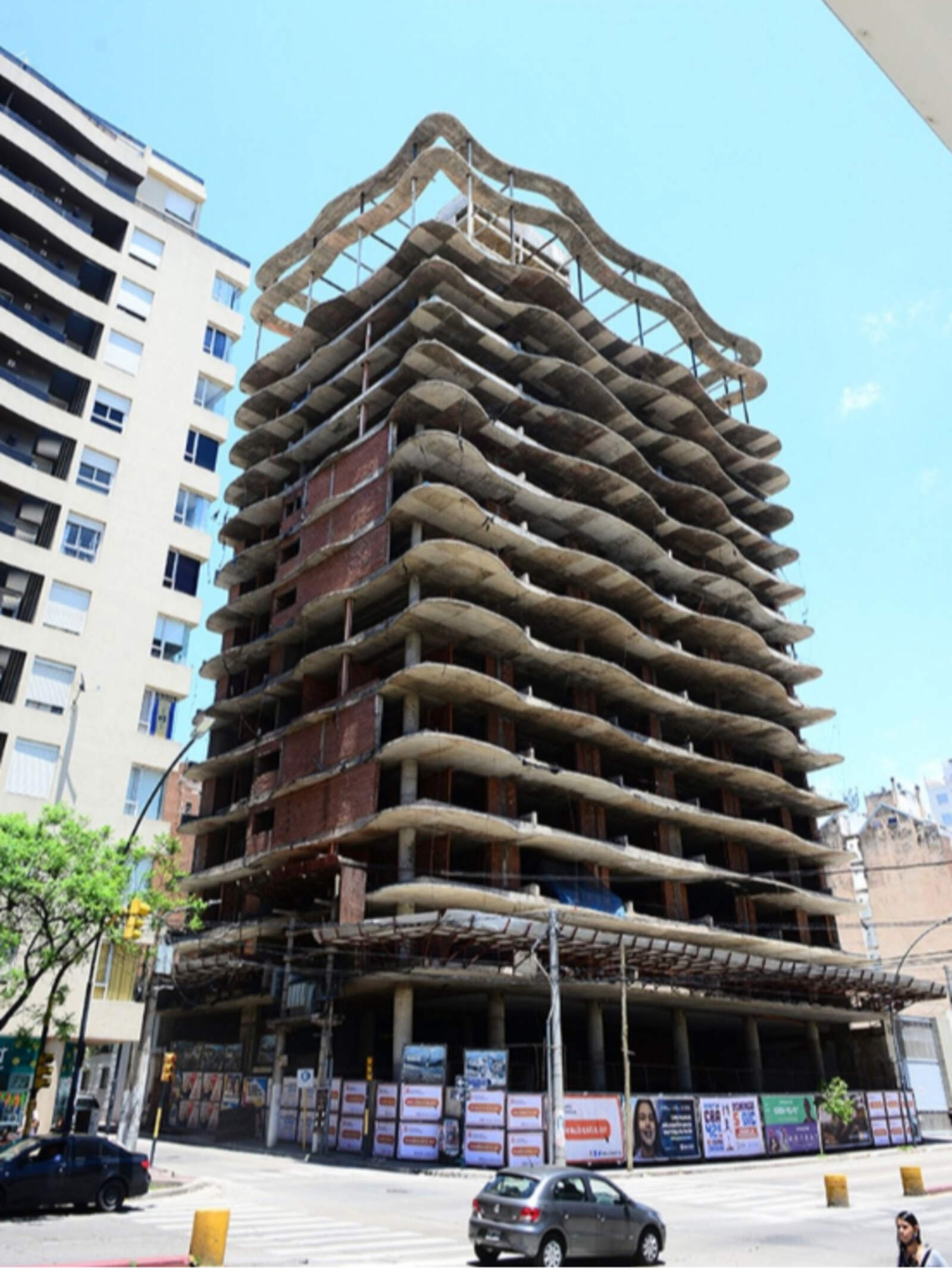
Uno de los edificios de Córdoba que podría ser expropiado por la municipalidad
State attack on private property
The compensation regime provides that the Municipality will receive built spaces to meet the housing demand that it itself doesn't solve. It is alarming that the public sector intends to alleviate the housing deficit by taking for free the assets that belong to private individuals. This logic of "recovering and reactivating these spaces so that they fulfill a social function" ignores that private ownership is the basis of every economy.
If the owner doesn't hand over apartments, the regulation forces the owner to carry out public infrastructure works for a value equal to the imposed sanction. This way, the municipality shifts its responsibility to provide lighting or paving onto the shoulders of already harmed developers. The calculation of these fines is left to the discretion of officials who add the cost of the infraction and charges for the civil owner's inaction.
The application of the concept of arrears will cause debts to skyrocket exponentially, turning any settlement into an impossible economic burden. Owners have only 180 business days to submit a technical plan that must be validated and approved by the same municipal bureaucrats. Agreements will be signed through urban planning covenants that require ratification by the Deliberative Council in order to have a specific legal framework.
Concejo Deliberante de Córdoba
Legal uncertainty for investors
The project establishes a final deadline for the delivery of the assets, which leaves builders in a situation of extreme legal vulnerability. Instead of creating real tax incentives to reactivate construction, the local Radical Party chooses coercion and the threat of dispossession. The regulation toughens penalties in a disproportionate way for those who don't accept this regime of subjugation put forward by a political force in decline.
The authorities will be able to issue precautionary measures on the properties, blocking any attempt by owners to rescue their assets. It even empowers the State to carry out subsidiary demolitions, whose high costs will be charged once again to the owner of the damaged work. This aggressive intervention will discourage future investments in Córdoba by showing that there are no minimum guarantees for local real estate capital.
The debate in committees will be key to stopping this outrage that undermines the pillars of private development and basic freedom of enterprise. Turning concrete skeletons into state-owned housing isn't modern management, but rather a regression toward dangerous interventionist models. The city needs clear rules and not laws that empower the bureaucracy to appropriate others' efforts under excuses of unreal community interest.