
Rafael Grossi stated that Javier Milei "is the most well-known Argentine president in history."

Rafael Grossi stated that Javier Milei "is the most well-known Argentine president in history."

The head of the IAEA highlighted the global impact of the leader and stated that "people know what Milei means."

Share:

The director of the International Atomic Energy Agency, Rafael Grossi, referred to President Javier Milei in an interview and stated that his figure has already reached an unprecedented level of international recognition for an Argentine leader.

During a conversation on Playbook, Grossi was asked about the political phenomenon that Milei represents on a global scale.

In that context, he did not hesitate to emphasize the magnitude of his visibility: “I believe he is the most well-known Argentine president in history. And this may offend many, but I travel all over the world, and anywhere you say Milei, people know what it means. Not only who he is, but what he represents.”
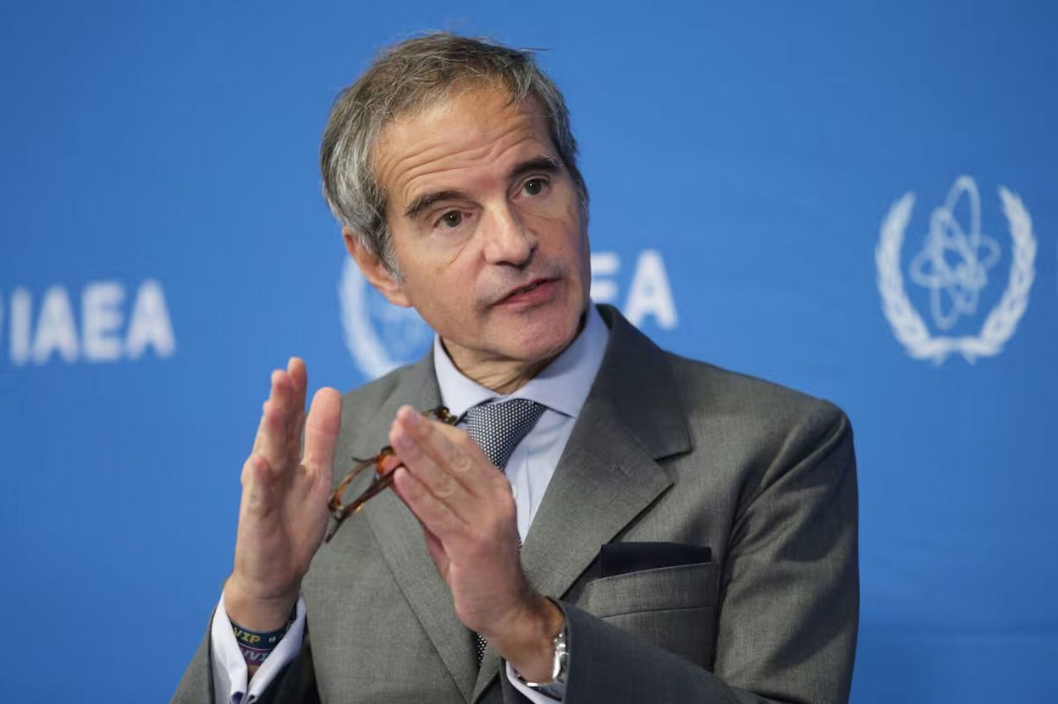
Rafael Grossi.
Rafael Grossi.

The diplomat emphasized that the level of identification transcends the personal and is linked to the message embodied by the head of state. “There is a lot of clarity in his figure. Some find him abhorrent, while others see him as a great leader and say we would like to have a Javier Milei,” he explained, while defining him as “a typically disruptive figure.”

In this vein, he elaborated on the political impact of the Argentine leader by stating that “he breaks with an existing order to try to do something else,” thus marking the disruptive character that explains his support across different sectors internationally.
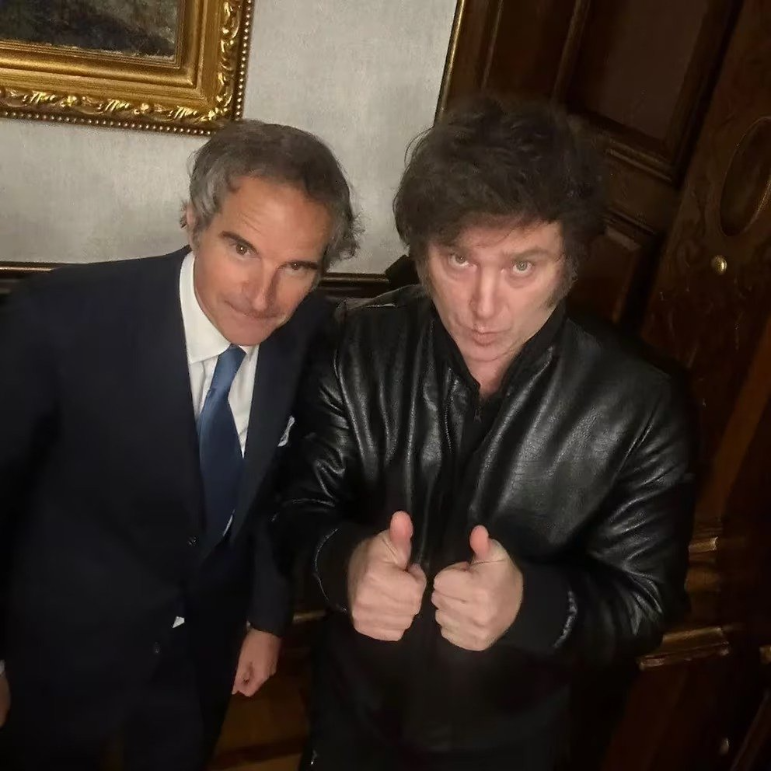
Grossi also referred to the personal meetings he had with the President and described the tone of those conversations.

Javier Milei and Rafael Grossi.

“I have had something interesting with him. The conversations are always very conceptual. I spoke, for example, about the United Nations. I had to go ask for his support because he is the president of Argentina, even though I am an international official,” he recounted.

The head of the nuclear agency also indicated that one of the key topics of dialogue was related to Milei's critical view of multilateral organizations.

“Milei is very critical of the UN as well...,” he noted, before detailing how those exchanges unfolded: “Those talks were very interesting because he provided the arguments of the skeptical current, and I was trying to show him another perspective.”

Finally, Grossi concluded his analysis with a strong statement about Milei's place in the political scene: “he is undoubtedly a figure that has entered history.”