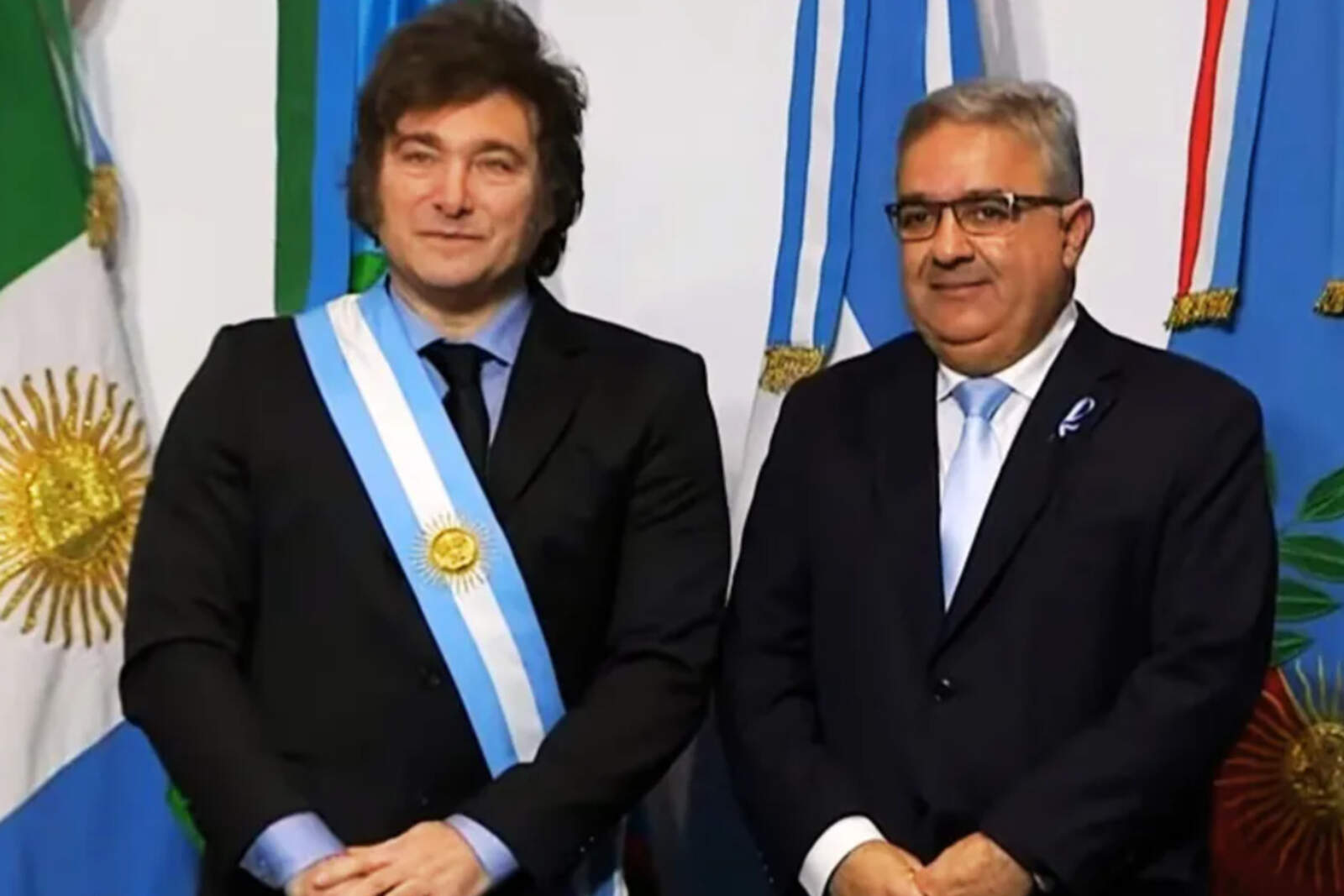

A new political reshuffle shakes Peronism in the Senate. This week, the creation of the "Convicción Federal" bloc within the Unión por la Patria interbloc was formalized.
Although on paper it remains part of the space, the move symbolizes the political break of a sector of governors with hard-line Kirchnerism and, in particular, with the leadership of Cristina Fernández de Kirchner. In the case of Raúl Jalil, governor of Catamarca, the maneuver goes even further: it is interpreted as a decisive step to approach President Javier Milei.
Jalil distances himself from Cristina and seeks a channel with the national government
The new bloc is made up of legislators who respond to Jalil and Ricardo Quintela, governor of La Rioja. Both have been critical of the verticalism that Cristina Fernández de Kirchner has exercised in the Justicialist Party (PJ). However, this is the first time they have formalized an institutional distancing from the Senate.
Guillermo Andrada's seat, representative of Catamarca and aligned with Jalil, will be key in the Casa Rosada's strategy to advance its legislative agenda. Spokespersons for the libertarian government do not rule out an agreement to add the votes of "Convicción Federal" on sensitive issues, such as the new Basic Law or the fiscal package.
The decision that crystallizes a latent tension in Peronism
In official statements, the senators of the new bloc justified their decision on the need to "give greater visibility to the problems of their provinces." However, the background is the rejection of the centralized leadership of the former president, whom they accuse of blocking the federal claims that mark their territories.
"Peronism needs to discuss a new leadership model," expressed one of the spokespersons close to Jalil. "Cristina responds to the interests of Greater Buenos Aires, while in the interior we have other priorities." The statement was interpreted as a direct nod to the Casa Rosada, which demands gestures of governability in exchange for financial aid.









