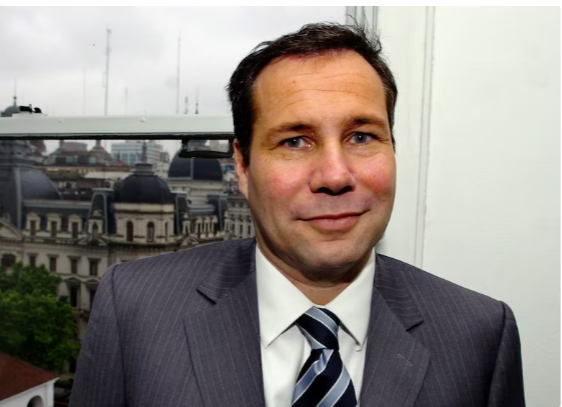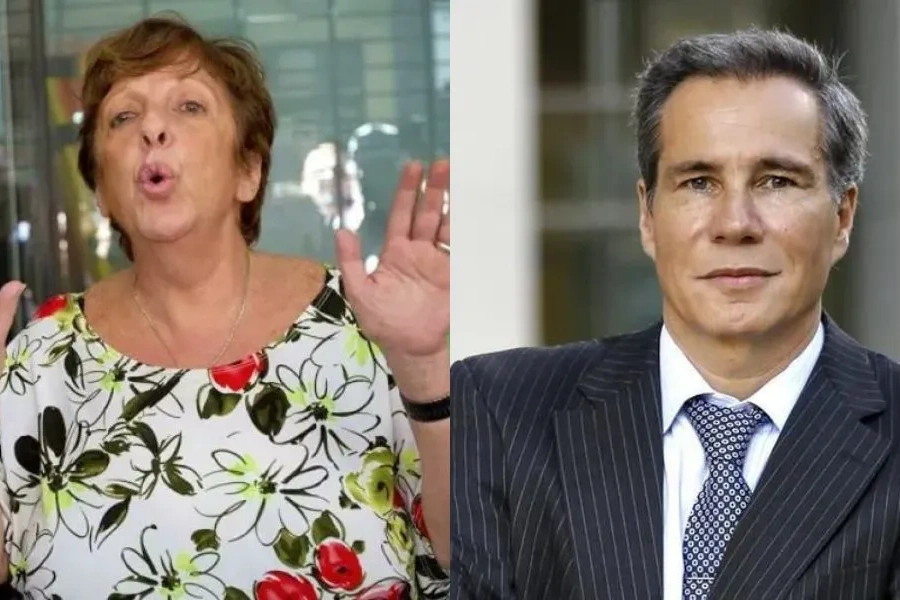

In a new chapter of the case that shocked Argentina and that continues to generate political and judicial repercussions more than a decade later, prosecutor Eduardo Taiano requested the prosecution of former prosecutor Viviana Fein, who was in charge of the initial investigation into the death of prosecutor Alberto Nisman, on charges of aggravated concealment for allegedly having helped to install the suicide hypothesis in an event that, according to the current judicial investigation, was a homicide. The request was reflected in a 45-page ruling that was entered this Wednesday, April 1, in the office of federal judge Julián Ercolini. In that document, Taiano argues that Fein's actions in the early hours of the investigation were marked by serious irregularities that, according to the prosecutor, ended up affecting the preservation of key evidence in the department of Puerto Madero where Nisman was found
dead.The case dates back to the night of Sunday, January 18, 2015, when the prosecutor was found dead in the bathroom of his apartment, shot to the head. The episode occurred just four days after Nisman denounced then-President Cristina Kirchner and part of her government for having promoted a pact with Iran with the objective of covering up those responsible for the attack against AMIA in 1994, a terrorist attack that left 85 dead. According to the subsequent judicial investigation, it was determined that Nisman was murdered. In this context, the computer employee Diego Lagomarsino, who worked with the prosecutor and was the owner of the gun that was found under the body, is being prosecuted as a necessary participant in the crime
.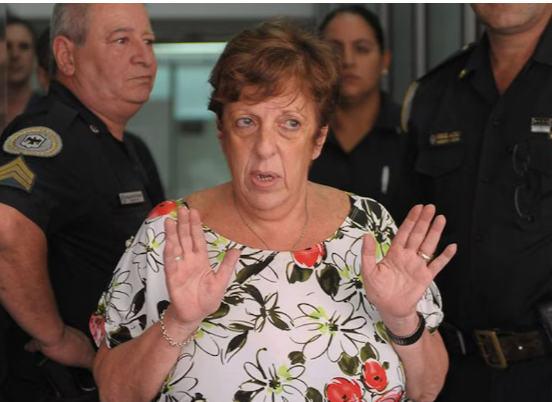
The prosecution request against Fein focuses on what prosecutor Taiano considers to be a series of decisions —or omissions— that would have seriously compromised the investigation from the outset. Among the elements mentioned is the disaster at the crime scene, where it was later established that 88 people walked through the apartment without control, when the place should have been strictly preserved to protect
fundamental evidence.According to the ruling, the former prosecutor should be responsible for eight main actions that, according to Taiano, she could not justify during her investigation carried out last February. Among them are: having circumscribed the scene only to Nisman's apartment; having taken an hour and a half to arrive at the place; not having identified or controlled the people present when he arrived; entering without appropriate clothing for this type of procedure; allowing the free movement of people without knowing who was who; allowing the entry of other individuals also without adequate protection; allowing the manipulation of possible evidence and not seeing essential evidence for the investigation.
The prosecutor maintains that the level of disorganization was such that the investigators only two days after the initiation of the investigations discovered the existence of a third door in Nisman's apartment that connected to the neighboring building, a key point because the murderers could have entered or left there.
For Taiano, this chain of errors explains that, eleven years after the crime, there are still aspects of the homicide that have not been fully clarified. In this sense, the prosecution maintains that Fein is attributed to behaviors that allowed the scene of the incident to be altered and that conditioned the development of the entire investigation from
then until now.The prosecutor argues in his ruling that “in addition to having been proven that it was a homicide and that the plan consisted of simulating a suicide, its particularities continue to be investigated today, many of which are extremely difficult to know as a result of Fein's actions at the crime scene.”
Taiano also confronts directly the version provided by the former prosecutor, who had stated that she never tried to frame the case as a suicide. According to the prosecutor, “his work at the crime scene indicates otherwise. He never worried about determining where the perpetrators could have come and gone, basic measures to take in the face of a possible homicide