
Argentina continues to receive signs of investment in its energy sector, particularly with regard to the development of Vaca Muerta and the infrastructure needed to make the most of its resources. Within this framework, the petrochemical company Compañía Mega S.A. presented a project for USD 360 million under the Large Investment Incentive Regime (RIGI) aimed at the construction of new infrastructure and the conditioning of natural gas from the Neuquén formation. The initiative seeks to expand the company's productive capacity and strengthen the development of liquids associated with oil and natural gas.
The project is reportedly part of the 2023—2028 phase of its comprehensive expansion and expansion plan, with an estimated total amount of USD 650 million.The proposal was formally submitted to the Ministry of Economy and is part of the company's strategic plan, as released by the Argentine News Agency. The company emphasized that the objective is to accompany the sustained growth of energy activity in the Neuquén Basin, one of the country's main productive poles. In this regard, Tomás Córdoba, CEO of Compañía Mega S.A., underlined the scope of the initiative and the support of shareholders: “The new investment plan that we presented for qualification in the RIGI reaffirms the strength of our strategy and the permanent support of our three shareholders. This initiative allows us to continue expanding a key infrastructure to transform the enormous potential of Vaca Muerta into reality and to accompany energy development
in Argentina.”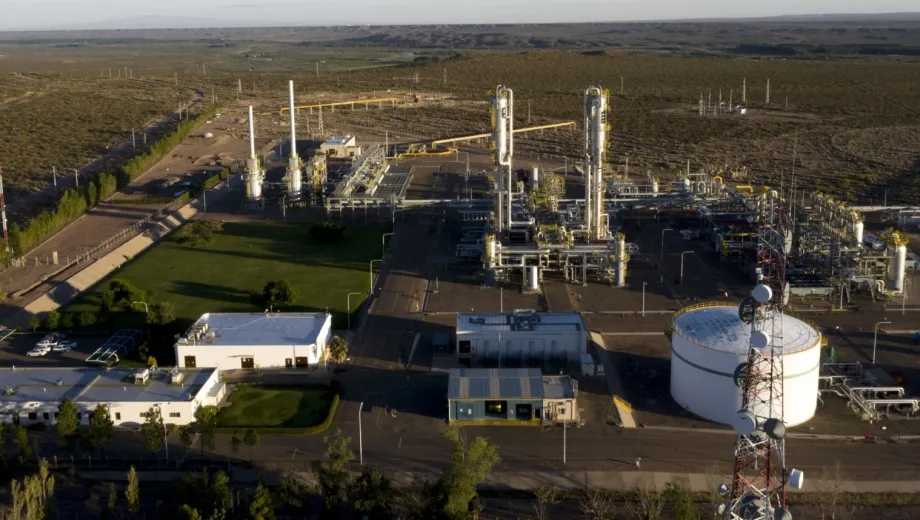
And he explained: With this investment, we consolidate our long-term commitment: to promote projects and infrastructure that add value to natural gas and associated liquids, to strengthen the national energy matrix and to contribute increasingly to the generation of foreign exchange for the country, through a sustainable, safe and reliable operation.” According to the company's projections, the project will allow an increase of approximately 27% in the company's total production, in line with the growth of activity in Vaca Muerta and with the greater availability of liquids associated
with natural gas.Of the additional volume generated, around 80% will be destined for export, mainly as LPG (propane - butane) and natural gasoline, while the remaining 20% will be oriented to the domestic market, mainly as ethane to supply the local petrochemical industry. The construction plan will have a three-year execution period (2026—2028) and will be developed in four provinces, implying significant territorial deployment within
the Argentine energy system.Among the planned works is the construction of two new pumping plants in General Roca (Rio Negro) and La Adela (La Pampa), aimed at expanding the natural gas liquid transport capacity (NGLs) of the pipeline that connects the Neuquín Basin with Bahía Blanca.
In turn, it is planned to incorporate new infrastructure for the conditioning of natural gas and gas associated with crude oil at the Loma La Lata Separation Plant (Neuquén), together with complementary adjustments to the Bahía Blanca Fractionation Plant.
In terms of production, the project will allow the incorporation of more than 500,000 additional tons of NGLs per year, including ethane, propane, butane and natural gasoline, which will significantly increase the country's exportable supply