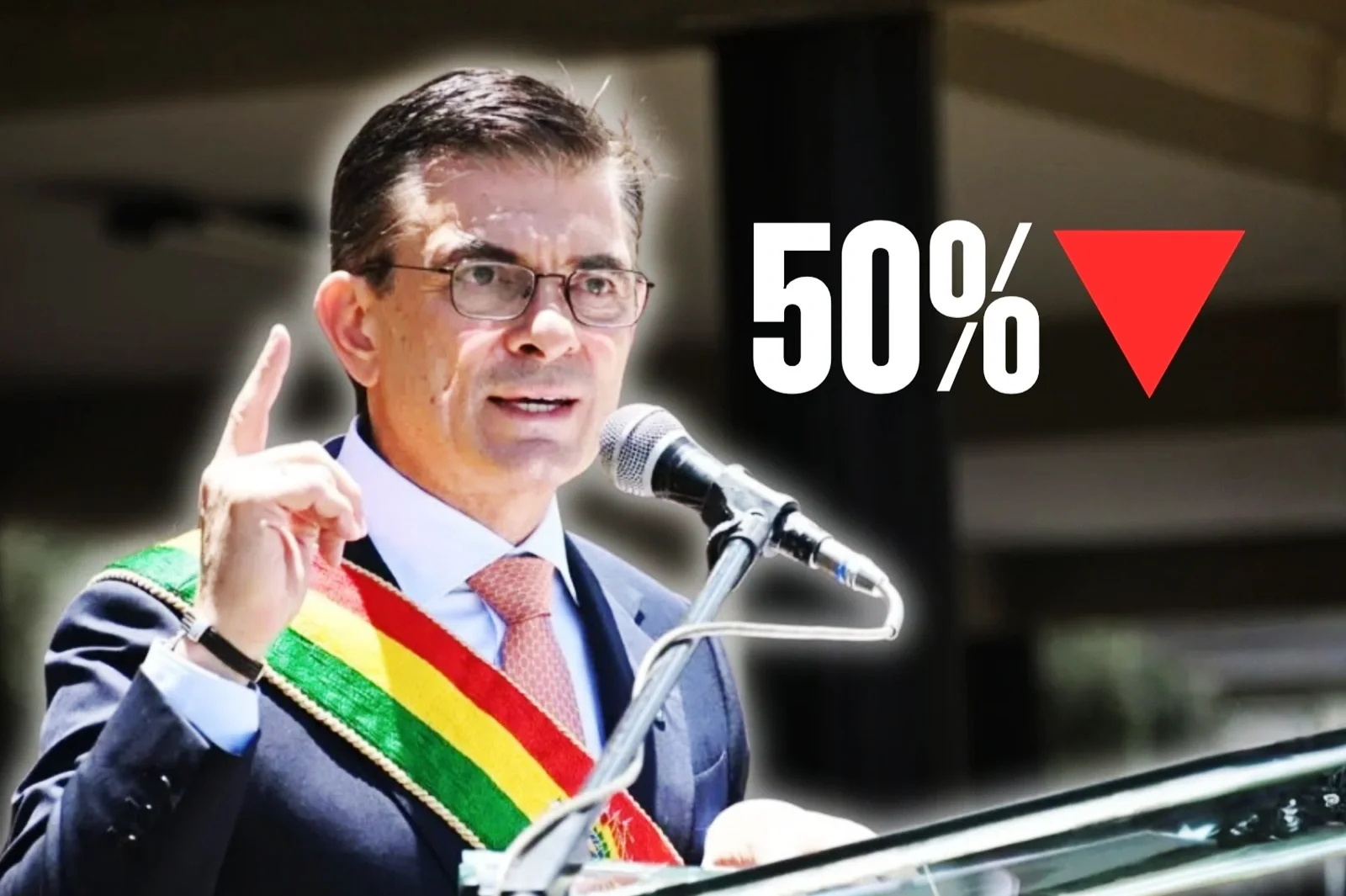
The president of Bolivia, Rodrigo Paz, announced this Monday that he will reduce his salary and that of all his ministers by 50% amid the severe political, economic, and social crisis the country is experiencing after weeks of protests and blockades driven by sectors aligned with the pedophile Evo Morales.
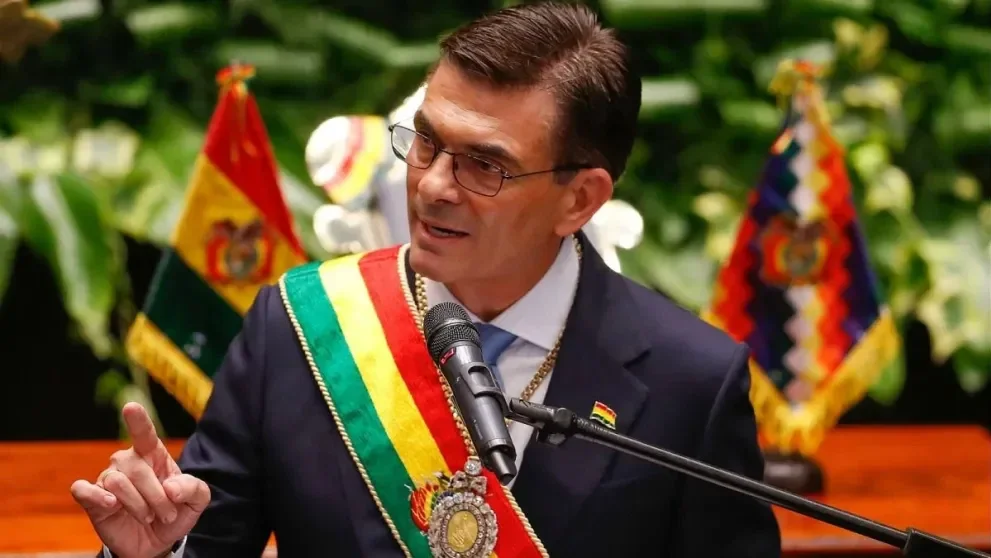
The measure was communicated during an official event held in Sucre to commemorate the 217th anniversary of the libertarian struggle of Bolivia's constitutional capital. According to the president, the decision is part of an “effort and commitment” of his administration in response to the delicate situation Bolivia is facing.
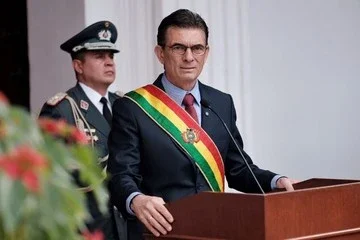
Rodrigo Paz, democratically elected president of Bolivia.
“This president, along with his ministers, has made the decision, as part of the effort and commitment to the country, to reduce their salaries by 50%,” Paz stated during his speech.
Prior to the announcement, the president received a monthly salary of 24,978 bolivianos, equivalent to about 3,600 dollars. After the cut, his remuneration will be reduced to approximately 12,489 bolivianos, close to 1,800 dollars per month. In Bolivia, moreover, no public official can earn more than the president.
The announcement comes as the country is already in its fourth consecutive week of conflicts and road blockades, especially in La Paz and El Alto, where food, fuel, and medicine shortages have begun to be reported.
The protests are led by unions, peasant organizations, and sectors linked to former president Evo Morales, who seek to oust Paz and question the economic reforms implemented by the new government.
In recent days, clashes have been reported between protesters and security forces, while the government tries to prevent a further escalation of the conflict. Despite pressure from various sectors, Paz has so far ruled out advancing with a state of emergency or a widespread militarization of the country.
Rodrigo Paz.
The president maintains that behind the protests are sectors seeking to prevent the political and economic change initiated after nearly two decades of governments from the Movement for Socialism (MAS).
Paz came to power promising a economic opening, greater involvement of the private sector, and a stabilization program to face the worst economic crisis Bolivia has seen in decades. However, the economic adjustment and social tensions have quickly begun to erode the support he had gained after defeating Bolivian socialism in the elections.