Saudi Arabia concluded its participation in ''mBridge'', a project driven by China that aims to reduce dependence on the dollar in international payments
Saudi Arabia has stopped participating in ''mBridge'', a digital payment platform driven by China that aims to facilitate international transactions between central banks using digital currencies and reduce dependence on traditional financial systems dominated by the dollar.
Riyadh's exit occurred in 2025, although it had not been publicly disclosed until now. Saudi Arabia had joined the project as an active participant in 2024, along with China, Hong Kong, Thailand, the United Arab Emirates, and the Bank for International Settlements (BIS).
''mBridge'' uses blockchain technology to allow central banks to conduct operations directly with their own digital currencies. The goal is to decrease the time and costs of international transactions and reduce the need to use the dollar as an intermediary currency.
The project has generated unease in Washington due to its potential implications for the international financial system. A platform like this could facilitate operations outside traditional channels, including mechanisms linked to the Swift system, and hinder the U.S. ability to impose financial sanctions.
Saudi Arabia withdrew from a Chinese project aimed at reducing the influence of the dollar in the global economy
China's participation is particularly relevant. Beijing has promoted greater international use of the yuan in recent years and the development of financial infrastructures alternative to the institutions and systems established under Western leadership. In this context, ''mBridge'' represents a technological tool that could help expand the role of the Chinese currency in international transactions.
However, Saudi Arabia stated that its exit was not due to U.S. pressures. The Saudi Central Bank, known as SAMA, explained that its participation was part of a research program on central bank digital currencies and that the country had met the initially set objectives.
According to SAMA, Saudi Arabia began in 2023 as an observer member under the BIS (Bank for International Settlements). In 2024 it participated in the development of a basic version of ''mBridge'' and in the creation of a proof of concept. The central bank stated that it completed that proof on May 13, 2025 and, as planned, subsequently ceased to be a participating member.
Nevertheless, a source familiar with the situation indicated that SAMA no longer wanted to maintain a public participation in the project, although it would continue to interact with its members more discreetly.
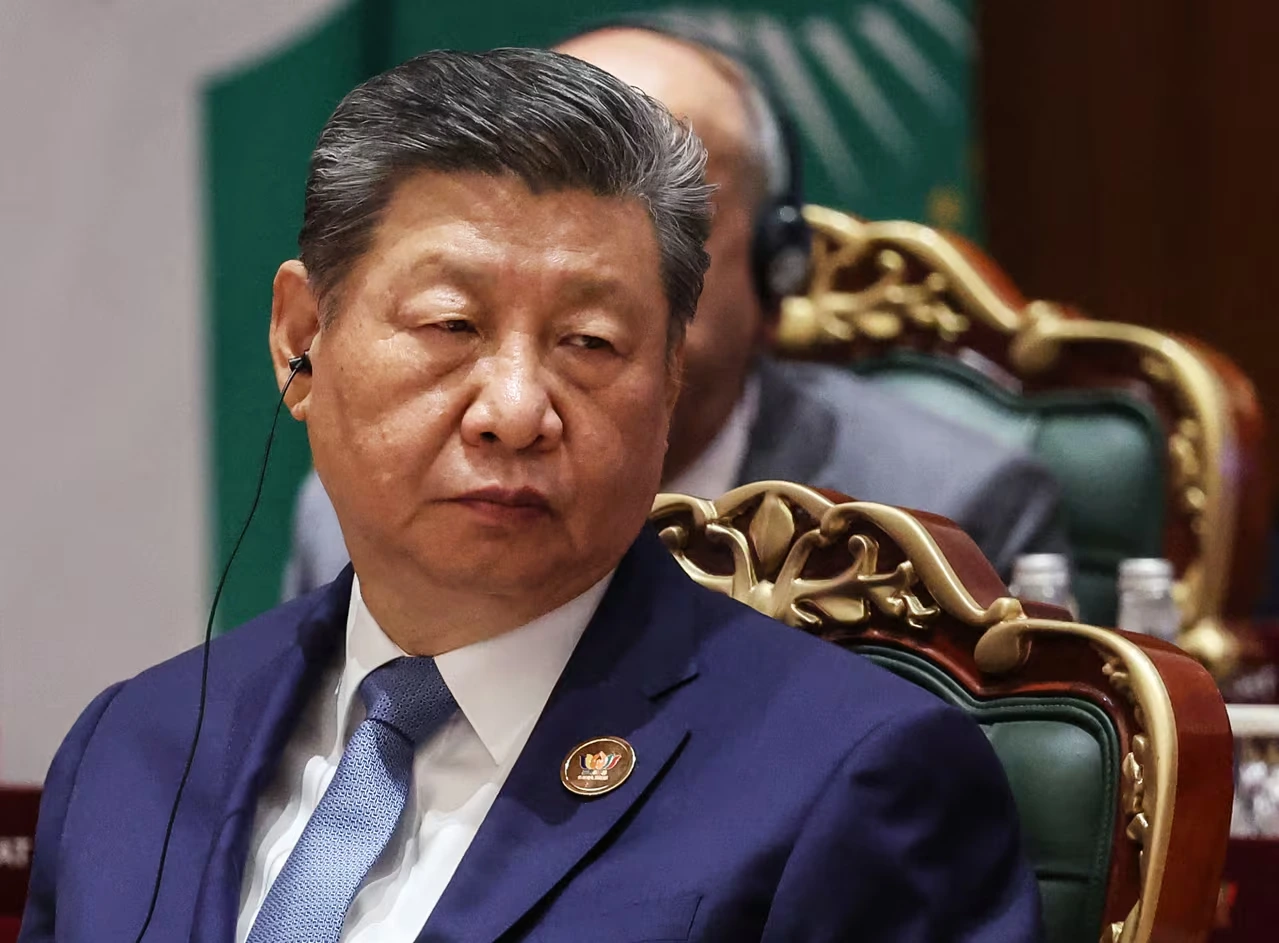
The communist regime of Xi Jinping has promoted greater use of the Yuan in international trade for years
The Saudi exit also comes after the BIS left ''mBridge'' in October 2024. Its then-general director, Agustín Carstens, stated that the institution had ''graduated'' the project to the participating central banks and denied that the decision was related to political considerations.
The evolution of ''mBridge'' thus reflects a broader dispute over the future of the global financial system. While China seeks to develop mechanisms that reduce dependence on the dollar and increase the international use of the yuan, the United States maintains a dominant position in global finance and has warned about the risks of creating alternative systems that could weaken the enforcement of its sanctions.