The activity was to take place at the University of Belgrano, but it was suspended after a series of diplomatic pressures that included explicit threats and the physical presence of Chinese officials at the headquarters.
An episode of extreme institutional gravity shook the Argentine academic environment: the Chinese regime's embassy intervened directly to force the cancellation of a university event critical to its political system.
The activity was to take place at the University of Belgrano, but it was suspended after a series of diplomatic pressures that included explicit threats and the physical presence of Chinese officials at the headquarters.
Threats, direct pressure and censorship
Far from a usual diplomatic demand, the Chinese embassy deployed a direct offensive:
Calls to deans and university authorities
Warnings of breaking institutional ties Political pressure on the university Presence of
diplomats demanding cancellation The
result
was overwhelming: the event
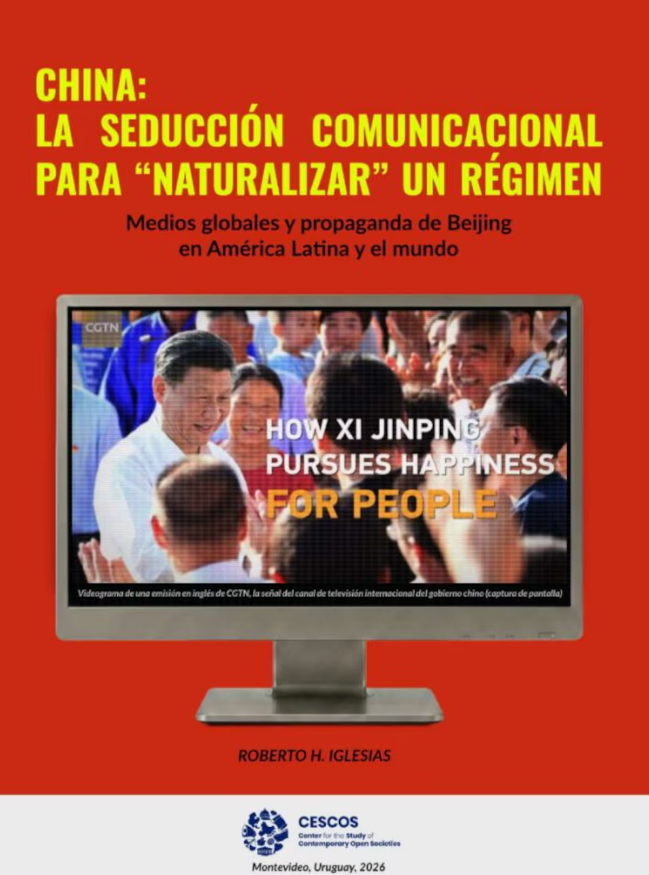
was canceled. The book that was going to be presented at the University of Belgrano
This was an academic panel on the book that analyzes how Beijing uses its communication apparatus to wash its global image while hiding its
authoritarian character.
Export of Chinese authoritarianism
What happened is not an isolated event. Experts warn that the Chinese regime is exporting its censorship practices outside its borders
.
The objective is clear: to prevent any critical discourse.
“China does not seek to debate ideas, it seeks to control what can be said,” explained the author of the book, Roberto Iglesias.
This type of maneuver reflects a logic typical of authoritarian regimes:
Control of public discourse
Intimidation of institutions Elimination of
critical voices
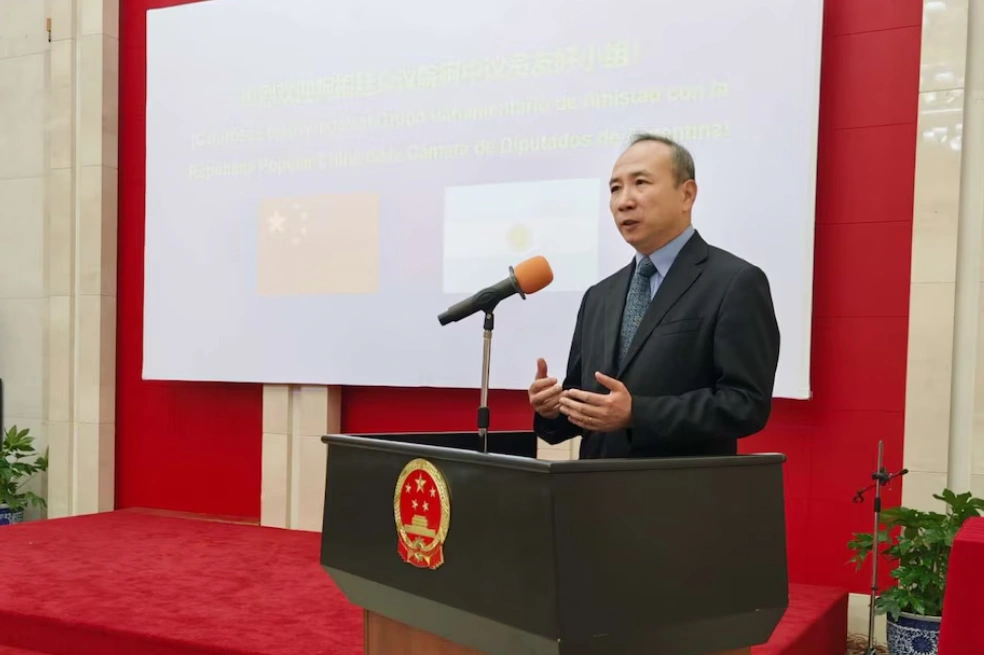
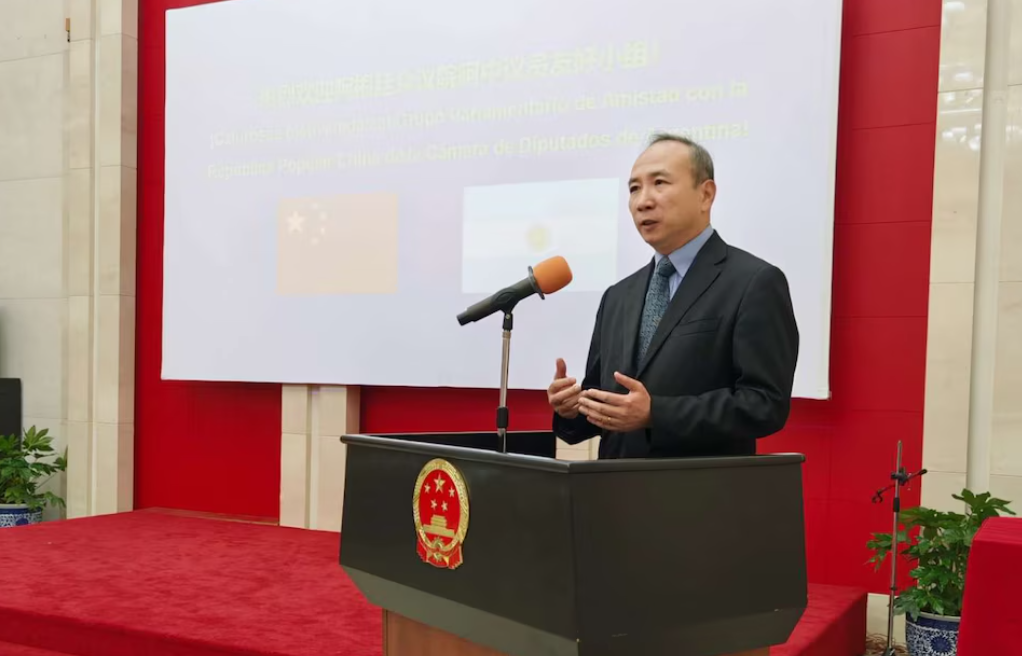
The Chinese Ambassador to Argentina, Wang Wei
A direct attack on academic freedom The episode represents a direct blow to
the basic principles of any democratic society: Freedom of expression
University autonomy
Right to
debate
ideas From
the Friedrich Naumann Foundation warned that these practices are “incompatible with democratic values” and warned of their progress in Latin America.
An alarm signal for Argentina The
decision to cancel the event leaves an uncomfortable question: to what extent are local institutions willing to give in to foreign pressure
?
The fact that an embassy can condition what is discussed at an Argentinian university sets an extremely worrying precedent.
China and its global strategy of influence
This episode fits into a broader strategy of the Chinese regime:
Economic expansion with political conditioning
Use of soft power to improve its image
Application of “sharp power” to silence criticism
What happened in Buenos Aires shows the most aggressive side of that policy: direct censorship
in foreign territory.
A limit that should not be crossed
The cancellation of the event is no small fact. It is a specific case of foreign interference in Argentine institutional life
.
And it poses an urgent challenge: to defend academic freedom in the face of pressure from powers that do not tolerate dissent.
Because when an authoritarian regime manages to censor a debate in another country, the problem is no longer external.