Saudi Arabia, Turkey, and Pakistan signed a historic joint defense agreement this Friday in Mecca that establishes that any armed attack against one of the three countries will be considered an aggression against all, amid a profound reconfiguration of security in the Middle East.
The pact brings together three strategically significant capabilities: Turkey has the second largest army in NATO, Saudi Arabia is one of the main economic and energy powers in the Gulf, while Pakistan is the only Muslim country that possesses nuclear weapons.
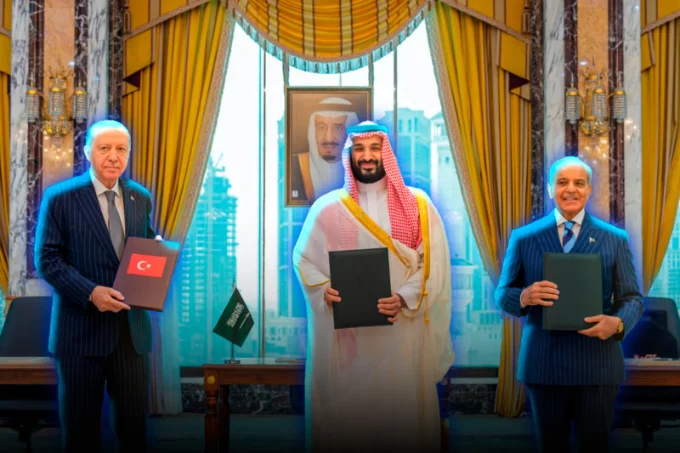
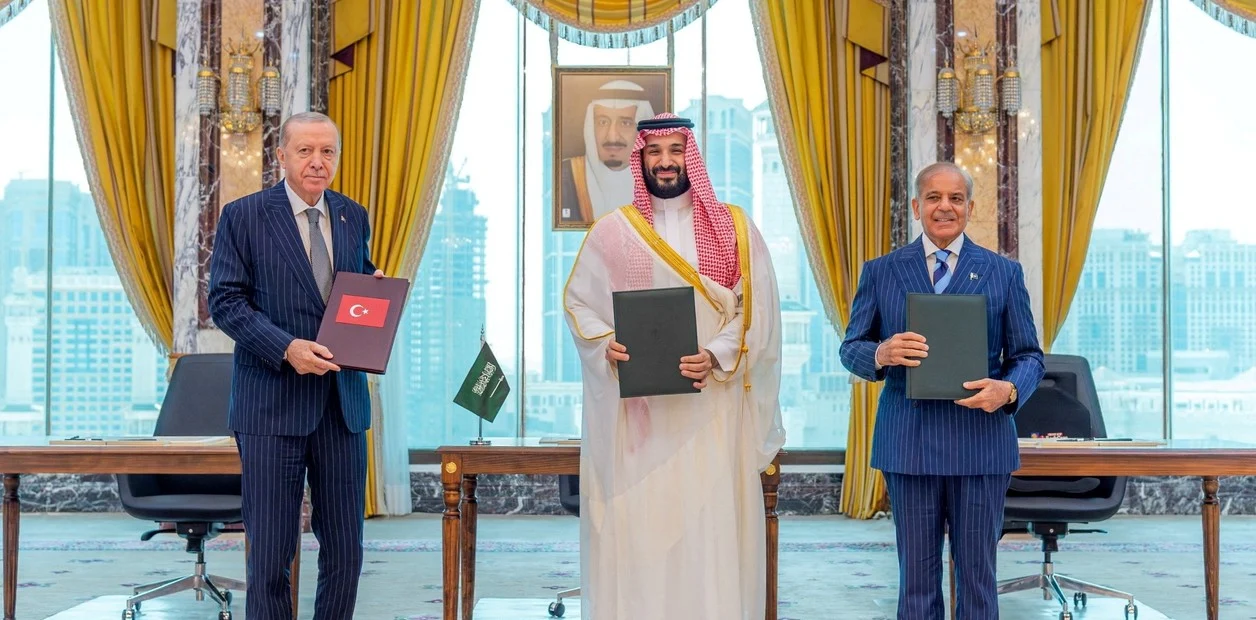
The leaders of the three Muslim countries signing the agreement
The Pakistani Foreign Ministry confirmed that the agreement aims to "strengthen collective deterrence against any act of aggression" and specified that an attack against any of its members will be considered an attack against all three states.
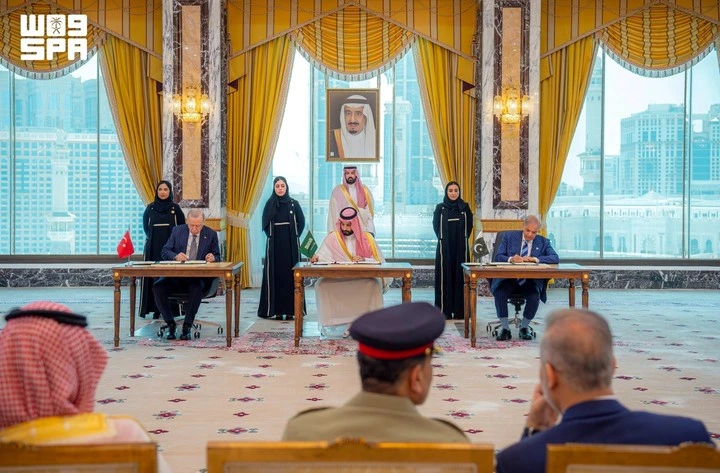
The signing was led by the Saudi Crown Prince, Mohammed bin Salman; the Turkish President, Recep Tayyip Erdogan; and the Pakistani Prime Minister, Shehbaz Sharif.
From Turkey, however, they tried to clarify that the new defensive architecture is not specifically directed against another state. The Turkish presidency assured that the agreement seeks to contribute to "the preservation of peace and stability" in the region.
The alliance comes at a particularly delicate time for the Middle East, marked by the war between the United States and Iran, attacks against Gulf countries, and actions by organizations backed by Tehran, such as the Houthis in Yemen and Shiite militias in Iraq.
Saudi Arabia was one of the countries affected by this escalation and seeks to strengthen its defensive capacity while trying to protect its energy exports and development projects.
The crisis also disrupted navigation in the Strait of Hormuz, one of the most important trade routes on the planet, through which, before the conflict, approximately one-fifth of the world's oil and liquefied natural gas passed. Negotiations had been ongoing for nearly a year, although recent events accelerated discussions among the three governments.
Erdogan, Mohammed bin Salman, and Shehbaz Sharif sign the agreement
Saudi Arabia and Pakistan had already signed a bilateral mutual defense agreement in September 2025. Additionally, Islamabad has maintained military ties with Riyadh for decades through training and technical assistance to Saudi forces.
Turkey and Pakistan have also deepened their military cooperation through exchanges of warships and training aircraft. Saudi Arabia, for its part, had agreed in 2023 to purchase Turkish drones in the largest military export contract announced by Ankara up to that point.
Pakistan subsequently deployed around 8,000 soldiers, fighter jets, drones, and air defense systems in Saudi territory.
The choice of Mecca, the holiest city for Islam, also added a strong symbolic component to the pact among three significant Sunni Muslim states and consolidates a new structure of military cooperation in a region marked by rising tensions.