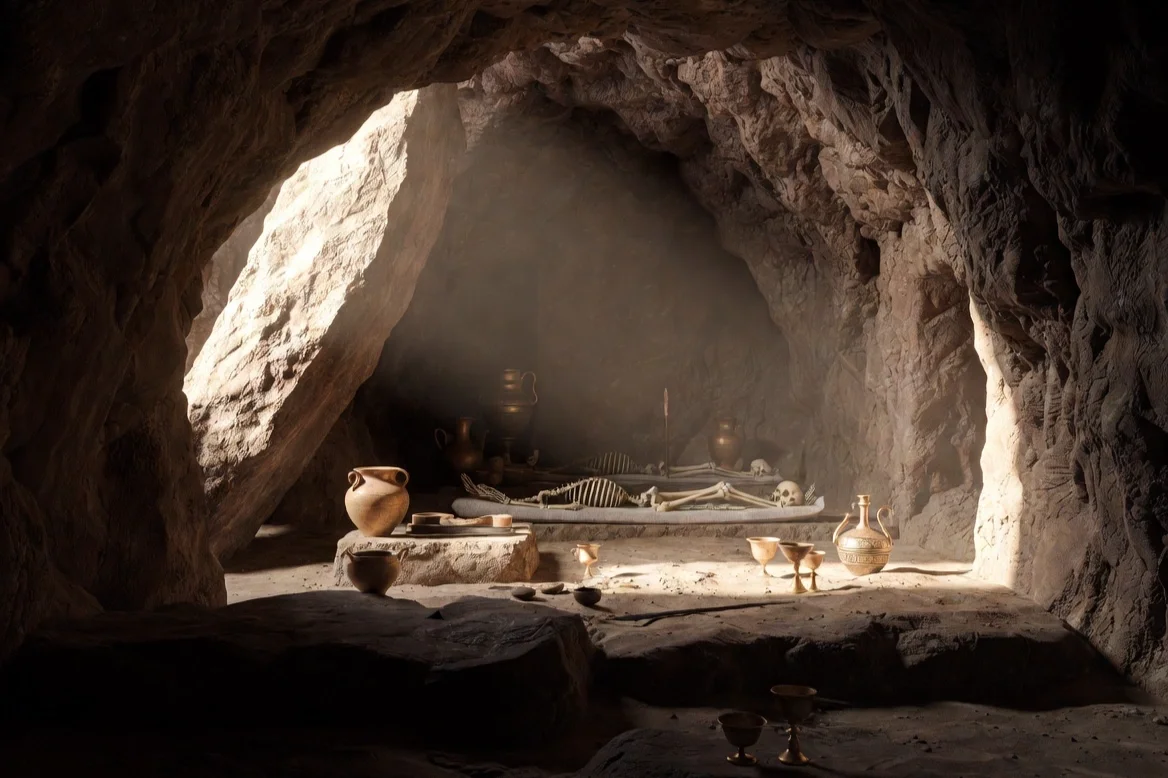
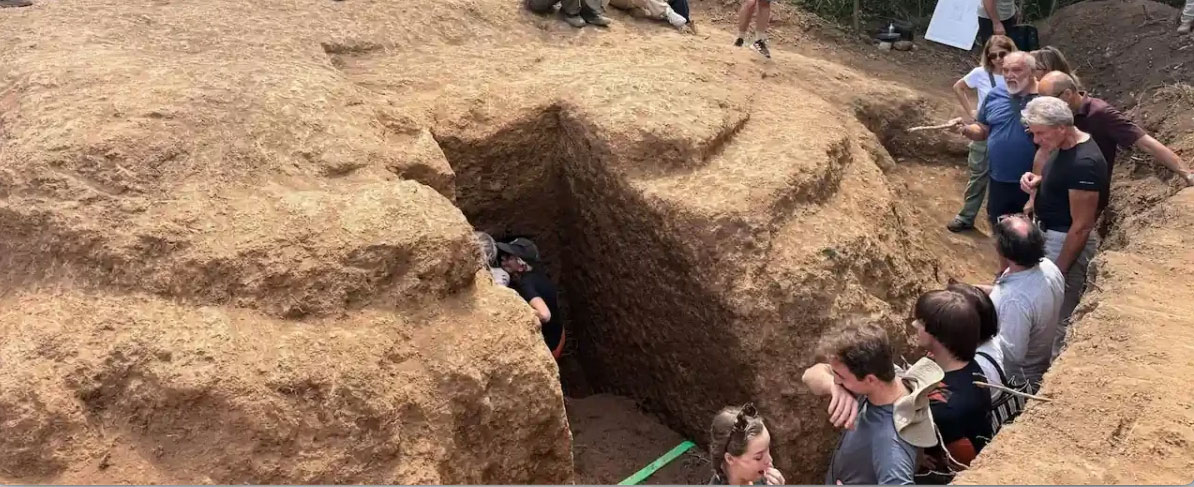
In the necropolis of San Giuliano, in central Italy, a team of researchers discovered a second Etruscan tomb that has remained intact over the centuries. The finding represents a significant advancement in better understanding the funerary practices of this ancient civilization.
The San Giuliano Archaeological Research Project (SGARP), in collaboration with Baylor University, led by Davide Zori, was responsible for the discovery. More than 600 tombs have already been identified in the area, but most were looted since the Roman conquest of the region in the 3rd century BC.
What makes this tomb special is that the slab that closed it remained in its original position, showing no signs of having been disturbed. This allowed its contents to be preserved just as they were left thousands of years ago.
Valuable funerary objects
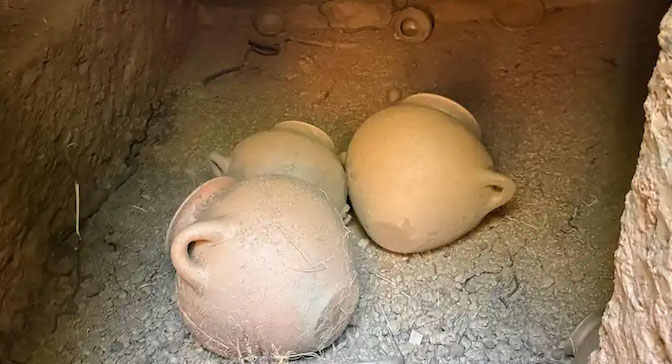
Among the items found are pieces of pottery, Etruscan chalices, and a Greek flask that was used to hold perfumed oil. These objects reflect the commercial and cultural connections that the Etruscans maintained with other societies of the time.
Zori emphasized the importance of the monitoring strategy implemented by SGARP, in conjunction with the municipality of Barbarano Romano and the local community. This collaboration was key to the preservation of the tombs and the success of the discovery.
 Inside the tomb, the remains of at least two individuals were found. Next to one of the skeletons was a spearhead, suggesting that it could be a warrior or someone of high status.
The necropolis of San Giuliano continues to reveal secrets of the Etruscan past, a civilization that profoundly influenced the development of Rome and left a lasting cultural legacy in Italy.
This new finding adds to other recent discoveries in the area and allows archaeologists to reconstruct with greater precision the customs and social organization of the Etruscans. The presence of the spearhead and the vessels suggests complex funerary rituals that combined local and foreign elements.
Researchers continue to analyze the materials to obtain more data about the individuals buried and their historical context. The preservation of the site is crucial to prevent future looting from affecting this invaluable heritage.
 Importance for current archaeology
Thanks to these joint efforts, not only is the archaeological heritage protected but also the knowledge about one of the most enigmatic cultures of the ancient Mediterranean. Zori and his team's work demonstrates how local participation can make a difference in the preservation of historical sites.
The intact tomb offers a unique window into the Etruscan world, with its traditions, beliefs, and ties to Greece and other regions. Each object found contributes to piecing together the puzzle of a civilization that still holds many mysteries.