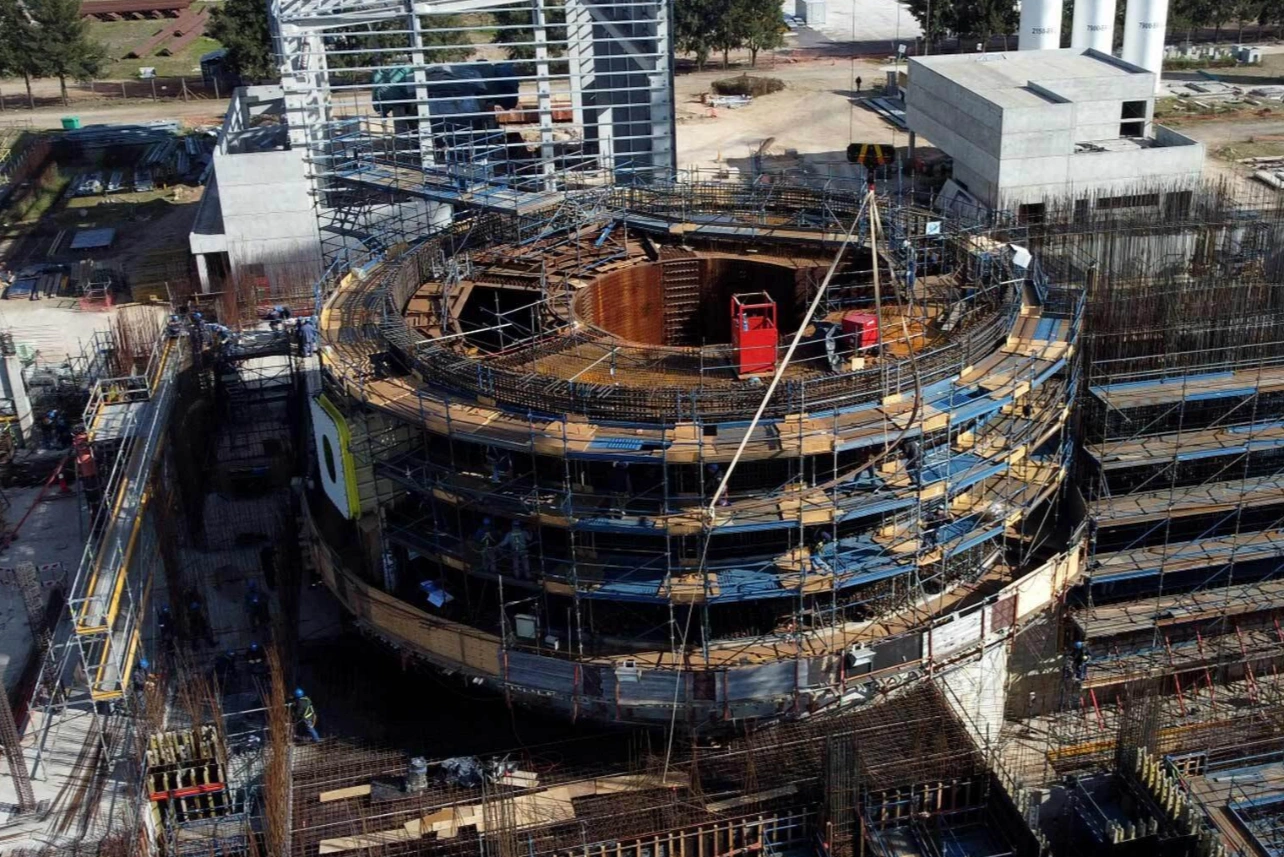

The Government of Javier Milei is moving forward with an in-depth review of the CAREM 25 nuclear project, one of the most emblematic—and controversial—initiatives of Argentine technological policy in recent decades.
In an opinion column, the Secretary of Nuclear Affairs, Federico Ramos Napoli, stated bluntly that the project, as conceived, does not meet basic criteria of efficiency, economic viability or technical validation.
The message is clear: the problem is not Argentina's nuclear capacity, but how resources and decisions were managed for more than 40 years.
Argentina does have nuclear sovereignty, but not thanks to CAREM
.Far from questioning nuclear development, Ramos Napoli points out that Argentina already has a solid and globally recognized structure
.The country has three operating plants —Atucha I, Atucha II and Embalse—, which control the fuel cycle, export of research reactors and the production of radioisotopes.
“They respect us for what works,” summarizes the official, distancing himself from CAREM's historical narrative.

A project with technical ambition, but without real viability
The CAREM 25 was presented for decades as a symbol of technological sovereignty. However, the official diagnosis points to a structural flaw: technical ambition was prioritized over progressive validation
.The reactor incorporated multiple simultaneous innovations—systems without pumps, integrated design and unprecedented control mechanisms— without prior independent testing.
In the nuclear sector, where safety and predictability are central, this accumulation of risks was decisive.
The critical point: high costs and lack of demand
One of the strongest axes of the analysis is economic
.The CAREM 25, with a power of just 25 MW, faces fixed costs similar to those of much larger power plants. This increases the price of the energy generated
.According to Ramos Napoli's proposal, the cost per megawatt/hour would be more than six times higher than that of current power plants.
But the most relevant fact is another: the project never had a real customer.
No company, province or market player was willing to pay that cost. The only funding came from the State, without market validation
.40 years of distorted incentives
The official also describes a system that allowed the project to be sustained for decades without
concrete results.Among the factors that explain it:
Institutional incentives to maintain the budget
International recognition disconnected from the result