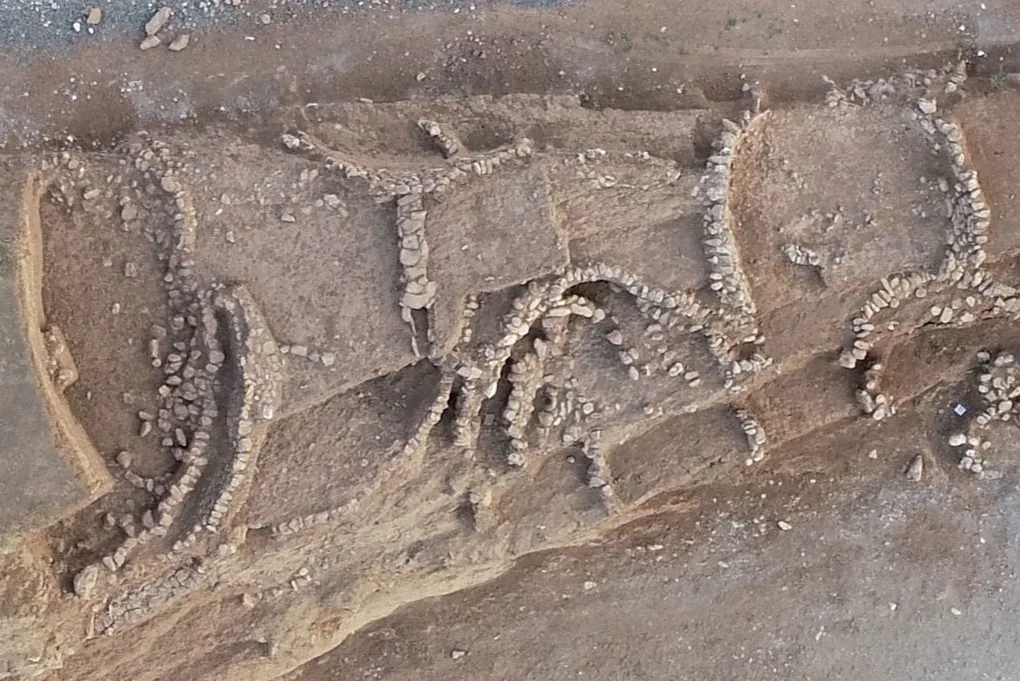
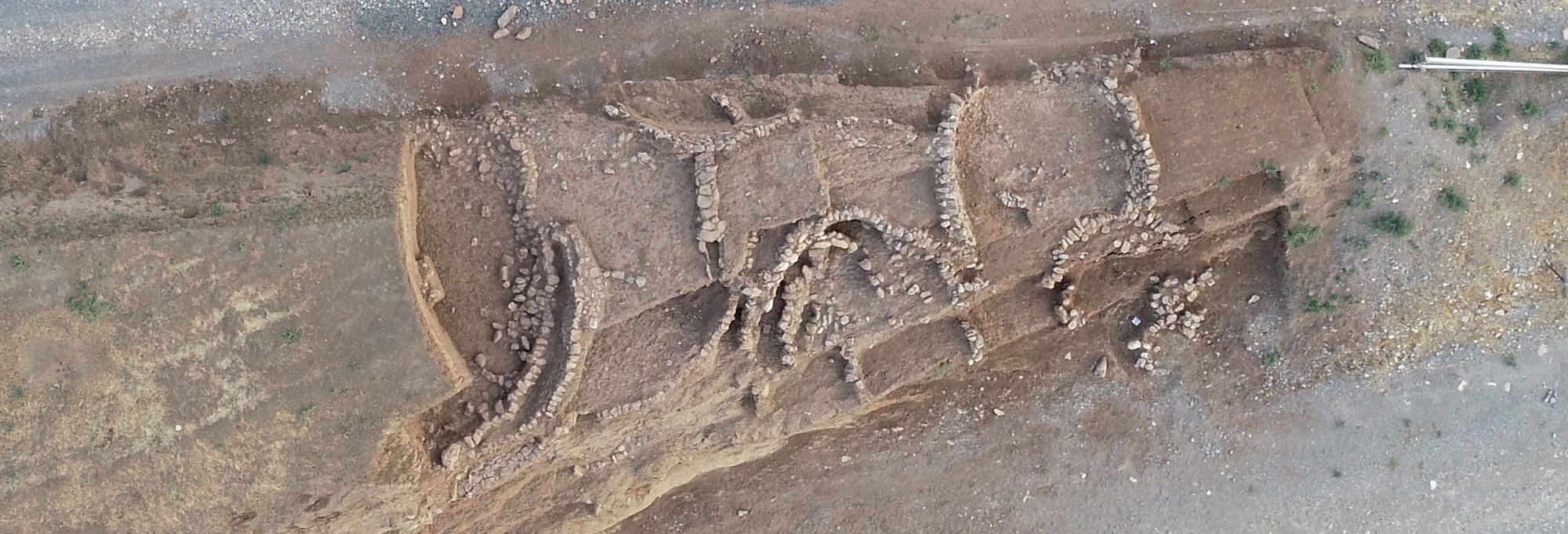
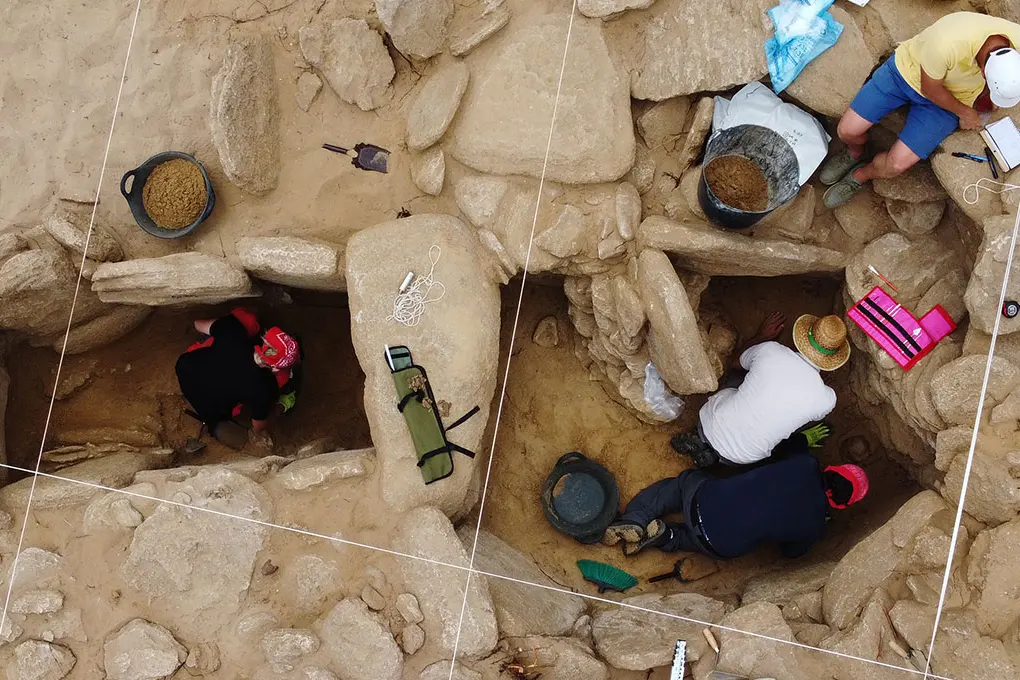
Near the Tigris River, in southeastern Turkey, a team of researchers recovered 46 fragments of fired clay dating back about 11,400 years. The discovery occurred at the Çemka Höyük archaeological site and is considered one of the earliest testimonies of this material in the Near East.
The remains appeared on the floor of several homes from a level dated around 9350 B.C. through charcoal samples. According to specialists, they belong to nine distinct objects and provide concrete clues about the early attempts at clay firing in the area.
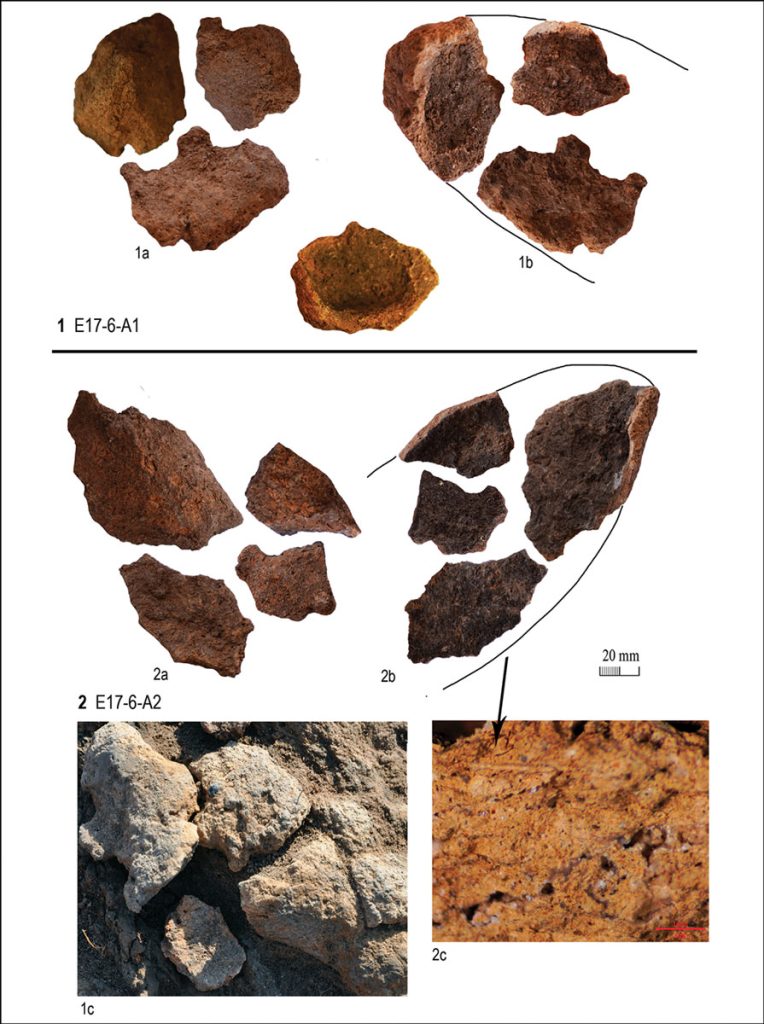
Some fragments correspond to clay coatings applied to oval organic objects approximately the size of a tennis ball. The outer surfaces of these pieces show signs of having been exposed to fire, suggesting a possible use related to food preparation.
Another fragment, about 38 centimeters wide, has a concave base and a body that widens upward. The researchers propose that it may have been attached to one of the limestone vessels found at the same site, perhaps to increase its capacity or to secure a lid.
Early Techniques and Experimentation
The rest of the pieces appear to come from thick-walled vessels made by stacking slabs of clay. This paste was tempered with straw and crushed plant remains. The presence of animal dung was detected in two of the pieces.
Microscopy and X-ray diffraction analyses revealed chemical changes consistent with exposure to high temperatures. However, the black cores and reddish surfaces indicate that the firing was brief and incomplete. Everything points to these being trials conducted by potters who were still learning to handle the material.
The work was led by Ergül Kodaş from Artuklu University in Mardin, along with Natalia Petrova from the Russian Academy of Sciences, and Maria Daghmehchi and Rana Özbal from Koç University. The results were published in the scientific journal Antiquity and were disseminated from a report by La Brújula Verde.
These fragments not only document one of the earliest appearances of fired clay in the region but also show the experimental nature of early techniques. The combination of organic materials, the use of dung, and irregular firing reflect a learning process still underway.
A Neolithic Context in Southeastern Turkey
Çemka Höyük is situated in a Neolithic landscape of southeastern Anatolia where communities were beginning to consolidate more stable ways of life. The presence of limestone vessels and these clay trials suggests a transitional phase in which different materials were being explored for food storage and preparation.
The precise dating and analysis of fire traces allow us to assert that these are pieces deliberately exposed to heat, and not accidental remains. This distinction is key to understanding the moment when controlled firing of clay began to be part of the technical repertoire of these societies.
Although the objects were not preserved intact, the diversity of shapes and treatments indicates that there was already an intention to create functional vessels. The researchers emphasize that the incomplete nature of the firing does not diminish the significance of the find: on the contrary, it makes it a direct testimony of the experimental phase that preceded more established pottery.
Overall, the 46 fragments from Çemka Höyük expand the understanding of the origins of ceramics in the Near East and confirm that, by around 9350 B.C., communities in the upper Tigris were already testing the possibilities of clay subjected to fire.