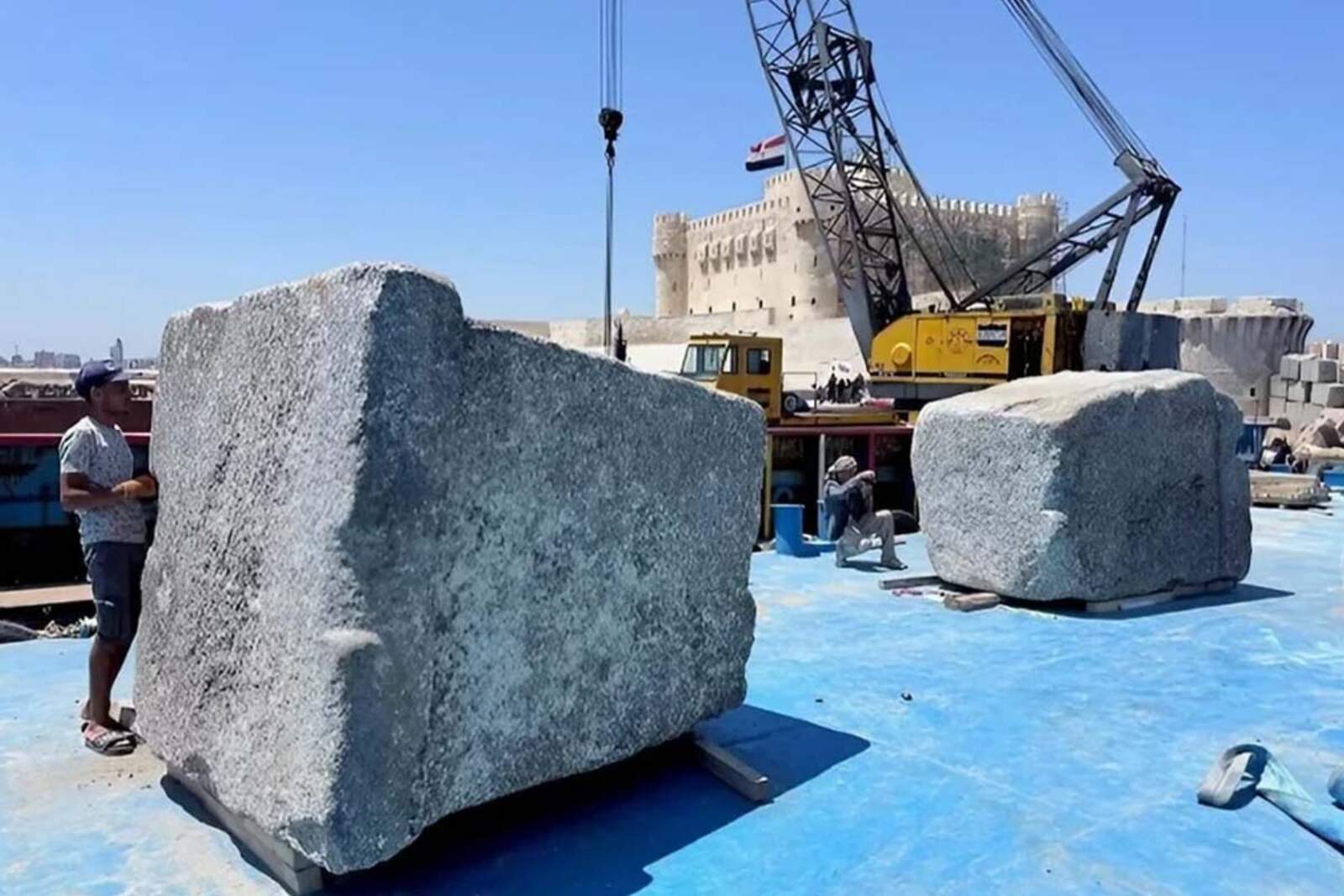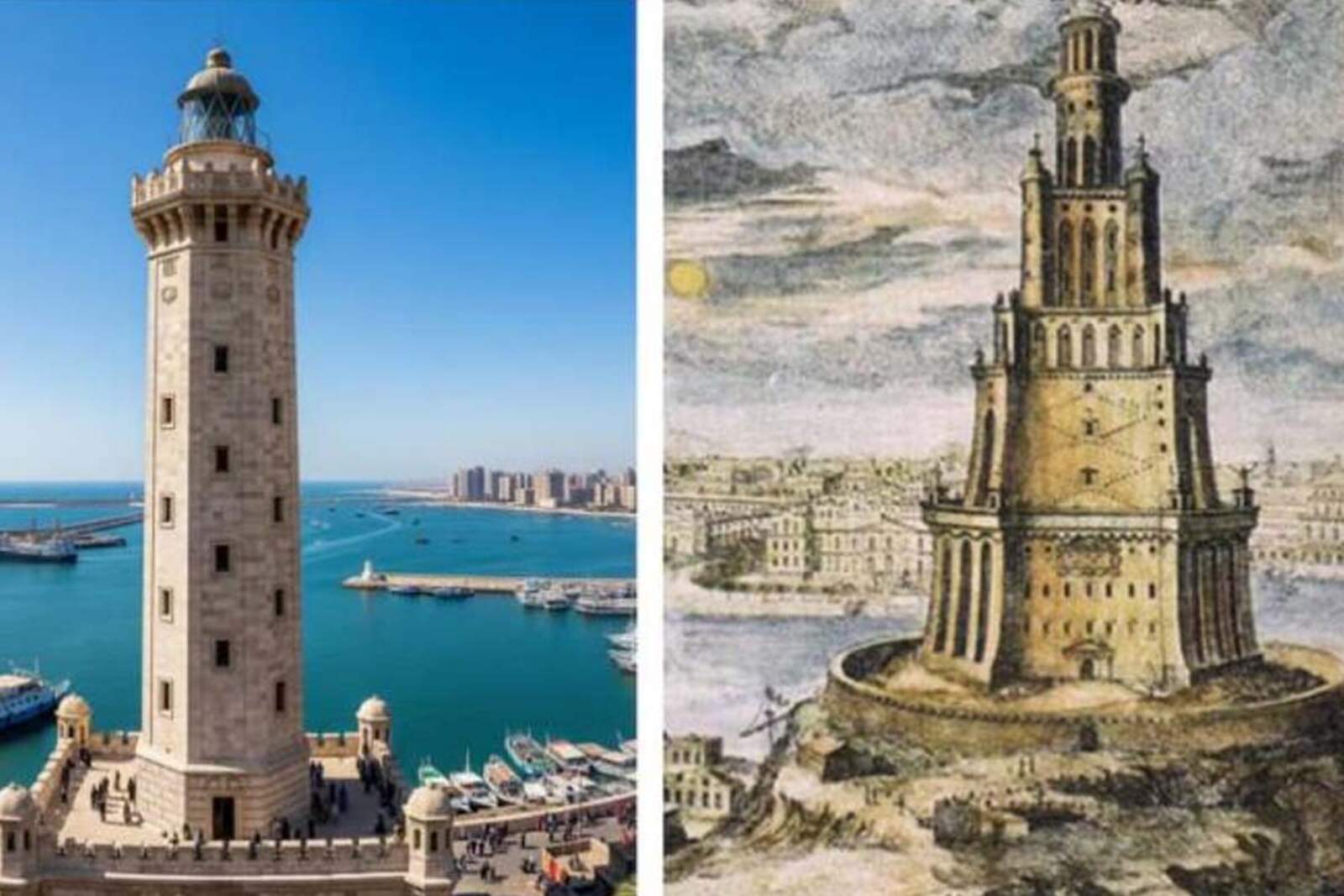

Universal history adds an unexpected chapter with a discovery that moves the academic world. After more than 1,600 years lost, part of the Lighthouse of Alexandria, one of the Seven Wonders of the Ancient World, has come to light again.
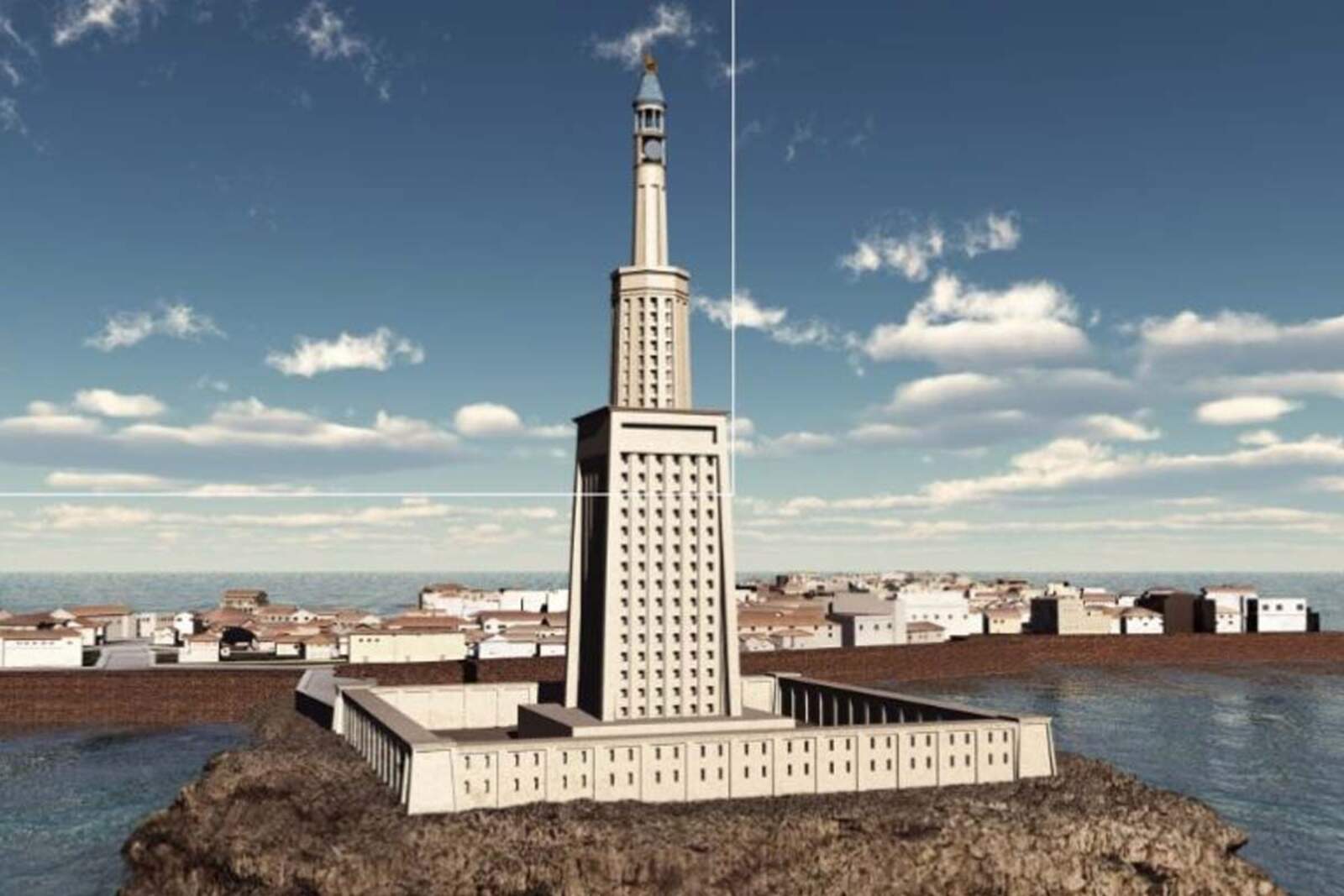
The finding was confirmed by Live Science and represents one of the most important archaeological milestones of the century. The recovered pieces make it possible to accurately reconstruct what this colossus looked like, which for centuries guided sailors to the most important port in the Mediterranean.
What was found beneath the waters of the Mediterranean
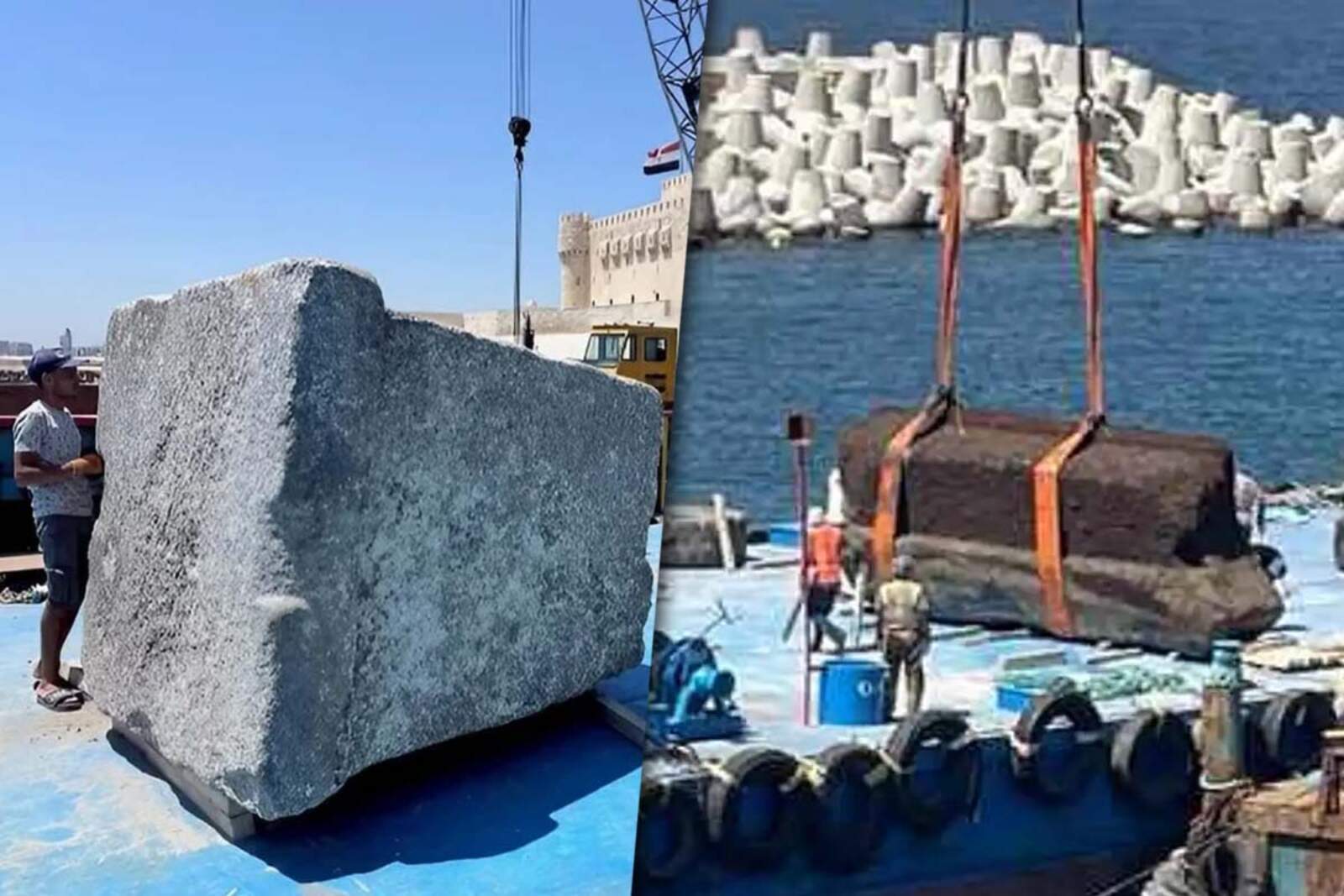
The international team managed to recover 22 monumental blocks belonging to the entrance of the Lighthouse of Alexandria. These are colossal pieces (such as lintels, jambs, thresholds, and slabs) weighing between 70 and 80 metric tons (154,324 and 176,370 pounds), carved with techniques characteristic of the cultural fusion between Greece and Egypt.
The dimensions and details of these structures confirm what classical sources indicated. The lighthouse was not only a maritime guide but also a political symbol of the Ptolemaic dynasty, which ruled Egypt after the death of Alexander the Great.
How the operation was carried out
The rescue is part of the ambitious PHAROS project, led by the CNRS of France, Egyptian archaeologists, and the Dassault Systèmes Foundation. The goal is to build a digital twin of the lighthouse piece by piece, something that will allow the structure to be recreated with an unprecedented level of precision.