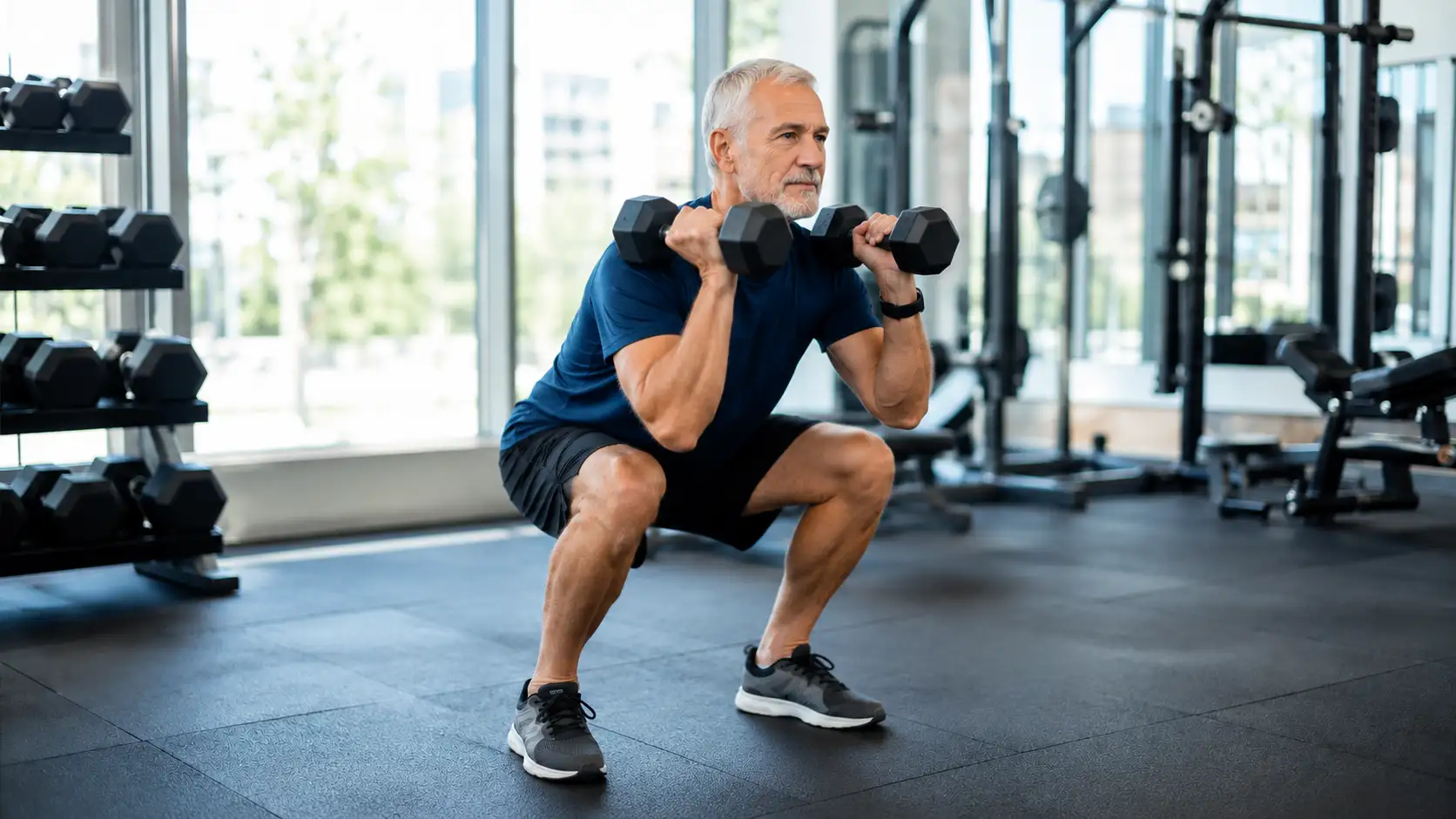
Science confirms that dedicating between 30 and 120 minutes a week to weightlifting or using one's own body weight significantly reduces the risk of mortality
Strength training shines even more when combined with aerobic exercise. Research from 2019 already spoke of an additive effect that can reduce mortality by up to 40%. The Harvard study raised that mark: those who combine both types of activity manage to lower their risk by between 45% and 58%.
These findings change the way recommended physical activity is viewed. It is not about replacing cardio, but about integrating it with regular strength sessions to maximize long-term protection.
Experts agree that maintaining muscle mass is essential for independence in advanced ages and to avoid falls. Additionally, it positively influences metabolic control and reduces chronic inflammation.
Starting is easier than it seems. One can begin with basic exercises at home or in the gym, prioritizing consistency over extreme intensity. The benefits appear even with moderate practices and accumulate over time.
Current science positions strength training as an accessible and powerful tool for longevity. Incorporating it into the daily routine, along with healthy habits, represents one of the best investments in future health.
In the face of a scenario where population aging is a challenge, this data invites us to rethink priorities and give muscle the leading role it deserves in prevention.
For a long time, exercise was primarily associated with running or cycling, leaving strength training in the background. However, more and more experts in medicine and sports emphasize that lifting weights, using resistance bands, or working with one's own body is key to reaching old age with a good quality of life.
Far from being just an aesthetic issue, muscle acts as an active endocrine organ that regulates metabolism and offers protection against the main causes of death. Recent studies support this idea with solid data.
A scientific review from 2022 linked muscle-strengthening activities with a lower risk of overall mortality, as well as reductions in cardiovascular diseases, diabetes, and various types of cancer. That same year, the American Journal of Preventive Medicine quantified the benefits: any amount of strength training is associated with a 15% lower mortality from all causes, a 19% lower cardiovascular risk, and a 14% lower risk of cancer.
The mega-study that settles the debate
In 2026, a large Harvard study followed over 147,000 adults for 30 years. The results are clear: engaging in 90 to 119 minutes of strength training per week is associated with a 13% lower overall mortality and an impressive 27% decrease in deaths from neurological causes.
The relationship between dose and benefit is not linear. Most of the advantages are concentrated in moderate volumes, specifically between 30 and 120 minutes per week. Moving from zero to 45 minutes per week already generates a notable improvement in life expectancy, but exceeding that significantly does not multiply the effects and may reach a plateau.
One of the most common myths is thinking that one needs to train like a professional athlete. Evidence shows that accessible and sustainable routines are sufficient to achieve significant results in aging prevention.