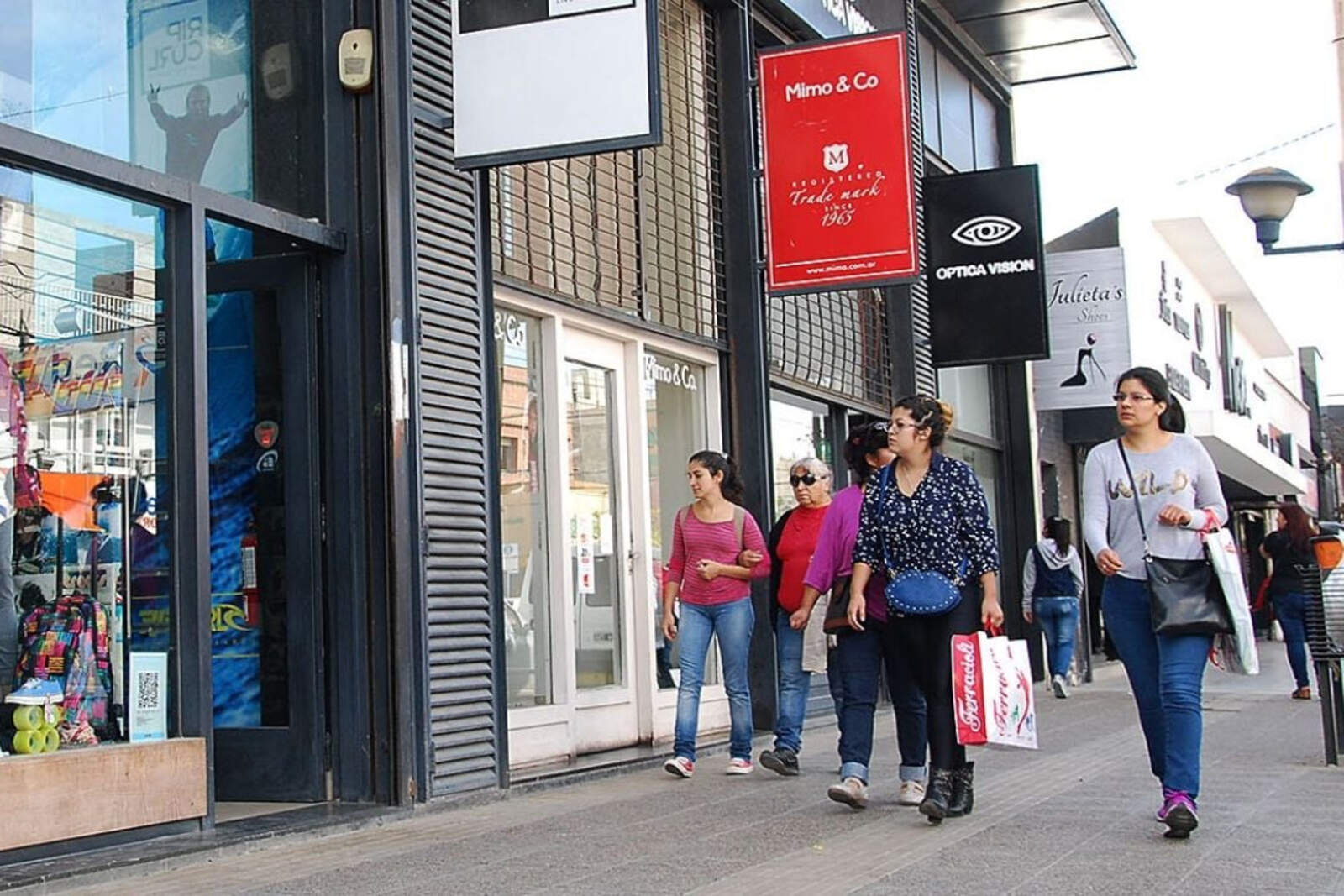
In the province of Buenos Aires, cities such as Arrecifes, Pilar, and San Isidro recorded normal operation of businesses, while in La Plata opening reached 100%. In the provincial interior, commercial activity also was sustained without interruptions.
The same scenario was repeated in the interior of the country. In the province of Chaco, particularly in Resistencia, businesses operated normally, while in Patagonia, cities such as Comodoro Rivadavia kept all of their establishments open. Full operation was also recorded in Córdoba, Corrientes, Formosa, and Mendoza, where commercial activity continued despite the lack of transportation and the closure of banks.
In the province of Santa Fe, 98% of businesses opened their doors in Rosario, while in Tucumán commerce and gastronomy operated fully throughout the entire day. Even in large shopping centers and malls, operations remained practically at 100%, with only some isolated delays in opening.
Work absenteeism was also moderate, standing at below 20% in the interior of the country and around 25% in the Buenos Aires Metropolitan Area, figures that failed to affect the sector's overall functioning.
Business organizations agreed that the drop in the circulation of people was due mainly to the shutdown of public transportation and not to merchants' support for the strike. This way, the general strike failed to achieve its goal of paralyzing commerce, which operated widely throughout the country.
The general strike called at the national level by CGT ended up being a failure, with a low level of support in the commercial sector, where the vast majority of businesses remained open despite the measure.
Reports from the Federación de Comercio e Industria de la Ciudad de Buenos Aires (FECOBA) and the Cámara Argentina de Comercio y Servicios (CAC) confirmed that the strike failed to paralyze activity, with very high levels of opening both in the City of Buenos Aires and in the rest of the country.
One of the most compelling data points emerged from the survey carried out in the capital, where only 12% of businesses joined the measure, which reflected the limited impact of the union's show of force in one of the country's main economic centers. The majority of establishments continued operating normally, even in a context affected by the shutdown of public transportation.
Comercios abiertos.
The president of FECOBA, Fabián Castillo, explained that the few closures recorded were concentrated in specific areas linked to transportation. “We have detected that the places where the majority of establishments remained closed are those that depend on the flow of public transportation passengers, train stations, and transfer hubs,” he pointed out.
Meanwhile, the CAC survey, which included inquiries in different provinces, confirmed that the strike failed to halt commercial activity in the country. In numerous cities, opening was practically total, although with fewer customers present due exclusively to difficulties in getting around.