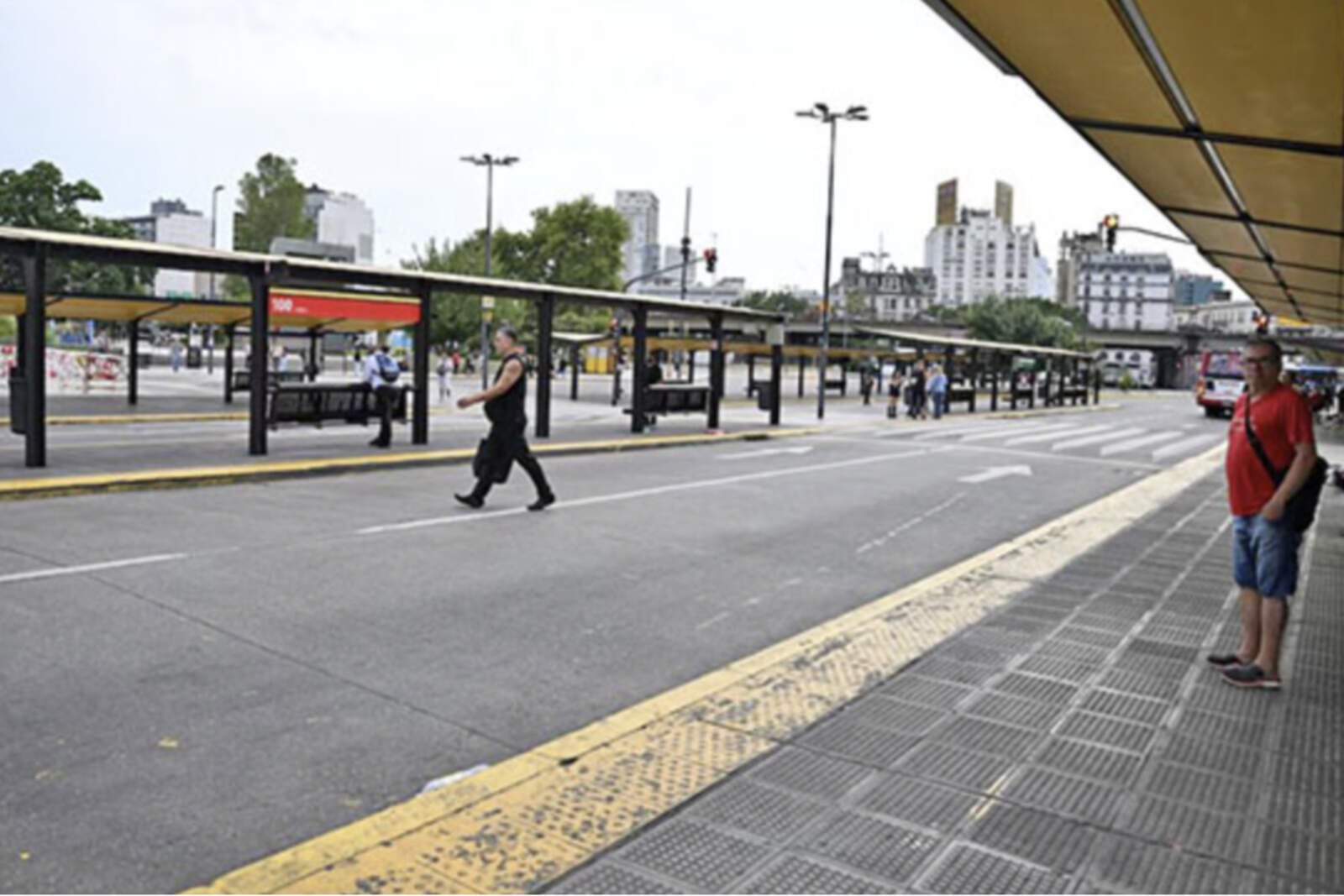
The Ministry of Economy estimated that the general strike called by the General Confederation of Labor (CGT) could generate a loss close to USD 575 million.
The figure, according to official sources, depends on the level of support that the strike action ultimately has. This "protest" is being promoted in rejection of the labor modernization that is being discussed in Congress.
According to technical projections prepared in the Palacio de Hacienda, the calculation starts from an average compliance of between 30% and 50%, with variations depending on the sector. "It comes to approximately USD 575 million, assuming that range of support," officials from the Ministry stated.
Although it is a high amount, the Government considers that the impact would be lower than that of other strikes with a higher level of participation.
Luis "Toto" Caputo
The key role of transportation
One of the determining factors for measuring the economic impact is the operation of public transportation. In particular, the position of the Automotive Tramways Union (UTA) is central.
In recent precedents it was observed that, when buses operated normally, the drop in activity was considerably smaller. In contrast, when transportation was paralyzed, the cost skyrocketed.
According to estimates by the UADE's Institute of Economics, a strike with strong support can fall within a range of between USD 500 and USD 600 million. On May 9, 2024, for example, the estimated loss was USD 544 million, equivalent to 24.3% of daily GDP.
El funcionamiento del transporte es clave para determinar cuanto se paralizará cada actividad
In April 2025, by contrast, with buses operating, the impact was substantially lower: USD 194 million, around 6.4% of that day's output. The technical models indicated that without transportation that figure would have climbed to USD 539 million.
For this Thursday's strike, various transportation unions anticipated their support, which would place the projection in the highest impact range. Each strike not only has a multimillion-dollar economic cost, it also has a cost in freedom that limits the right to work.
Labor reform and political tension
CGT linked the measure to the closure of the FATE factory and questioned the Government's economic course. From the union headquarters they maintain that the labor reform "puts acquired rights at risk." The reality is that the population has understood that this reform doesn't harm them, but rather quite the opposite, and therefore the level of disapproval of the general strike is extremely high.
Meanwhile, the Ministry of Human Capital recalled that in some cases mandatory conciliation is in force, which could limit the support of certain unions under threat of sanctions.
Capital Humano apeló el fallo por una errónea aplicación del derecho
Official estimates contemplate uneven support by sector. Commerce, manufacturing industry, logistics, and financial services are among the most sensitive to the interruption of activities, especially if mobility is restricted.
Supermarkets, shopping malls, banks, and airlines have already anticipated disruptions in their operations, although there will not be a total shutdown in every case. The final magnitude will depend on the combination of union support and the operation of essential services.
The current scenario shows open tension between the Government and traditional unionism. Meanwhile CGT seeks to consolidate its capacity for extortion, the Executive aims to minimize the consequences of the strike and sustain activity.
La CTG se encuentra de paro general como protesta en contra de la modernización laboral
Productive Argentina can't move forward while organized minorities block the right to work and generate losses that the whole society pays for.