This behavior reinforces the reading that the ruling party retains a solid core of support, while recent variations respond more to fluctuations in the moderate electorate than to a structural deterioration.
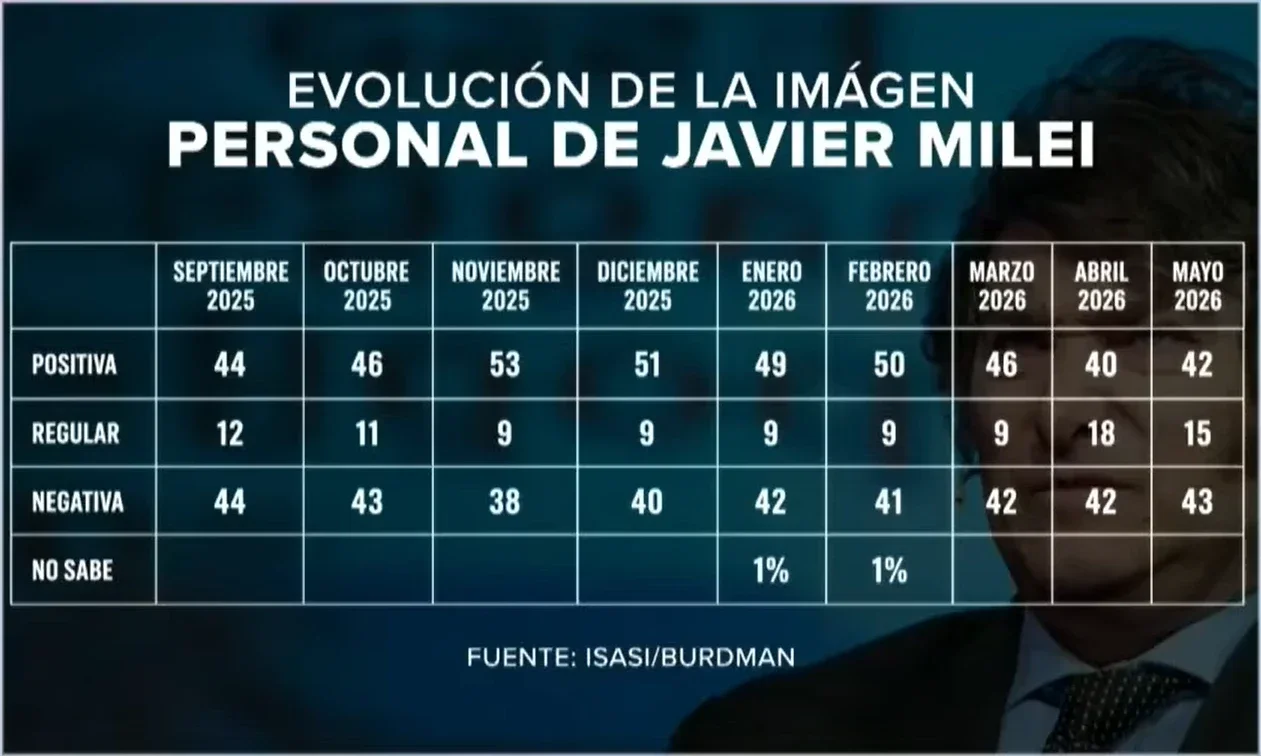
Another highlighted point of the report is the recovery recorded in the last month. In April 2026, the positive image had dropped to 40%, but in May it rose again to 42%. Meanwhile, the neutral rating fell from 18% to 15%, along with the partial recomposition of support for the President.
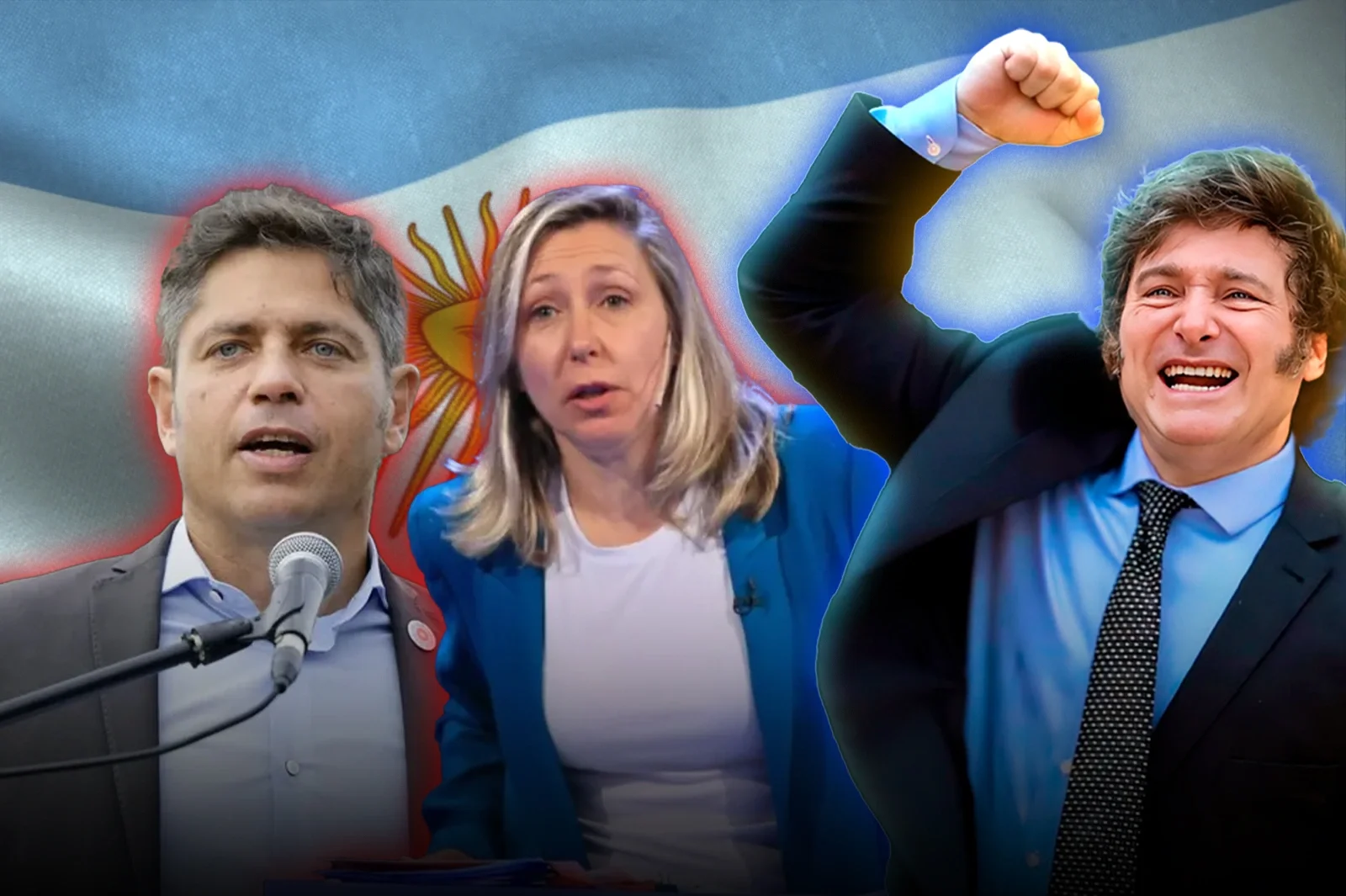
The analyst Viviana Isasi, a member of the consulting firm Isasi / Burdman, presented new public opinion data on the program of Luis Majul on La Nación, focusing on the evolution of the image of President Javier Milei and the electoral projections for 2027.
According to the survey corresponding to May 2026, the president's image is distributed into three main segments: a 42% positive rating, a 15% regular image, and a 43% negative perception.
Although at first glance there is a parity between favorable and unfavorable opinions, the most relevant data arises from the analysis of the trend and the recent recovery of approval.
The image of Milei.
Indeed, Milei's positive image had reached a peak of 53% in December 2025, after being at 46% in October of that same year.
The current measurement of 42% marks a decline from that maximum, but the study highlights that this drop did not transfer to the negative segment, but mainly to the group of undecided or neutral voters. The regular image, which was only at 9% in November, grew to the current 15%.
On the other hand, the negative image remained relatively stable: it went from 43% in October 2025 to 40% in December, and returned to 43% in May 2026.
The intention to vote by parties.
2027 Elections
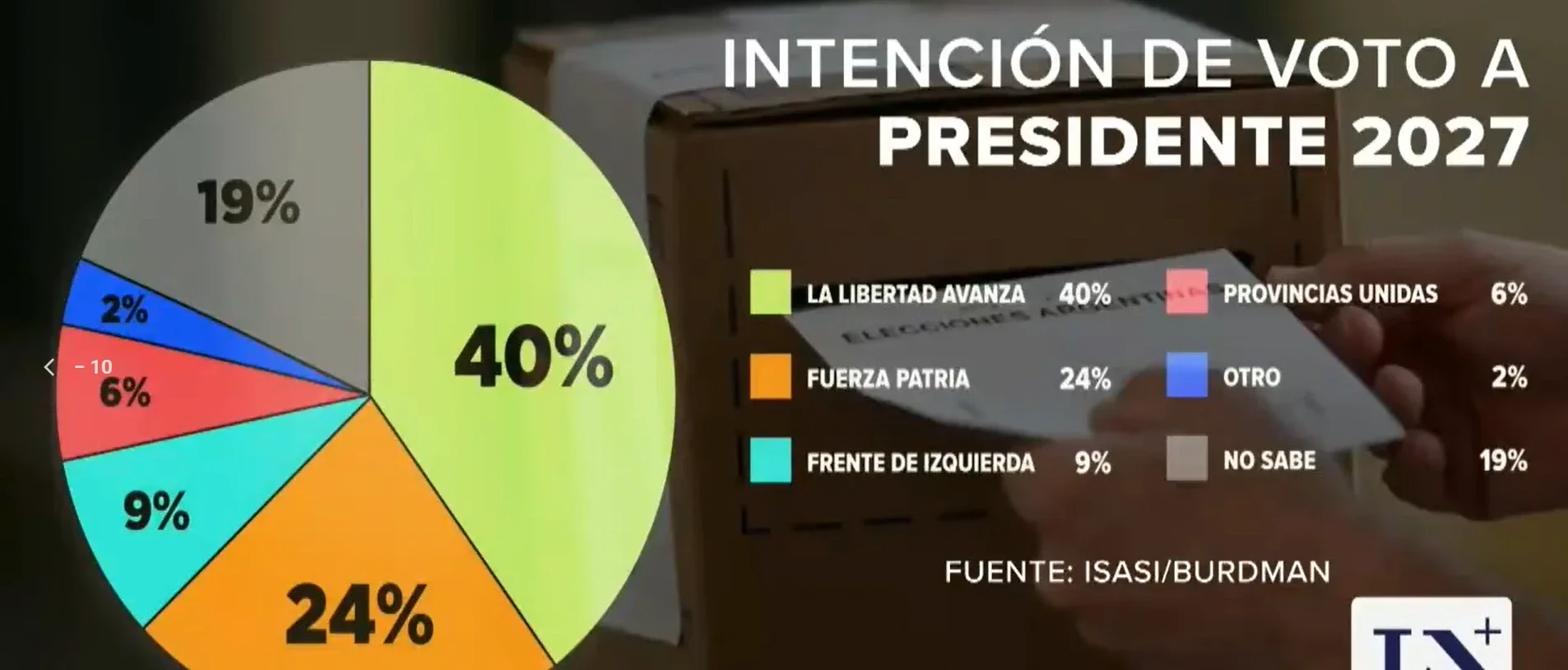
Looking ahead to the presidential elections of 2027, the study also measured voting intention by political spaces. La Libertad Avanza, led by Milei, tops the scenario with a 40% voting intention. In second place is Fuerza Patria, representing Kirchnerism, with 24%.
Further back are the Frente de Izquierda with 9%, Provincias Unidas with 6%, while 2% opt for other forces. A key figure is the 19% of undecided voters, a segment that could be decisive in consolidating or modifying this scenario.
During the presentation, Isasi provided an interpretation of the internal dynamics of the opposition: “What is happening there is that the left is stealing votes from Cristina and Kicillof, because they practically have the same electorate.”
The analysis suggests that fragmentation within the same opposition spectrum could be weakening the main anti-Milei force, while the ruling party maintains a considerable advantage in voting intention.
With this data, it can be seen that President Milei maintains a high approval rating, sustained both by his support base and by the opposition's difficulties in consolidating a competitive alternative.