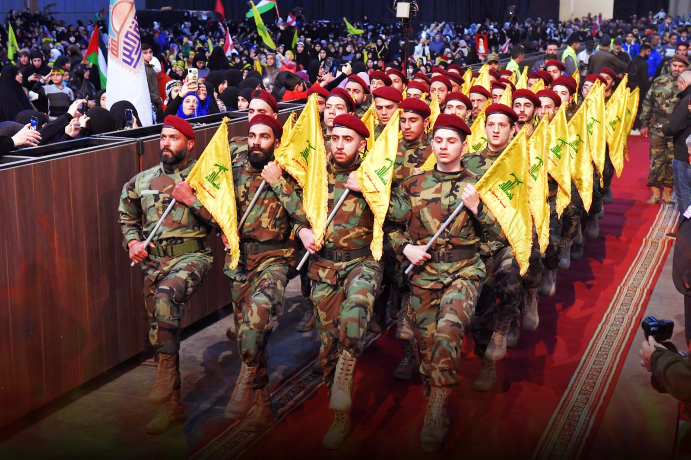
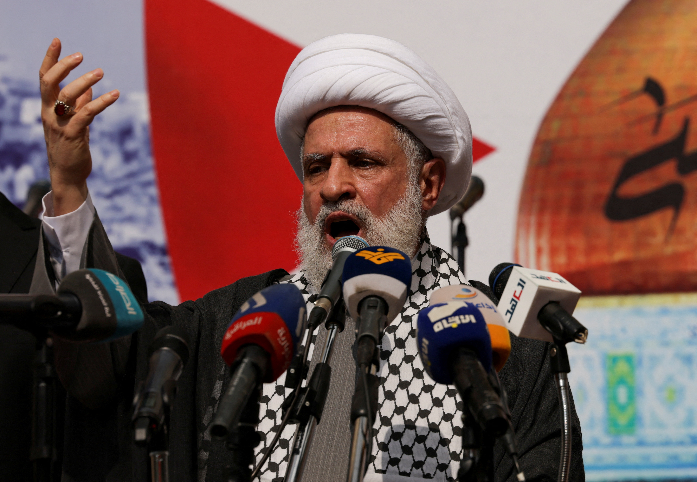
The leader of Hezbollah, Naim Qassem, issued a strong threat against Israel on Tuesday, asserting that the Shiite group will turn the conflict into ''a hell'' for Israeli forces if military operations in southern Lebanon continue.
The statements came on the eve of a new round of negotiations between Lebanese and Israeli representatives in Washington, driven by the United States with the aim of maintaining the fragile ceasefire reached in April and preventing further regional escalation.
In an open letter disseminated by the Al-Manar channel, linked to Hezbollah, Qassem stated that the organization will not accept surrender or abandon its military strategy. ''We will continue to defend Lebanon and its people no matter how much time passes and no matter how great the sacrifices are,'' the leader expressed, in a message directed at the political and military leadership of the Iran-backed Islamist movement.
The head of Hezbollah also questioned the direct negotiations between Beirut and Israel, arguing that this format only benefits the Israeli government and forces Lebanon to make concessions without obtaining real guarantees. Instead, he proposed indirect talks, a mechanism that, he claimed, would give the Lebanese negotiator a stronger position. Although Hezbollah is not officially participating in the meetings scheduled for this week in Washington, the jihadist group is trying to influence the political and military direction of the conflict.
The terrorist leader of Hezbollah issued numerous threats against Israel and even against Lebanese territory itself.
One of the most sensitive points of the negotiations remains the future of Hezbollah's arsenal. Israel and the United States demand the total disarmament of the group, while some sectors of the Lebanese state itself believe that the existence of a powerful parallel armed organization severely undermines national sovereignty. However, Qassem rejected any discussion on the matter and maintained that Hezbollah's weapons are part of ''an internal Lebanese issue'' that should not be negotiated with Israel or foreign actors.
The position of the Shiite group once again highlights one of the main criticisms it has faced for years: its refusal to fully submit to state institutions and its role as an autonomous military force strategically aligned with Iran. For many Lebanese political sectors, Hezbollah acts as a ''state within a state,'' with the capacity to unilaterally decide on matters of war and peace without national consensus.
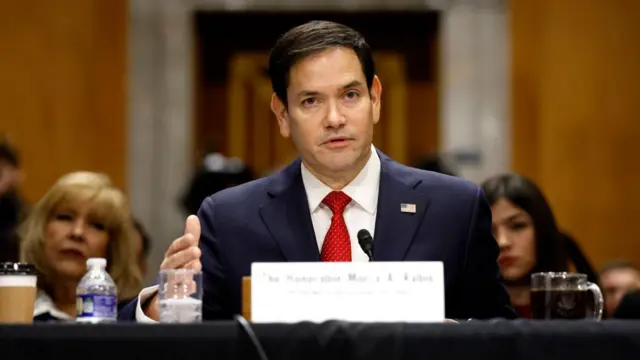
The United States recently reiterated its support for the disarmament of the organization. The spokesperson for the State Department, Tommy Pigott, stated last week that lasting peace in the region depends on the ''full restoration of Lebanese state authority and the complete disarmament of Hezbollah.'' Washington considers that Iranian military influence through the group represents one of the main destabilizing factors in the Middle East.
The U.S. State Department subordinated a peace process to a total disarmament of Hezbollah and the complete restoration of Lebanese state authorities.
Qassem, however, proposed a different sequence to move towards a potential solution. According to the Shiite leader, Israeli attacks must first cease and troops deployed in southern Lebanon must withdraw. Only after that, he asserted, could an internal debate on a future national security strategy be opened. The leader also assured that Hezbollah is willing to ''cooperate'' with the Lebanese government, although without renouncing its military structure.
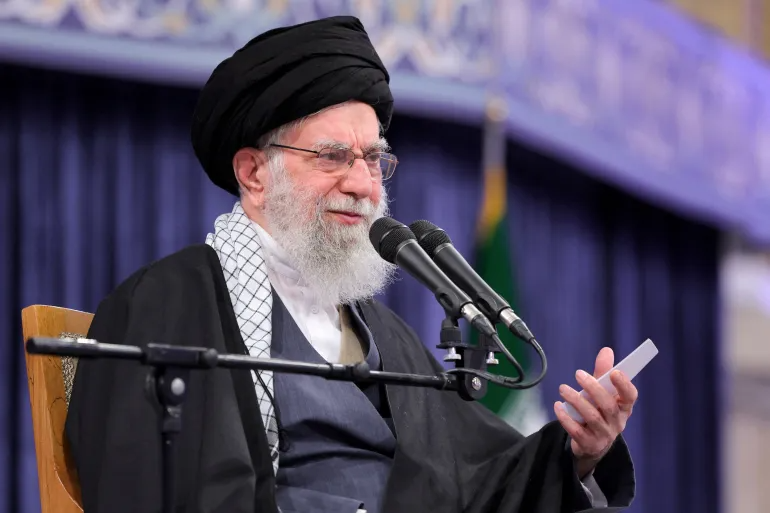
The current conflict began on March 2, when Hezbollah launched rocket attacks against Israel to avenge the elimination of the Iranian supreme leader, Ali Jamenei, who died during the joint U.S. and Israeli offensive against strategic facilities in Tehran.
The group's decision to intervene militarily generated strong criticism within Lebanon, where many believe that Hezbollah has once again dragged the country into a devastating war for interests linked to Iran rather than Lebanese national priorities.
Hezbollah's intervention in the Middle Eastern conflict occurred after the removal of the supreme Iranian dictator, Ali Jamenei.
The Israeli response included massive bombings and a ground incursion into southern Lebanese territory. Although the ceasefire came into effect on April 17, both sides continue to accuse each other of violating the truce. The Israeli army reported on Tuesday that it eliminated more than 350 Hezbollah fighters and destroyed over 1,100 military targets since the beginning of the cessation of hostilities, including weapon depots and missile launchers.
The war further exacerbated the deep economic and political crisis that Lebanon has been experiencing for years. Numerous analyses suggest that Hezbollah continues to prioritize its regional agenda and its ties with Tehran over the internal stability of the country. Meanwhile, diplomatic efforts to contain the violence face enormous difficulties due to the group's persistent refusal to abandon its weapons and fully submit to the control of the Lebanese state.