According to estimates from the Timbúes commune itself, if all planned stages are realized, the complex could achieve a monthly turnover close to 1.2 million tons, becoming a global industrial and logistical hub.






The complex could move 1.2 million tons monthly and generate 350 direct jobs.
According to estimates from the Timbúes commune itself, if all planned stages are realized, the complex could achieve a monthly turnover close to 1.2 million tons, becoming a global industrial and logistical hub.





The approved ordinance also set concrete requirements for the company. Construction must begin within 24 months after obtaining provincial and national authorizations, while the first stage must be operational within a maximum of three years from the start of work. Additionally, the creation of at least 350 direct jobs during the operational phase is required.
Among the commitments made are road improvements to manage heavy traffic, an educational donation of USD 100,000, and the purchase of a communal property valued at USD 1.1 million.
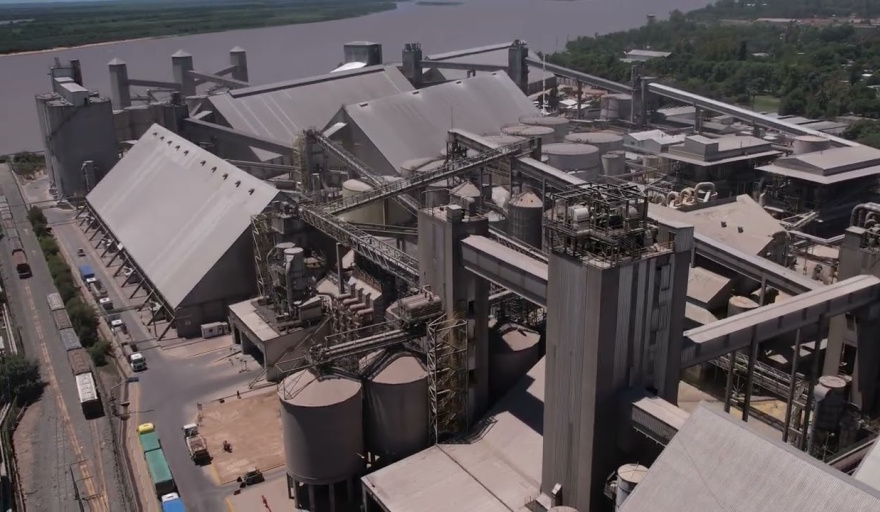
The company remains cautious and clarifies that it is still a “preliminary project under evaluation”. To move forward, it will still need to obtain environmental and port approvals, as well as define the final financial scheme for an investment that would be executed in phases.
If realized, the mega-project would further consolidate Argentina's position as a global agro-exporting power and reinforce the strategic role of the Santa Fe port complex in the international trade of flours and vegetable oils.
The Argentine agro-industry could add one of the most ambitious logistical developments in recent years. Molinos Agro, the agro-industrial arm of the Pérez Companc group, presented a preliminary project to build a gigantic port and industrial complex in Timbúes, Santa Fe province, with an estimated investment of USD 800 million.
The venture has already taken a key step after the local commune approved Ordinance 051/2026, enabling the change of land use and the creation of a “Special Port Subdistrict.” Local government described the initiative as a “world-class” project, capable of transforming the productive and logistical profile of the region.
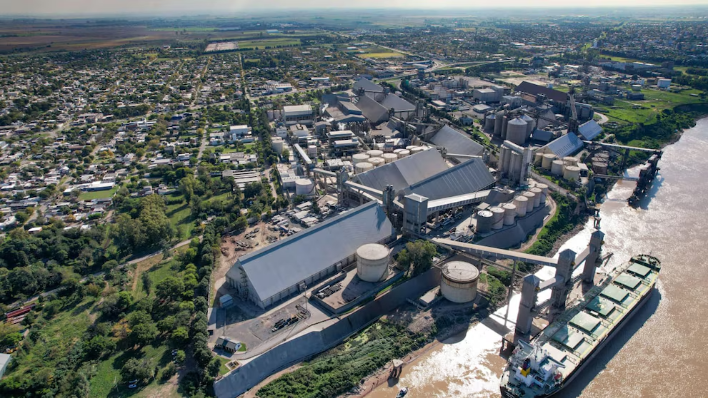
The projected complex would have unprecedented dimensions even for Greater Rosario, the area that concentrates the largest soybean processing capacity on the planet. The plan includes three milling lines with capacities ranging from 12,000 to 15,000 tons per day each, in addition to a storage system for approximately one million tons of grains and by-products.
The infrastructure would include two docks suitable for Panamax and Neopanamax vessels, a third dock for barges, and a 55-megawatt cogeneration power plant intended to supply the industrial operations. There is also a plan for a water and effluent treatment plant to integrate the entire production system into the Paraná River port corridor.