Five years later, the Milei Government decided to recover the traditional designation. The change also responded to a request from the Argentine Chamber of the Toy Industry (CAIJ), which raised the need to unify criteria and restore clarity to a date deeply rooted in Argentine culture.
Next Sunday, August 16, the traditional celebration dedicated to the little ones will officially take place again under the name “Children's Day”, a designation that has remained in effect since the Government of Javier Milei formally reinstated it through Decree 562/2025.
This is not a new modification adopted this year. The measure was formalized in August 2025 and remains fully in effect during 2026, so the date retains the historical name used for decades by millions of Argentine families, before Argentine progressivism attempted to indoctrinate the youngest.
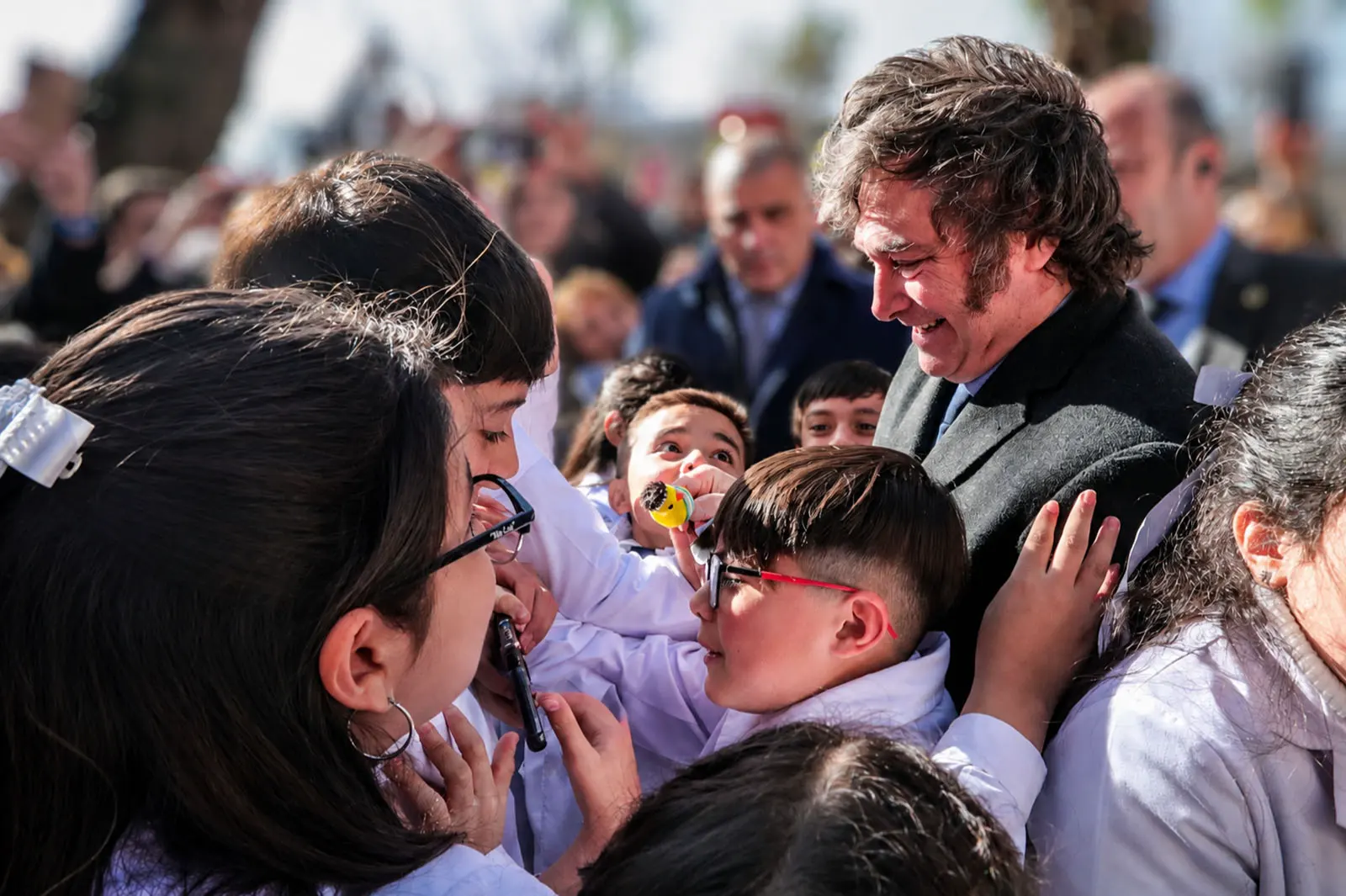
Javier Milei, accompanied by dozens of children.
The decision of the Milei administration had left behind the change promoted in 2020 during the administration of Alberto Fernández, when the National Secretariat for Childhood, Adolescence, and Family pushed to replace “Children's Day” with “Day of Childhoods”.
At that time, the then head of the agency, Gabriel Lerner, justified the modification by stating that they sought to “celebrate the diversity of all childhood” and accompany certain “cultural transformations”. The area also defended a perspective linked to issues of "gender and diversity," aligned with international leftist views.
The president of the entity, Matías Furió, had then highlighted the “strong cultural roots” of Children's Day and its relation to the right to play as outlined in the Convention on the Rights of the Child.
Normalcy has returned
The celebration has a long history in the country and has been held continuously since 1960. After various calendar modifications, since 2013 it has been set for the third Sunday in August, a criterion that remains in effect today.
Thus, throughout Javier Milei's government, the Casa Rosada maintained a stance opposed to the approach adopted by Kirchnerism: to maintain a simple, traditional, and widely recognized designation by society, without incorporating linguistic reformulations that appeal to the ideologization of the youngest.