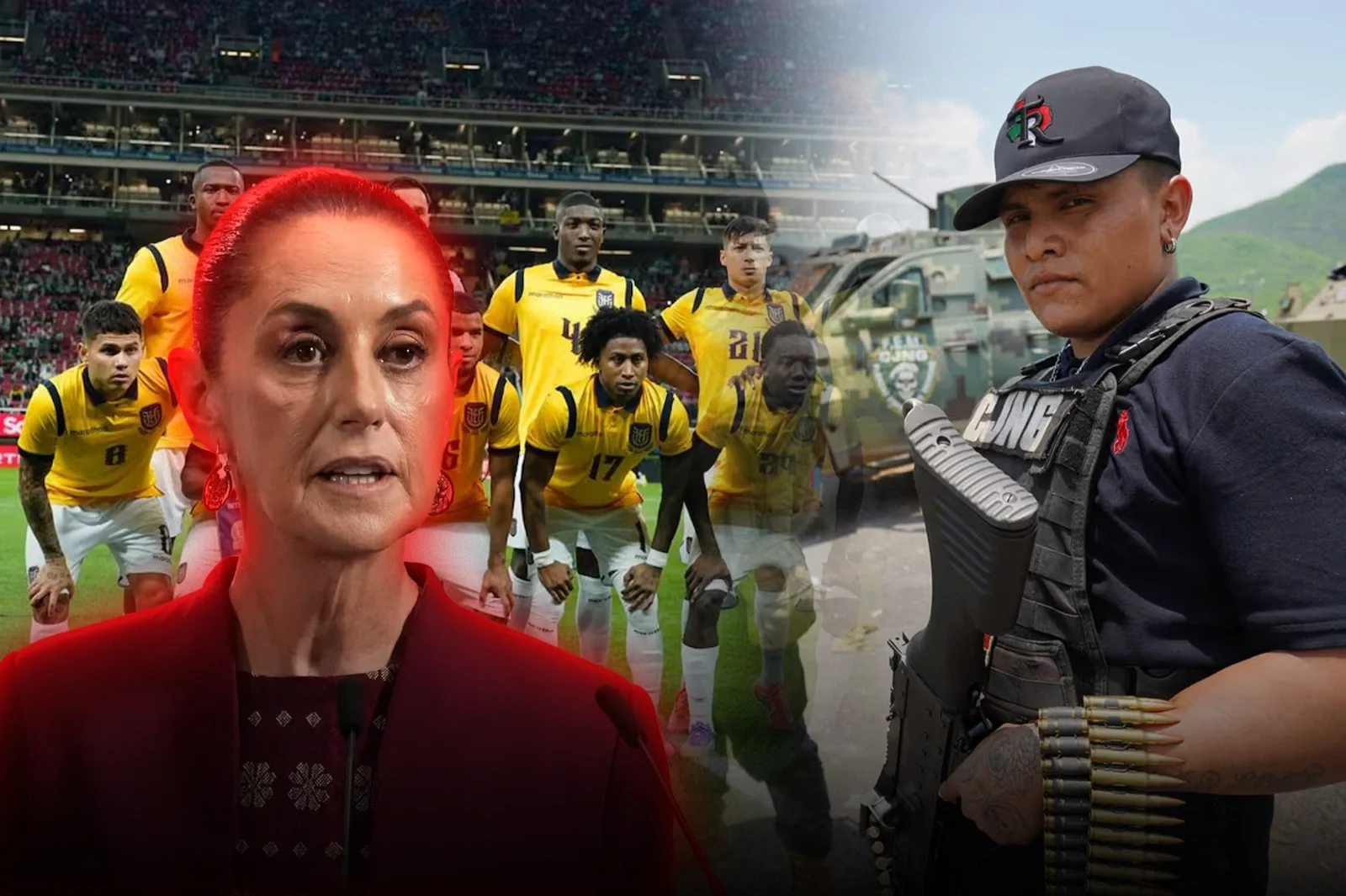
The case gained traction following statements from journalists who claimed that some players had been intimidated through threats to their families before the decisive match against Mexico
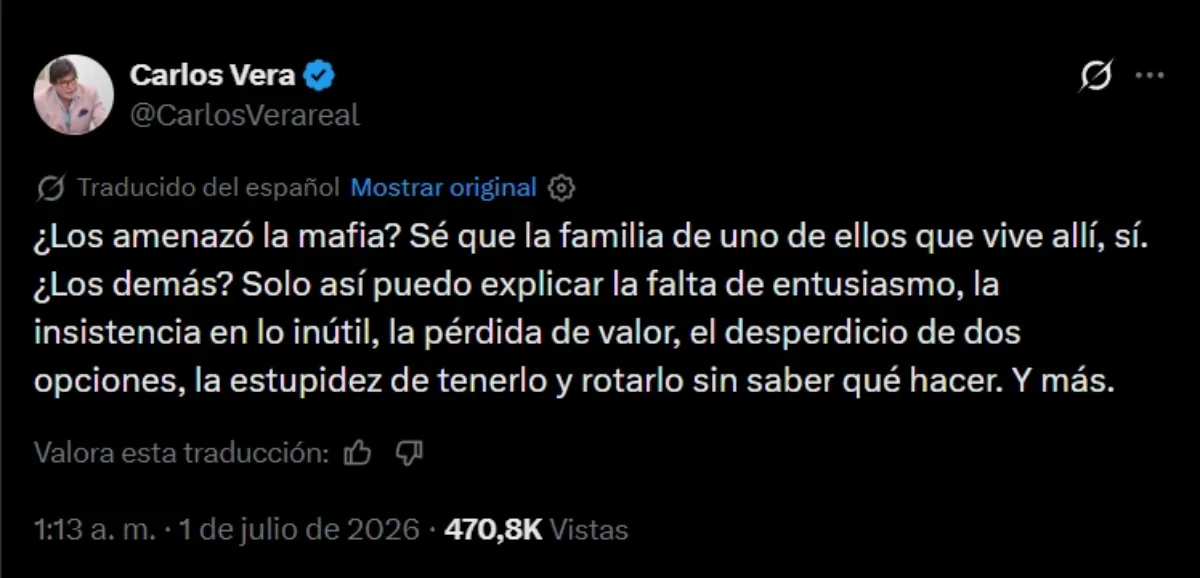
On his social media, the journalist delved into the seriousness of the situation, mentioning that the MAFIA had contacted at least one player's family residing in Mexican territory, which would explain the “waste of 2 opportunities” and the “nonsense of having it and rotating it without knowing what to do.”
For his part, Argentine journalist Eduardo Feinmann, through Radio Mitre, reportedly provided chilling details that would confirm the extent of this narco-state.
Claudia Sheinbaum
According to Feinmann, a drug cartel had communicated with five players from the Ecuadorian squad providing “specific information about family members in Ecuador and Mexico.” The vulnerability of the footballers playing in the Mexican league would have been the key used by criminals to ensure the progress of the local team in the Round of 32.
Feinmann described the situation at the Estadio Azteca as a “disaster” and highlighted the complicit silence of the authorities, pointing out that while Ecuador withdraws from the tournament even without a coach, the shadow of the threat would remain latent. This alleged criminal intervention in the 2026 World Cup would reveal how the security policy of the Mexican left has even surrendered the most sacred spectacles to the will of territorial mafias.
The international sports scene was shaken after the elimination of the Ecuadorian national team against Mexico with a score of 2-0, goals scored by Julián Quiñones and Raúl Jiménez. What might initially seem like a football result hides a plot of terror linked to the rampant insecurity that plagues the Aztec country under the regime of the leftist Sheinbaum. According to various sources, the Ecuadorian team allegedly played the match under extreme psychological pressure, stemming from alleged direct threats against the lives of its members.
The Ecuadorian journalist Carlos Vera was reportedly the first to raise alarms about these “external factors” that may have diminished the performance of “la Tri.” Vera harshly questioned the attitude of negligence and surrender of a team that had just defeated Germany 2-1 with a standout performance from Gonzalo Plata.
Ecuadorian journalist Carlos Vera on X:
In his statements, the communicator suggested that the players may have prioritized their survival: “There are factors that will be detected over time and played on the minds of the players for them to play like this. They chose to preserve their lives. Did the mafia threaten them? I know that one of them who lives in Mexico was.”
The lack of attitude, constant ball losses, and confusion on the field would be, from this perspective, symptoms of a coerced team. Vera was emphatic in pointing out that the team's behavior would not have been logical: “How is it possible that everyone has the same attitude of negligence, surrender, confusion...?”